
What should a potable water test report include?
A potable water test report should identify the sampled site, locations and dates, describe the sampling and analytical methods, and list each parameter tested with its result, units and relevant guideline or regulatory value. It should also explain any non-compliant findings, limitations or anomalies, and set out recommended follow-up actions where further investigation or remedial work is needed.
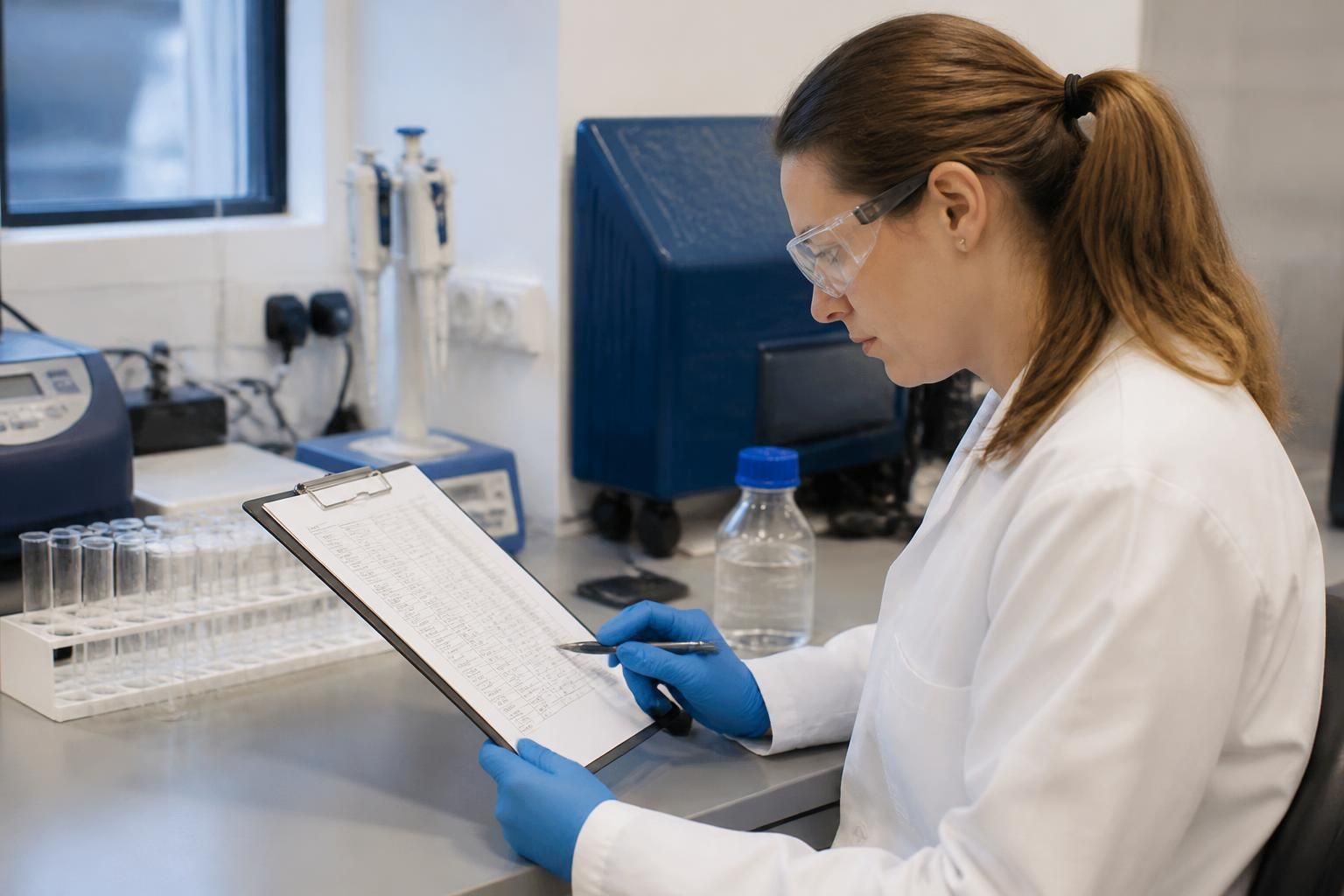
A potable water test report is a traceable record of how a drinking-water sample was collected, handled and examined, together with enough technical information to judge whether the findings are reliable and relevant to the site. A well-prepared report should allow a facilities manager, responsible person or auditor to understand what was examined, how the data should be interpreted and what decisions may follow.
In addition to the headline findings, the report should contain the following supporting information:
- Report identification: a unique report number, issue date, page numbering and, where applicable, a revision history. This prevents an amended document being confused with an earlier version.
- Client and site details: the organisation commissioning the work, the premises or water system concerned, and the relevant contact or responsible person. For multi-site programmes, the report should make clear which location each result relates to.
- Sample traceability: an individual sample reference, precise sampling point description and details such as whether the sample came from a tap, tank, outlet or other part of the system. The sample reference should link the result to the field records and laboratory records.
- Collection and handling records: the sampler’s identity or organisation, collection and receipt dates, sample condition on arrival, container type, preservation arrangements and any recorded temperature or transport observations. These details help establish whether the sample remained suitable for examination.
- Laboratory information: the testing laboratory’s name and address, relevant contact details, and the status of the methods used. Where testing is carried out under UKAS accreditation, the report should identify the applicable accreditation information and make clear which activities fall within the accredited scope.
- Analytical detail: the method reference or method description, reporting limits, and any dilution, preparation or calculation that materially affects the result. Where relevant, the report may also state measurement uncertainty, particularly when a result is close to an applicable decision value.
The report should distinguish clearly between a measured result and an interpretation. A numerical result is evidence from a particular sample at a particular time; it does not, by itself, prove that every outlet or every part of a building’s water system has the same condition. The interpretation should therefore consider the sampling point, the purpose of the investigation, the history of the system and any relevant operational information.
For results that are outside the applicable requirement, close to a decision value or otherwise unexpected, the report should explain the significance without overstating what the data proves. It may identify whether the finding could be associated with sampling conditions, local outlet contamination, stagnation, storage, treatment performance or a wider system issue. These are different possibilities and may require different follow-up investigations.
A useful report also records any data-quality qualifications. Examples include a damaged container, a delayed delivery, insufficient sample volume, interference during analysis, an unsuitable sampling point or a result that could not be reported within the normal analytical range. Such comments should be prominent rather than hidden in laboratory notes, because they may affect how confidently the result can be used.
Where the work forms part of an ongoing monitoring programme, the report can add value by comparing the current findings with previous results from the same or comparable sampling points. Any comparison should use consistent locations, methods and units. A trend may indicate that further investigation is sensible even when an individual result does not exceed an applicable limit, while an isolated result may need confirmation before wider conclusions are drawn.
The final section should set out practical next steps in proportion to the finding. Depending on the circumstances, this may include checking the sampling process, repeating a sample, inspecting the local outlet, reviewing storage or treatment controls, investigating the wider water system or obtaining specialist advice. It should identify which action is proposed, what issue it addresses and whether further testing is needed. The report should not present laboratory testing as a substitute for a broader water-system assessment where the results indicate a possible control problem.
Before accepting a report for compliance records, check that every sample can be matched to a location, each result has a clear unit and analytical context, qualifications are explained, and the conclusions are consistent with the evidence. Retain the report with the site’s water safety records so that later investigations, audits and monitoring reviews can be linked to the original sample and laboratory data.
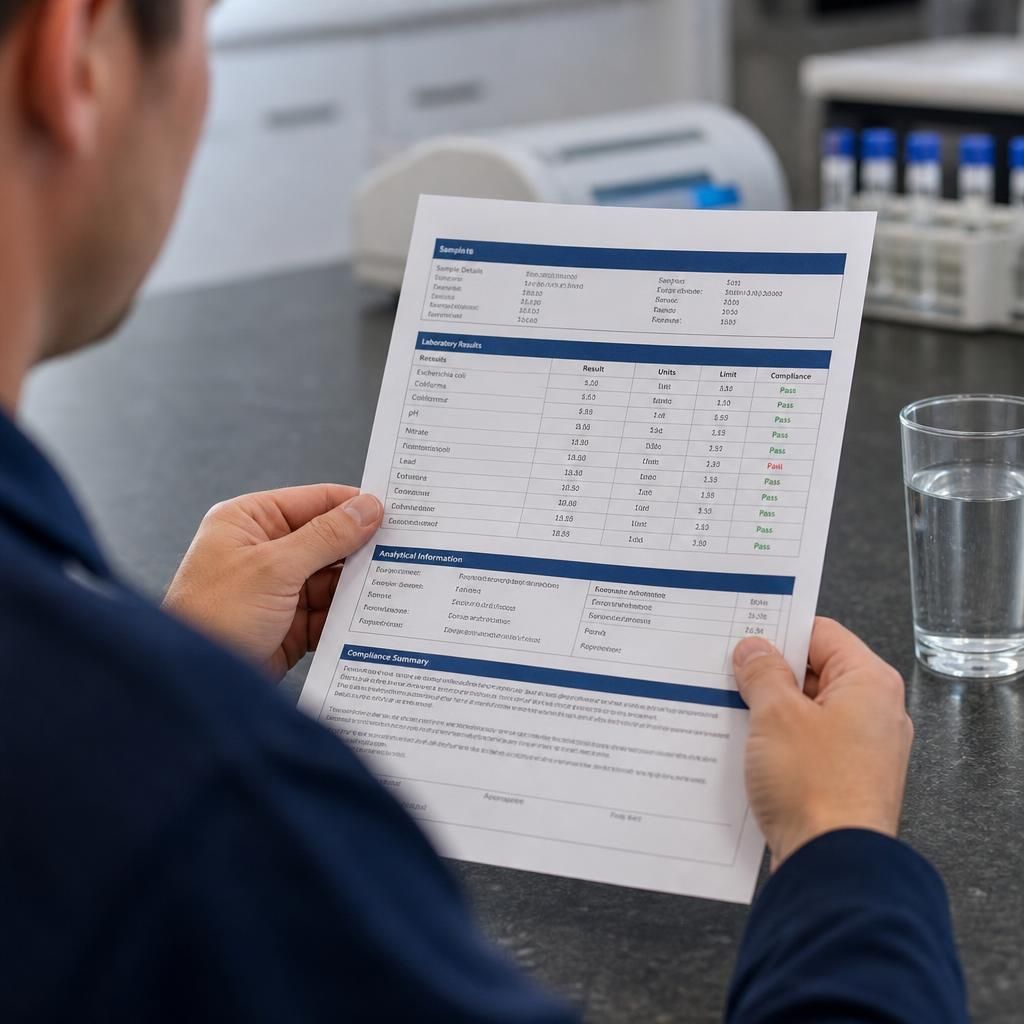
A potable water test report should make clear whether the tests performed were suitable for the reason the sample was taken. A routine monitoring sample, an investigation of an unusual taste or odour, and a suspected contamination incident may require different analytical scopes.
Check that the report identifies:
- the purpose of the sampling exercise;
- the parameters requested and those actually tested;
- any requested tests that were excluded, cancelled or could not be completed; and
- any limitations that prevent the results being used to answer the original question.
This prevents an untested parameter from being mistaken for a satisfactory result. If the findings do not address the reason for sampling, the appropriate next step may be to request additional analysis rather than draw conclusions from an incomplete test panel.
Need help reviewing your potable water test report?
If you need help interpreting a potable water test report or deciding whether further investigation is proportionate, speak to Blue Fish Water Management for practical advice on the next step.