
How often should potable water be tested?
Potable water should be tested at a frequency determined by a documented risk assessment, rather than by one universal interval. The schedule should reflect the water source, system design, usage and identified risks, with additional testing after alterations, incidents or concerns about water quality.
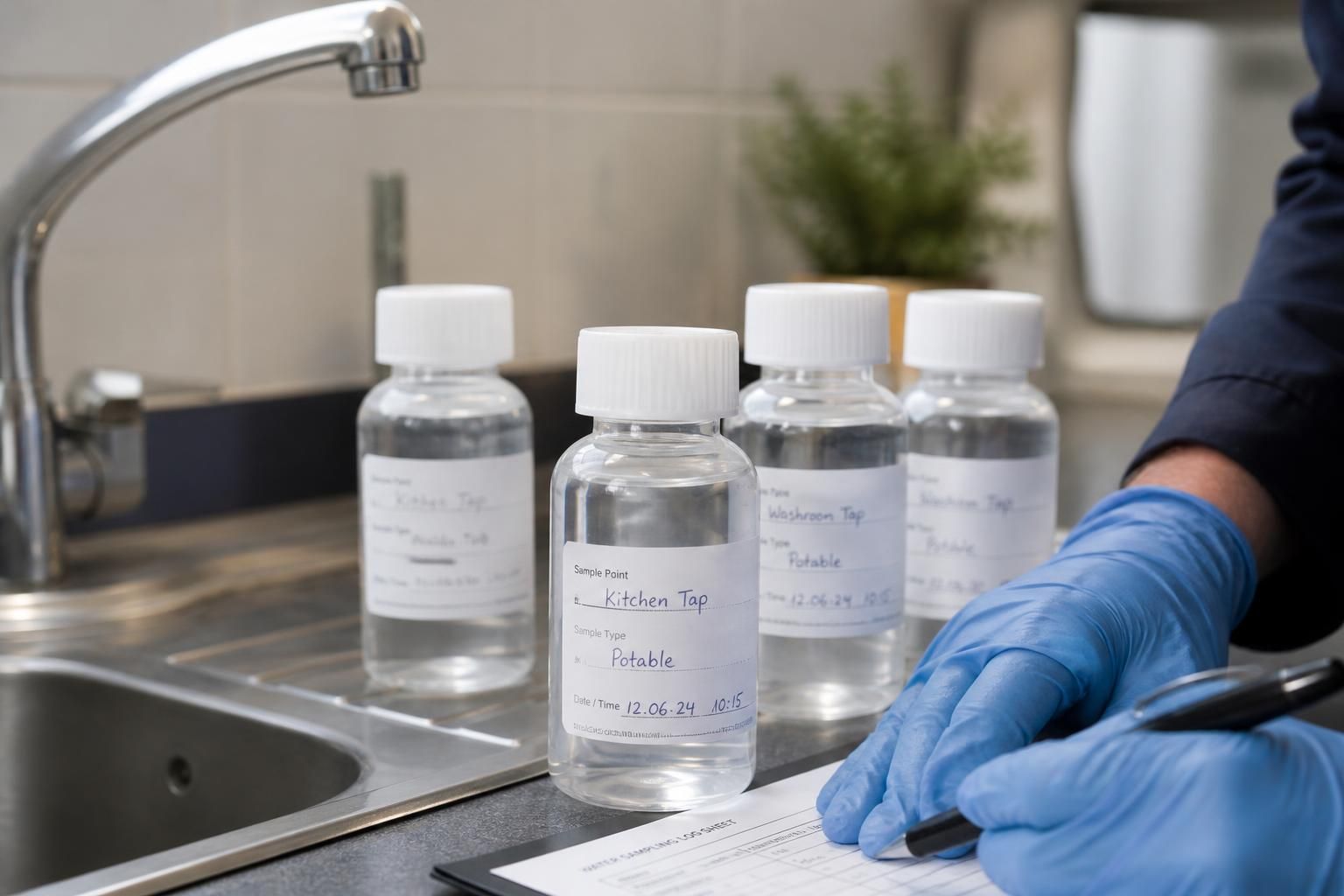
The appropriate testing frequency for potable water depends on the legal status of the supply, the number and type of people using it, the complexity of the plumbing system and the consequences of a quality failure. A suitable programme combines routine sampling with additional tests when circumstances change or results indicate a problem.
Public mains water
Water supplied by a statutory water company is tested by the supplier in accordance with the applicable drinking water regulations. That does not remove the need for a business to consider water quality at its own premises. Internal storage tanks, long pipe runs, infrequently used outlets, treatment equipment and changes in temperature can affect water after it enters the building.
For a straightforward premises supplied directly from the mains, testing may be limited to a risk-based verification programme rather than frequent routine sampling. More regular testing is appropriate where the building has complex plumbing, stored water, vulnerable occupants, unusual usage patterns or a history of unsatisfactory results.
Private water supplies
Private supplies generally require more formal monitoring. The relevant requirements vary between England, Wales, Scotland and Northern Ireland, and depend on factors such as the volume supplied, the number of users and whether the water is used commercially. Local authorities may carry out regulatory sampling, while the person responsible for the supply may also need their own operational checks and risk-based testing.
A private supply should be assessed from source to point of use. The programme may need to cover the source, treatment stages, storage facilities and representative outlets. Testing only one tap can fail to identify contamination entering elsewhere in the system.
Situations requiring more frequent testing
- Healthcare premises, care settings and buildings used by people who may be particularly susceptible to infection.
- Food businesses where water quality could affect food preparation, processing, cleaning or ice production.
- Sites with wells, boreholes, springs, reservoirs or other private sources.
- Premises with treatment systems, water softeners, filters or disinfection equipment.
- Buildings that are intermittently occupied or have outlets with low use.
- Systems with previous failures, recurring complaints or evidence of contamination.
- Sites where construction, refurbishment or plumbing alterations have disturbed the water system.
These factors do not automatically prescribe one fixed interval. They indicate that the sampling plan should be more detailed and reviewed more often, with the frequency justified in the documented risk assessment.
When additional samples should be taken
Testing should be considered after a system has been installed, extended, repaired or disinfected, particularly before areas are returned to normal use. Further samples may be needed after a positive microbiological result, a significant change in taste, smell or appearance, a suspected contamination event, loss of treatment, flooding or a prolonged period of stagnation.
Investigative sampling should be designed to identify the source and extent of a problem. This can involve comparing incoming water with samples from storage tanks and distal outlets, rather than simply repeating a sample from the original location. The laboratory results should be interpreted alongside system records, inspection findings and the actions already taken.
Routine testing should be reviewed
A testing schedule should not remain unchanged indefinitely. Review it when the building changes use, occupancy changes, new outlets are added, treatment equipment is modified, sampling results deteriorate or a risk assessment identifies a new hazard. The review should confirm which parameters are being tested, where samples are collected, who is responsible and what action follows an unsatisfactory result.
Keep a clear record of the sampling plan, dates, locations, laboratory reports, investigations and corrective measures. Results should be assessed against the requirements applying to the particular supply and intended use, rather than judged in isolation. A pattern of borderline or gradually worsening results can be significant even where an individual result has not exceeded a specified value.
Potable water testing and legionella control are related but different activities. A drinking water analysis may assess microbiological, chemical or indicator parameters, while legionella management focuses on the conditions that allow the organism to grow and spread through water systems. Where both risks are present, the programmes should be coordinated without treating one as a substitute for the other.
For a commercial premises, the most defensible approach is therefore a documented sampling plan supported by competent interpretation. Blue Fish Water Management can help businesses assess their supply and internal distribution system, identify suitable sampling points and establish a testing programme that reflects the relevant UK requirements and site-specific risks.
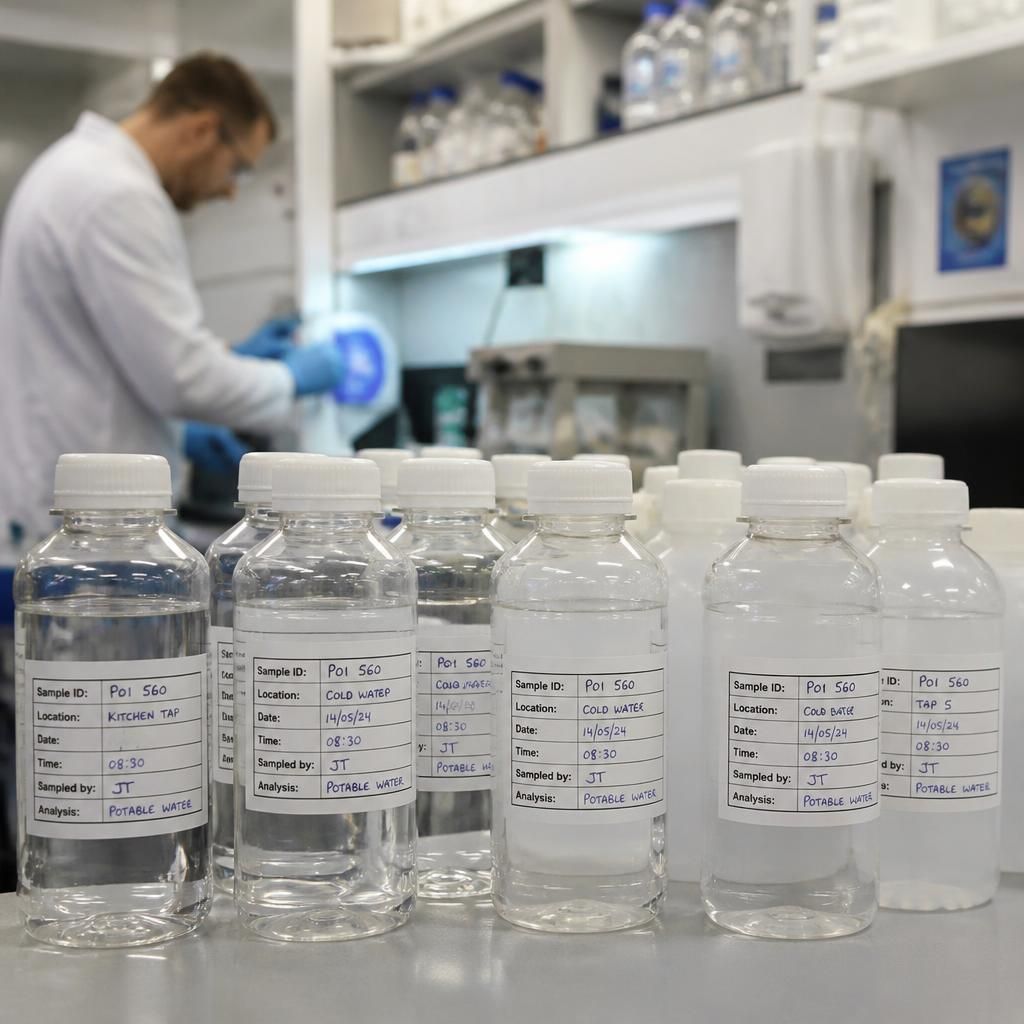
A potable water test is a snapshot of the sample collected at a particular outlet and time; it does not demonstrate that every part of a building’s supply remains satisfactory. Testing frequency should therefore be linked to how the results will be used, with samples taken from locations that provide meaningful evidence about the water reaching users.
Where results are consistently satisfactory and system conditions remain stable, the sampling plan may support a longer interval between routine checks. A change in results, operating conditions or water use should prompt a review rather than waiting for the next scheduled sample. This approach makes the testing programme a form of ongoing assurance, not simply a series of isolated laboratory reports.
Discuss your potable water testing requirements
Speak to Blue Fish Water Management to discuss your potable water testing requirements and determine how your current arrangements should be reviewed.