
Which type of water hygiene risk assessment suits your organisation?
The right water hygiene risk assessment depends on your organisation’s water systems, building use, occupancy, vulnerable people and level of operational complexity. A straightforward assessment may suit a simple, low-risk site, while larger, higher-risk or more complex premises require a detailed assessment covering system design, potential exposure points, control measures and ongoing management.

The most suitable water hygiene risk assessment is the one that provides enough evidence to identify, control and monitor the risks created by an organisation’s water systems. The choice should be based on the system’s construction and operation, the people who may be exposed, the quality of available records and the consequences of control failure, rather than on the size or name of the organisation alone.
A proportionate assessment for straightforward premises
A standard, proportionate assessment may be appropriate where the water installation is limited, well understood and operated in a consistent way. This could include premises with a simple hot and cold water arrangement, few outlets, limited storage and no unusual equipment. The assessment should still examine how water is supplied, stored, heated and distributed, and whether temperatures, use patterns and maintenance arrangements support effective control.
Even a straightforward site requires more than a general checklist. The assessor should verify relevant conditions on site, identify infrequently used outlets, consider dead legs and redundant pipework, review temperature control, and record responsibilities for monitoring and remedial action. If the assessment relies only on information supplied by the organisation without checking the installation, it may not reflect the actual risk.
A detailed assessment for complex or higher-consequence sites
A detailed water hygiene risk assessment is more appropriate where the installation has several distribution zones, multiple water heaters, storage tanks, secondary circulation, specialist outlets, showers, cooling equipment or other features that make control less straightforward. It is also appropriate where the system has changed over time, where records are incomplete, or where previous monitoring has identified recurring problems.
In these circumstances, the assessment should trace the system from incoming supply through to points of use. It may include a schematic review, asset identification, temperature measurements, examination of storage and circulation arrangements, assessment of low-use outlets, and evaluation of control measures at each relevant stage. The resulting report should distinguish current findings from recommendations and explain which actions are necessary, who should take them and how completion should be verified.
Sites involving vulnerable people
The potential consequences of exposure are an important part of selecting the assessment approach. Premises used by older people, people receiving healthcare, or others who may be particularly susceptible to legionella-related illness generally require careful consideration of exposure pathways and control reliability. A more detailed assessment may be justified even where the plumbing appears relatively simple, because the appropriate level of scrutiny depends on both the water system and the people affected.
Occupancy patterns should also be examined. A building that is occupied intermittently, partly vacant, seasonally used or subject to frequent changes in use may have different risks from a continuously occupied workplace. Periods of low demand can affect outlet use, temperatures and stagnation, so the assessment should explain how these conditions are managed.
When an existing assessment needs a fuller review
An existing document may no longer be suitable if the premises have been altered, the water system has been extended, occupancy has changed, control measures have not been completed, or monitoring results are inconsistent. A review should test whether the original assumptions remain accurate rather than simply confirming the previous wording. Changes to responsible personnel, contractors or management arrangements can also affect whether the stated controls are being applied in practice.
Water hygiene risk assessments should be treated as working management documents. They should support a clear control scheme, including monitoring frequencies, action limits, escalation arrangements, cleaning and disinfection requirements where applicable, and a method for recording completed actions. The assessment itself does not replace routine management; it provides the evidence on which that management is based.
Questions to use when selecting the approach
- Is the water system fully mapped, or are parts of it unknown?
- Are there storage tanks, showers, calorifiers, secondary circulation or specialist outlets?
- Are any outlets rarely used, disconnected or supplied by redundant pipework?
- Who uses the premises, and could any occupants be particularly vulnerable?
- Does the building have variable occupancy or periods of closure?
- Are temperature, flushing, cleaning and maintenance records complete and credible?
- Have previous assessments identified unresolved problems or repeated failures?
- Are responsibilities for monitoring, reporting and corrective action clearly allocated?
If the answers reveal uncertainty, multiple interacting risks or weak evidence, a more detailed assessment is usually the more defensible choice. Blue Fish Water Management Ltd can help organisations evaluate the condition and management of their water systems, interpret the findings and identify practical control measures that align with UK water safety and legionella management expectations.
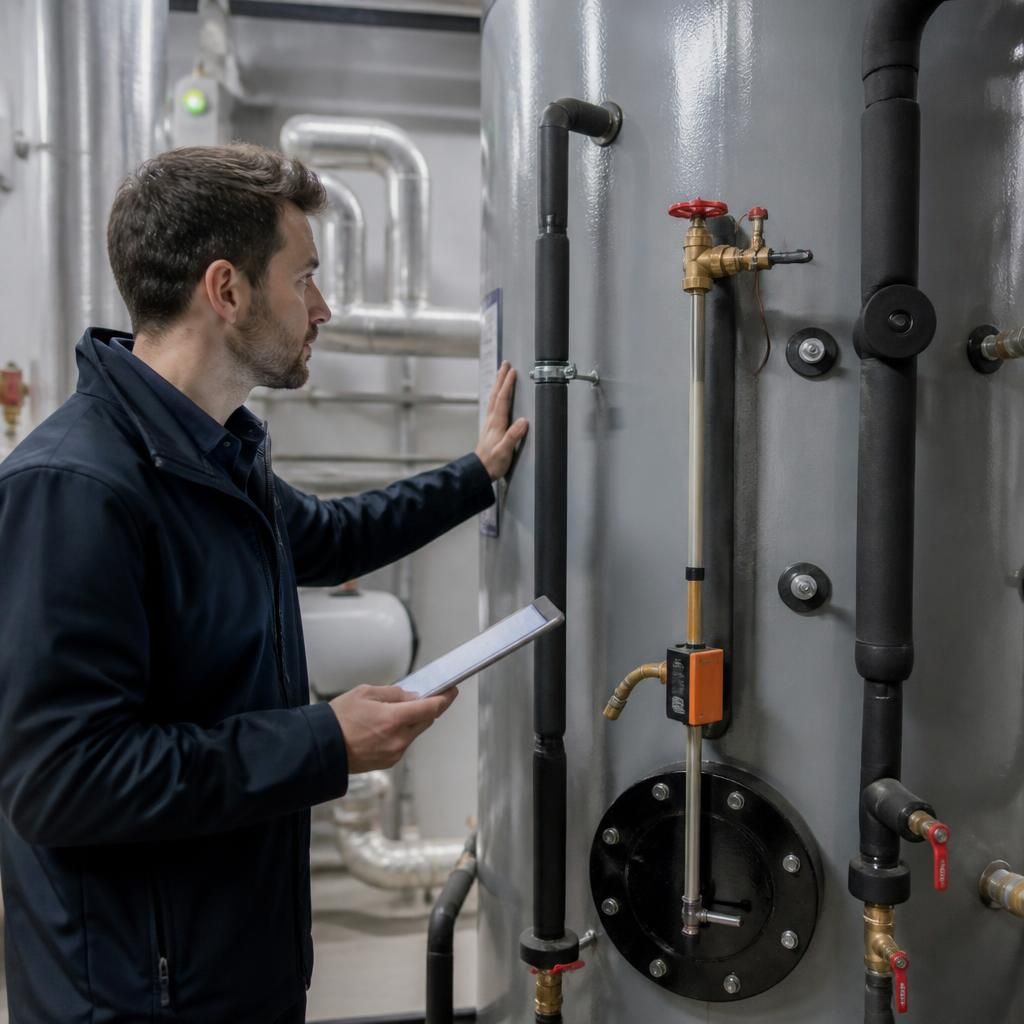
For organisations managing more than one premises, the most suitable approach may be a tiered assessment programme rather than one identical assessment for every site. Each building should be considered on its own water system, use, occupancy and management arrangements, while a consistent reporting structure makes findings easier to compare and oversee.
This approach allows a simpler assessment for genuinely straightforward premises and a more detailed assessment where system complexity or exposure consequences justify it. The organisation should retain a clear rationale for the level selected at each site, so changes in building use, equipment or risk information can trigger a review rather than leaving an unsuitable assessment in place.
Discuss the right water hygiene risk assessment for your organisation
Discuss your organisation’s water systems, occupancy and management arrangements with Blue Fish Water Management Ltd to determine the most appropriate risk assessment approach. Contact the team to arrange an informed review of your requirements.