
When is a detailed water hygiene risk assessment necessary?
A detailed water hygiene risk assessment is necessary when a water system is complex, widely distributed, poorly documented, undergoing significant change or associated with increased exposure to Legionella, including where vulnerable people may be affected. It examines the system, management controls, usage, maintenance and sampling requirements in depth so that proportionate remedial actions and ongoing monitoring can be specified.

A detailed water hygiene risk assessment is a structured investigation used when a high-level review cannot provide enough reliable information to judge how a water system is designed, operated and controlled. It combines documentary checks with physical inspection, discussions with responsible personnel and, where justified, technical measurements or sampling. Its purpose is to establish the actual risk profile and define controls that are suitable for the system rather than relying on assumptions.
Further investigation is generally appropriate where the water installation contains several interacting components or where the route from incoming supply to point of use is difficult to establish. Examples may include multiple storage cisterns, hot-water generation and return arrangements, thermostatic mixing valves, secondary circulation, little-used outlets, booster sets, showers, specialist equipment and sections that have been altered over time. These features can affect temperature control, turnover, stagnation and access for cleaning or inspection.
A detailed assessment may also be needed where responsibility is divided between a landlord, managing agent, facilities team, occupier or maintenance contractor. In such circumstances, the assessment should clarify who controls each part of the system, who receives monitoring results, who authorises remedial work and how faults are escalated. Unclear ownership can leave important tasks undocumented even when individual parties believe that appropriate arrangements are in place.
Other indicators include:
- water-system drawings that are incomplete, inconsistent with the installation or unavailable;
- changes in occupancy, building use or operating procedures that affect water demand;
- repeated temperature failures, unexplained sampling results or recurring maintenance issues;
- outlets or plant that cannot be safely accessed for inspection, flushing or cleaning;
- evidence that written control schemes do not reflect what staff or contractors actually do;
- planned refurbishment, replacement of plant, recommissioning or a return to use after prolonged closure; and
- questions about whether existing monitoring frequencies and sampling locations provide meaningful evidence of control.
A competent assessor will normally begin by reviewing available records, including previous assessments, schematic drawings, asset registers, cleaning certificates, temperature logs, sampling reports, maintenance information and records of remedial action. The physical survey then tests those records against the installation. This may involve tracing pipework, identifying outlets and storage vessels, checking access arrangements, observing operational practices and taking relevant measurements. The assessment should distinguish confirmed findings from information that remains uncertain and should explain the significance of each deficiency.
The resulting report should give the dutyholder a usable basis for management. It should identify risk sources, prioritise actions, assign responsibility, state when work or verification is required and specify the records needed to demonstrate completion. Where sampling is recommended, the rationale should be clear: a laboratory result is most useful when the sampling location, timing and interpretation relate to a defined risk or control question. Sampling alone does not replace examination of the system and its management.
Detailed assessment is not automatically the same as extensive testing or a long report. The level of investigation should be proportionate to the complexity and consequences of the risks found. A straightforward installation with reliable records, clear ownership and demonstrably effective controls may be adequately addressed through a suitable routine assessment. By contrast, uncertainty, conflicting evidence or unresolved control failures justify a deeper review even if the system appears relatively small.
The assessment should be revisited when the system, building use, responsible personnel or control arrangements change, and after significant remedial work. It should also be reviewed when monitoring identifies a pattern that the existing assessment does not explain. Water hygiene risk assessments are therefore working management documents: their value depends on being accurate, understood by relevant personnel and reflected in day-to-day control procedures.
Organisations that are unsure whether their existing review is sufficiently detailed can compare it with the installation itself. If it does not clearly describe the system boundaries, responsible roles, risk-relevant assets, control measures, verification arrangements and actions arising from deficiencies, a more detailed assessment is likely to be appropriate. Specialist water hygiene advice can help determine the necessary scope without commissioning work that is disproportionate to the actual risk.
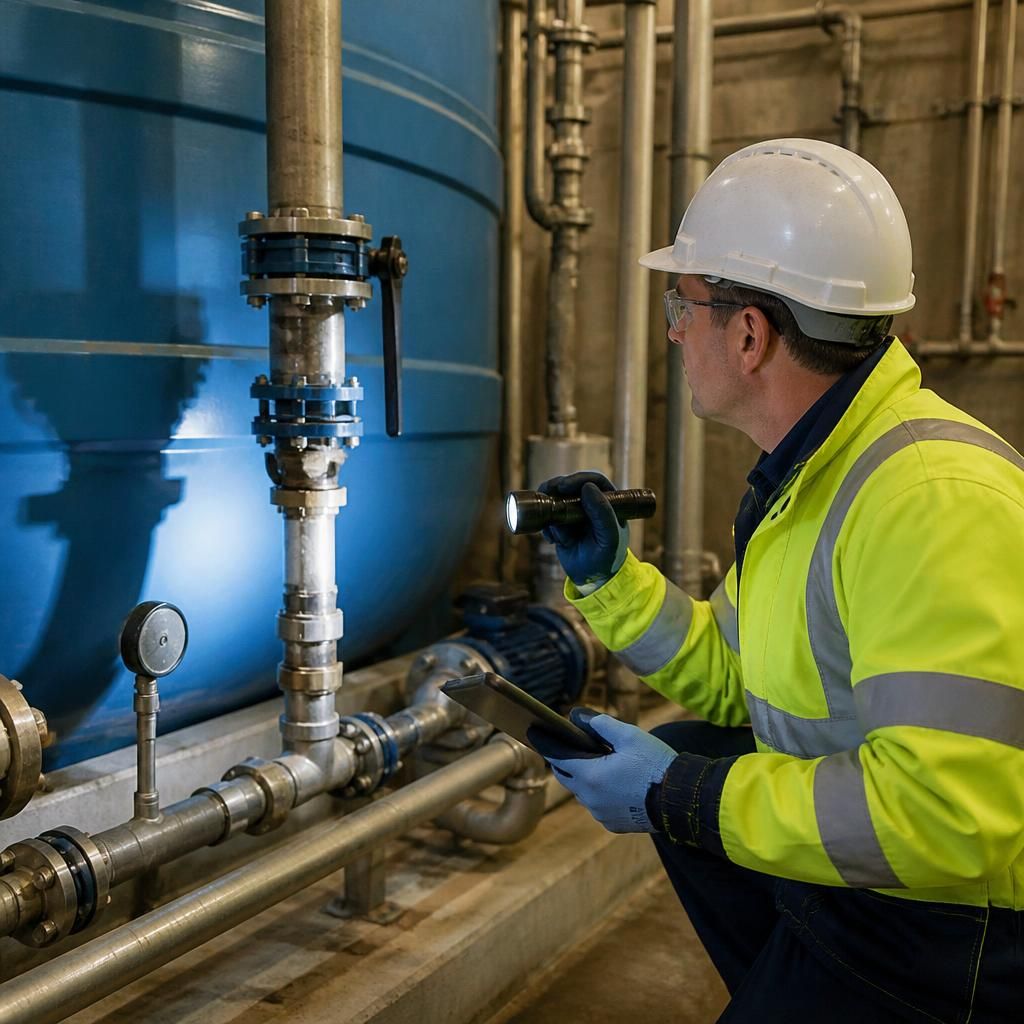
A suspected or confirmed case of legionellosis associated with a premises is a clear reason to commission a detailed water hygiene risk assessment, even where routine monitoring records appear satisfactory. The assessment should examine whether the water system, its operation or its control measures could have permitted exposure, while recognising that a positive finding does not by itself establish the source of infection.
The review should preserve and examine relevant temperature logs, sampling results, maintenance records, cleaning certificates and remedial-work records. It should then test those records against the installation, paying particular attention to areas that may have been missed by routine checks, such as infrequently used outlets, storage vessels, circulation arrangements and access restrictions. Any investigation should sit alongside advice from the relevant public health or occupational health professionals rather than replace it.
Discuss whether you need a detailed water hygiene risk assessment
If you are unsure whether your current assessment is sufficiently detailed for your organisation, discuss the required scope with Blue Fish Water Management Ltd. Their specialists can help you identify the appropriate next step for your water system.