
When should businesses arrange repeat legionella water testing?
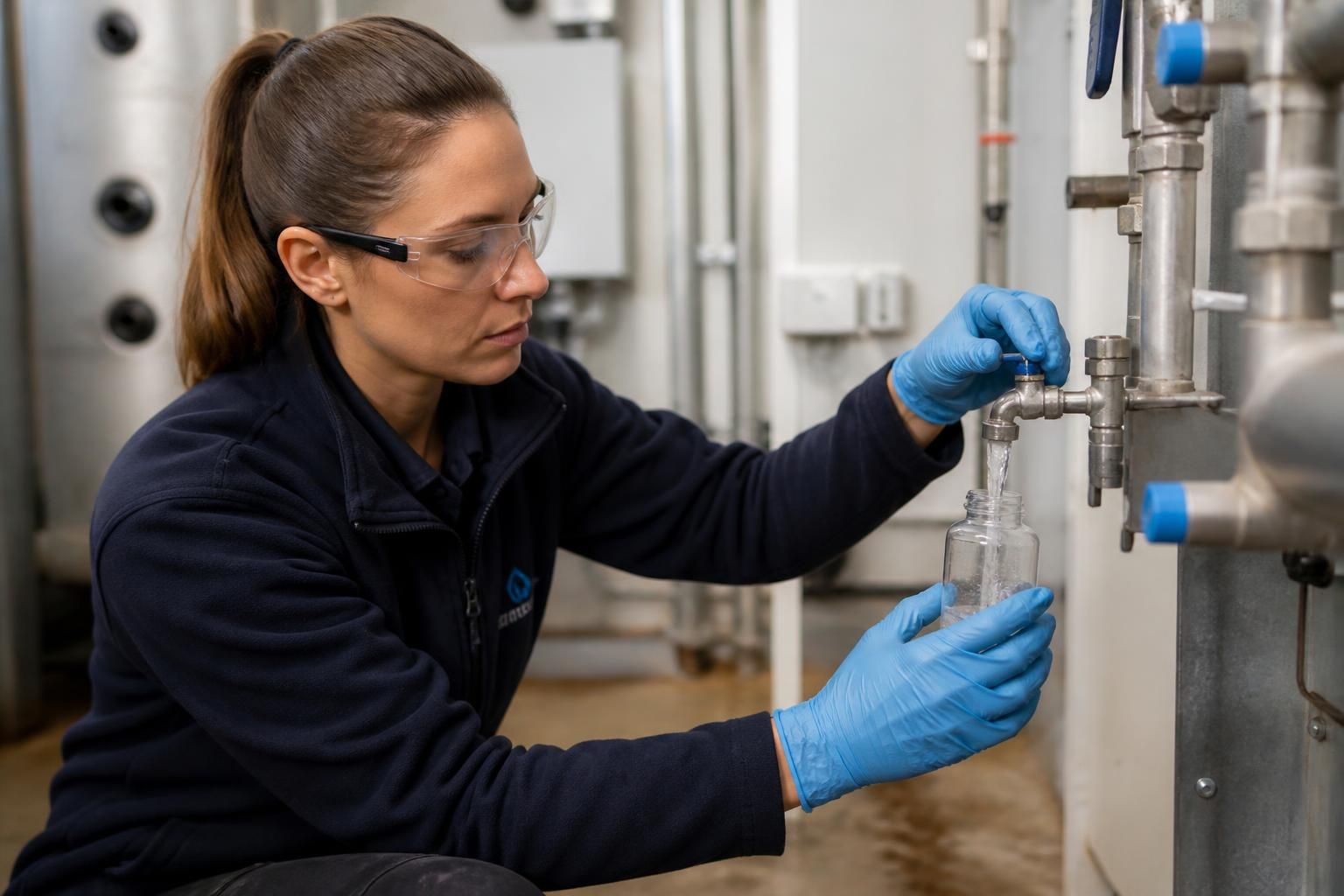
Businesses should arrange repeat legionella water testing according to their written risk assessment and control scheme. The appropriate interval depends on the type and complexity of the water system, the people exposed, previous results, the effectiveness of control measures and any relevant sector guidance. Testing should support a wider water safety programme; it should not be used as a substitute for temperature control, cleaning, disinfection and routine monitoring.
For many premises, routine checks of control conditions provide the main ongoing evidence that the system is being managed properly. These checks can include hot and cold water temperatures, the condition of storage tanks, the operation of thermostatic mixing valves, flushing of little-used outlets and general cleanliness. Microbiological sampling is then scheduled where the risk assessment identifies a need for it, rather than automatically treating every negative sample as proof that further testing is unnecessary.
A written sampling plan should specify:
- which outlets, tanks, calorifiers and other system components are to be sampled;
- how often each location is reviewed or sampled;
- which people are responsible for collecting samples and reviewing results;
- the laboratory method and reporting arrangements; and
- the action required if a result is unsatisfactory or cannot be interpreted confidently.
Sampling points should be representative of the system’s risk. They may include sentinel outlets, low-use outlets, areas with poor circulation, storage vessels and locations serving people who may be particularly vulnerable to legionnaires’ disease. Repeating a sample from one convenient tap alone may provide limited assurance if other parts of the system are not included in the sampling plan.
Additional testing is commonly considered in the following circumstances:
- after a positive or otherwise concerning legionella result, as part of the investigation and verification process;
- after cleaning, disinfection, tank work, pipework alterations or other remedial action;
- when temperatures, flushing records or other monitoring show that control has deteriorated;
- following a change in occupancy, use or operating conditions that alters exposure or system behaviour;
- where outlets have remained unused or the system has been partially closed; and
- when a healthcare, care, accommodation or other higher-risk setting is subject to additional sector-specific requirements.
After remedial work, the follow-up schedule should be agreed before the work is completed. A sample taken too soon may not demonstrate stable control, while waiting too long could leave a known problem unresolved. The responsible person should consider whether the system has been fully returned to its intended operating condition, whether all affected areas have been included and whether further sampling is needed to confirm that corrective measures have worked.
A repeat sample should also be assessed alongside operational records. A result can be affected by recent flushing, changes in water use, sampling technique, transport conditions and the location selected. For that reason, a laboratory result should be reviewed with temperature records, disinfection records, maintenance information and the current risk assessment. Where results are unexpected or inconsistent, the cause should be investigated rather than relying on repeated samples without changing the underlying controls.
UK businesses should align their arrangements with the Health and Safety Executive’s guidance, including the approved code of practice and guidance on the control of legionella bacteria in water systems. Other requirements may apply in particular sectors, especially healthcare and residential care. The responsible person should document the reason for the chosen interval and revise it when the system, occupants, results or control measures change.
In practice, the most defensible approach is a documented, risk-based programme that combines routine system monitoring with laboratory testing at justified intervals. An experienced water hygiene provider or UKAS-accredited laboratory can help review the sampling plan, select representative locations and explain whether the results require investigation, remedial action or continued monitoring.
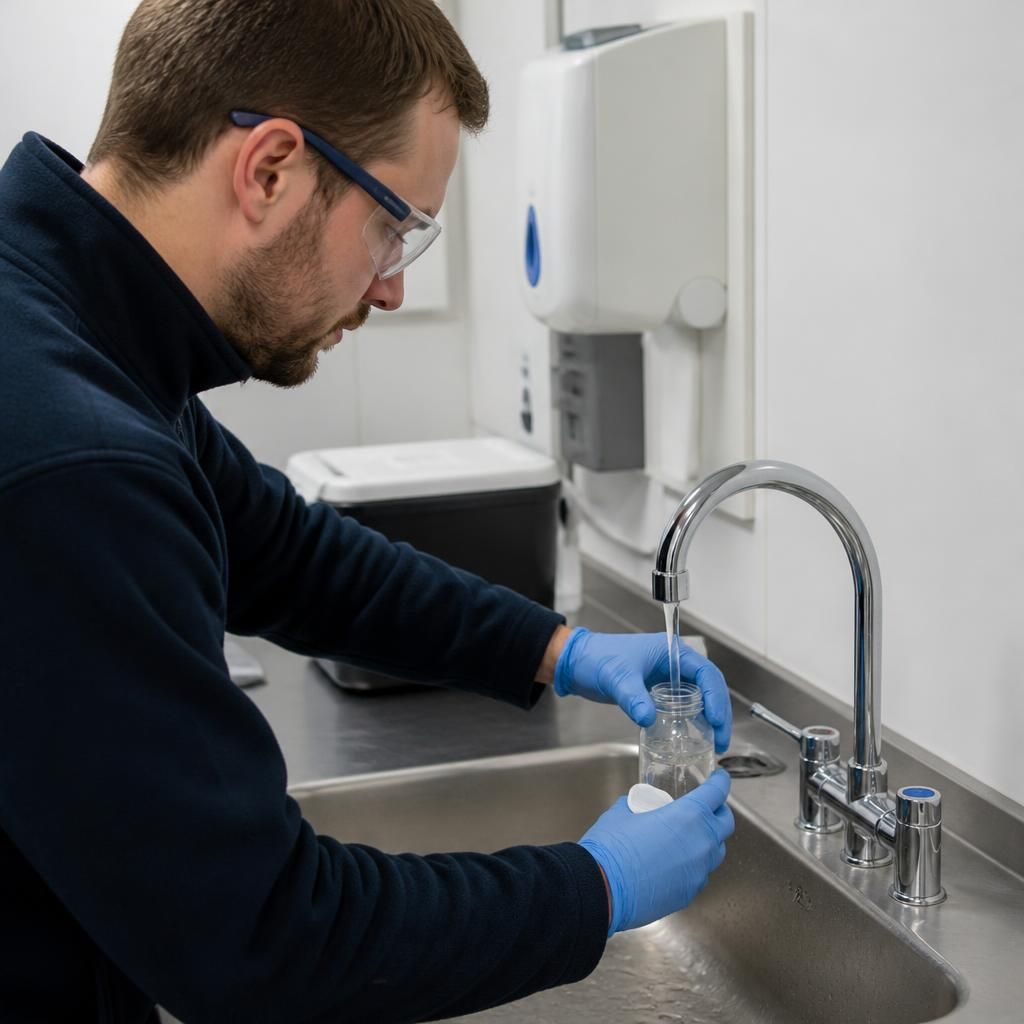
Each repeat sample should have a recorded purpose: routine surveillance, investigation of an unexpected result or verification following corrective work. This distinction helps the responsible person judge what the result can demonstrate. A verification sample may show whether an affected part of the system has improved, but it does not by itself establish that every part of the water system remains under control.
The sampling record should link the result to the outlet or system component tested, the operating conditions at the time, any recent intervention and the decision that follows. Keeping this context with the laboratory report makes later reviews more reliable and helps prevent an isolated repeat sample from being treated as evidence that the wider monitoring programme can be reduced.
Discuss your repeat legionella water testing requirements
Discuss your repeat legionella water testing requirements with Blue Fish Water Management Ltd to review whether your current sampling arrangements remain appropriate for your water system and risk profile.