
Who is responsible for acting on water supply check findings?
Responsibility normally rests with the duty holder or responsible person who controls the premises and its water systems, such as an employer, building owner, landlord or facilities manager. They must review the findings, arrange suitable corrective work, address any urgent risks and retain evidence that actions have been completed and ongoing controls are maintained.

Accountability for acting on water supply check findings follows control of the premises, the water systems and the people who may be exposed to them. The organisation that commissions a check may not be the only party responsible for the response. Responsibility should therefore be confirmed against the management structure, lease arrangements, work activities and contracts in place.
The main duty holder is usually the employer, building owner, landlord, occupier or other organisation controlling the premises. This party should ensure that findings are understood, risks are assessed in context and appropriate actions are assigned to named people. Where premises are shared, responsibility may be divided between several duty holders rather than resting with one organisation.
A facilities manager, estates manager or building services lead may carry out the practical coordination, but delegated responsibility does not remove the controlling organisation’s need to provide suitable oversight. Senior management should make sure that the person coordinating water safety has sufficient authority, time, information and resources to arrange remedial work and verify completion.
Typical responsibilities are divided as follows:
- Owners and landlords: address risks within areas and systems under their control, maintain relevant assets and coordinate with occupiers where responsibilities are shared.
- Employers and occupiers: manage risks arising from the water systems and activities under their control, including access to plant rooms, outlets and records.
- Facilities or property managers: coordinate inspections, work orders, access, documentation and communication between owners, tenants and contractors.
- Water hygiene advisers and contractors: provide competent technical assessment, recommendations, testing or remedial work within the agreed scope. They should report limitations and significant findings clearly, but their appointment does not automatically transfer the client’s legal duties.
- Employees and other users: follow relevant procedures, report defects and avoid interfering with control measures. They do not normally own the overall water safety management process.
Where a check identifies a potentially serious issue, the responsible organisation should not wait for the next routine review before deciding what to do. It should establish whether immediate precautions are needed, such as restricting access to an outlet, stopping use of affected equipment or arranging further investigation. The appropriate response depends on the finding, the type of system, the likelihood of exposure and the people who may be affected.
Findings should be converted into an action plan rather than left as general recommendations. Each action should identify:
- the specific defect, deviation or risk;
- the corrective measure required;
- the person or organisation responsible for completing it;
- the target date and any interim control;
- the evidence needed to demonstrate completion; and
- the method for checking that the action has been effective.
Technical decisions should be made by a person with suitable competence. For example, a persistent temperature failure, inadequate storage arrangement or contamination concern may require input from a suitably qualified water hygiene professional, engineer or other specialist. A manager should not close an action merely because a contractor has attended site; completion should be supported by appropriate records, test results, photographs, commissioning information or a follow-up inspection, depending on the work involved.
Shared buildings require particular care. A lease may allocate day-to-day maintenance to a tenant while leaving responsibility for communal tanks, risers or incoming supplies with the landlord or managing agent. The written agreement should be checked against the physical system and actual control arrangements. Gaps can arise where each party assumes that another is dealing with a finding. A written responsibility matrix, regular communication and shared access to relevant records can help prevent this.
Water supply check findings should also feed into the wider legionella control scheme where they affect conditions that support bacterial growth or exposure. This may mean updating the risk assessment, written control scheme, monitoring frequencies, asset information, training arrangements or maintenance programme. A change to the system or its use can create new responsibilities and may require the findings to be reviewed by the competent person.
Records should show not only what was discovered, but how the organisation decided what to do and whether the decision was completed. Useful evidence includes the original check report, management responses, risk assessments, work instructions, contractor reports, laboratory results where relevant, approval records and follow-up verification. These records help demonstrate that findings have been considered systematically and support continuity when personnel or contractors change.
In practice, the accountable organisation remains responsible for ensuring that risks are controlled, while competent advisers and contractors provide specialist support. Clear allocation, prompt escalation of significant findings and documented verification are the central safeguards against water supply check results being recorded but not acted upon.
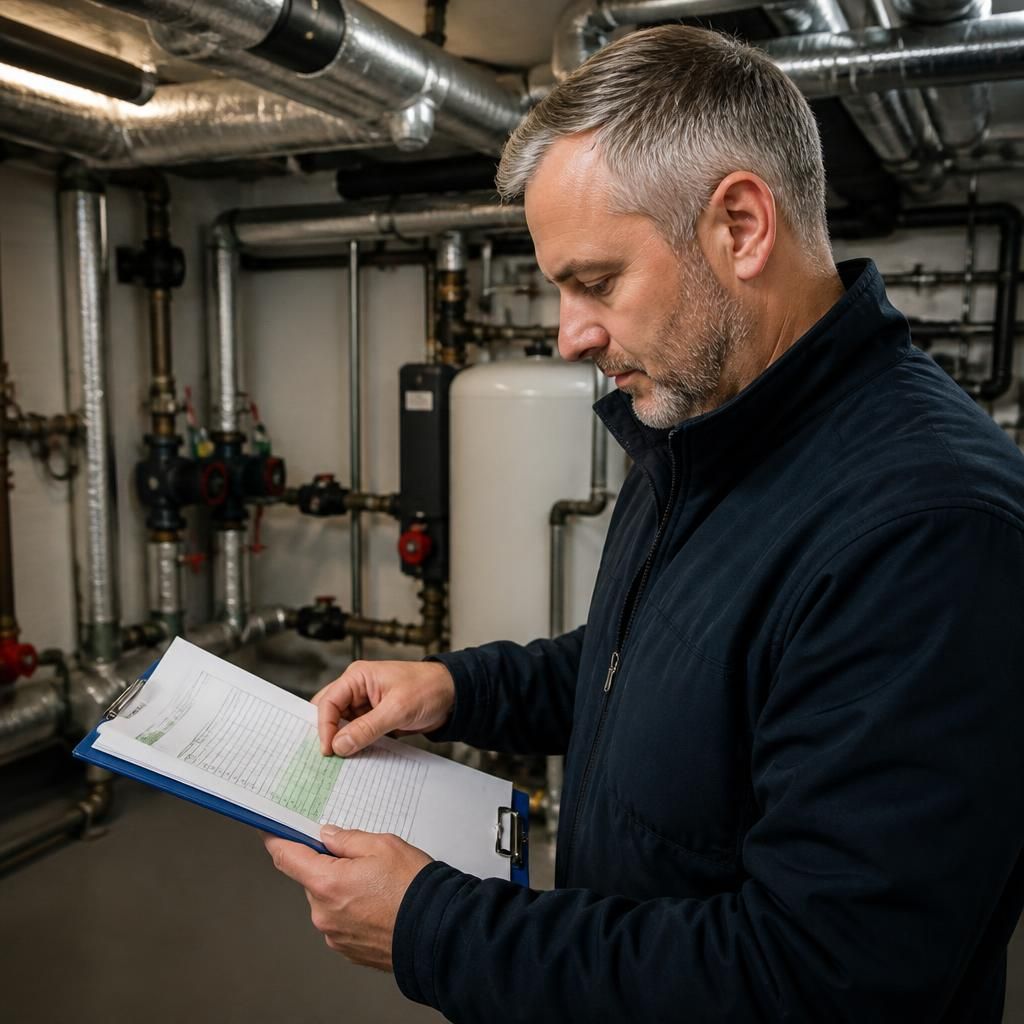
The person assigned to complete a corrective action is not necessarily the person who decides whether the finding has been adequately resolved. Effective governance separates action ownership from verification: the action owner arranges the work, while a suitably competent manager or adviser reviews the evidence and confirms that the underlying risk has been addressed. If the evidence is incomplete, the action should remain open and be escalated to the duty holder for a further decision.
Discuss your water supply check findings
If you need help interpreting water supply check findings or deciding what further action is appropriate, discuss the report with Blue Fish Water Management Ltd. Our team can provide practical guidance on water hygiene, legionella control and any required remedial measures.