
Which evidence should a water hygiene management service provide?
A water hygiene management service should provide a clear audit trail, including the legionella risk assessment, monitoring and inspection records, water sampling results from a UKAS-accredited laboratory, and documented remedial actions. It should also show who completed each task, when it was completed, what was found, and how outstanding risks or corrective measures were verified and closed.
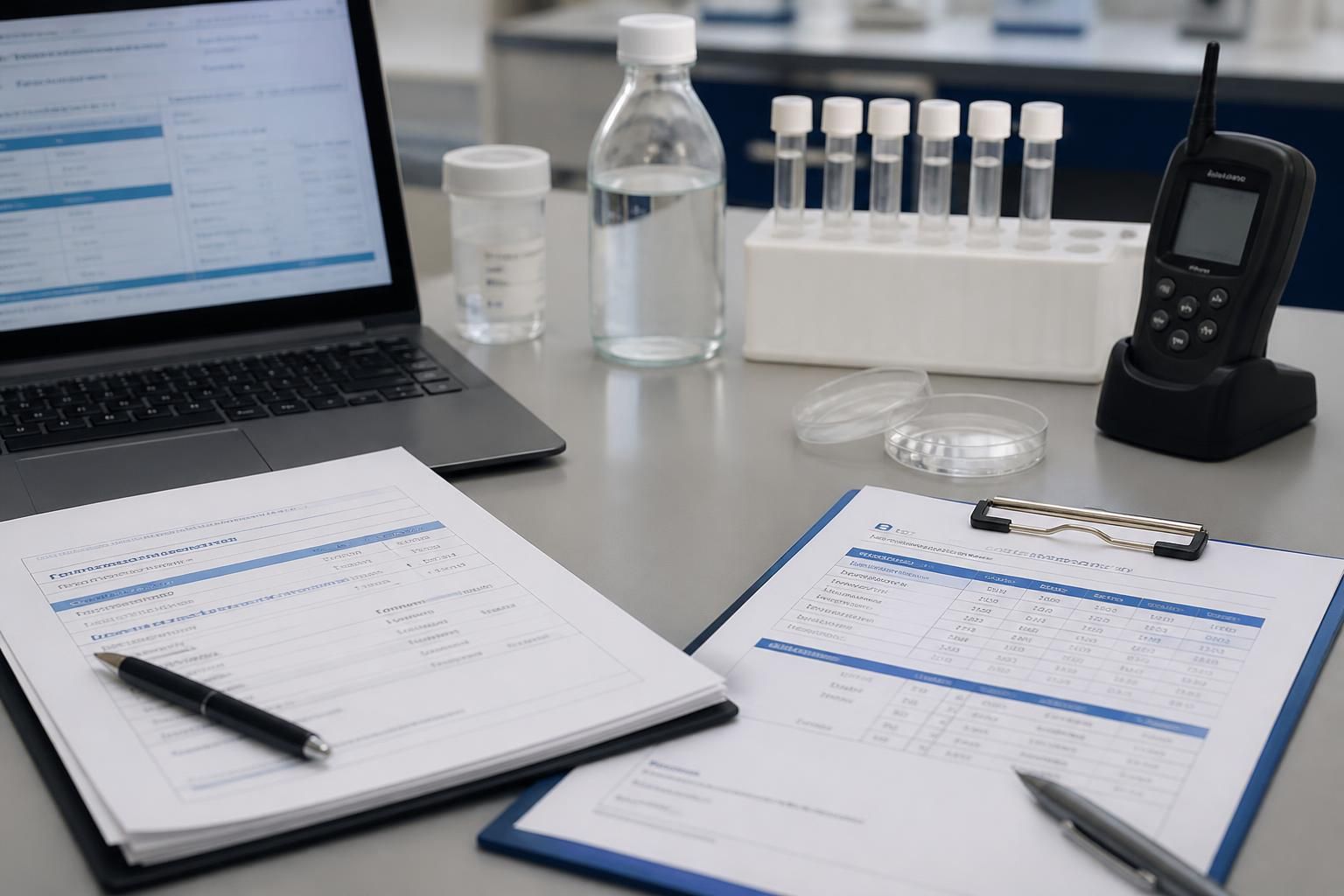
A water hygiene management service should provide evidence that its advice, control measures and decisions are based on the actual water systems in scope. The evidence should be organised, dated and sufficiently detailed for a responsible person, auditor or enforcing authority to understand the condition of the system, the risks identified, the controls applied and the basis for any further action.
1. A defined scope and method
The service documentation should identify the buildings, water systems, outlets, plant and areas covered. It should make clear whether the work relates to hot and cold water services, stored water, process systems, evaporative equipment or other relevant sources of exposure. A description of the inspection and assessment method is also useful, particularly where access was restricted or parts of the system could not be examined.
Where information has been supplied by the client rather than verified on site, this distinction should be recorded. Good evidence separates observed conditions from assumptions, historical information and recommendations. It should also explain any limitations that could affect the reliability of the conclusions.
2. A current understanding of the water system
Records should show that the provider understands how water moves through the premises. Depending on the system, this may include schematic drawings, asset registers, photographs, outlet schedules, storage arrangements, plant details and records of infrequently used areas. The documentation should identify features that can affect legionella risk, such as redundant pipework, low-use outlets, dead legs, storage tanks, temperature control points and areas where access for maintenance is difficult.
This information allows later checks to be compared with the correct asset and location. It also helps the client recognise when a refurbishment, change of occupancy, alteration to plant or change in usage may invalidate existing evidence.
3. Evidence that control measures are operating as intended
Rather than simply stating that controls exist, a suitable service should show how their effectiveness is checked. Depending on the system, this may include:
- temperature profiles taken at relevant parts of the system;
- inspection findings for tanks, calorifiers, outlets and associated components;
- cleaning, disinfection or flushing records where those measures have been required;
- checks on dosing equipment, filters, strainers or other treatment systems;
- records of outlet usage or flushing for areas that are not routinely occupied; and
- maintenance information relevant to valves, pumps, thermostatic devices and other water-system assets.
Each record should identify the location or asset examined and provide enough context to determine whether the result is within the organisation’s defined control parameters. Isolated readings are less useful than a consistent record showing normal performance, deterioration or recurring exceptions.
4. Complete laboratory and sampling documentation
Where water samples have been taken, the evidence should extend beyond a summary table. The report should normally show the sample point, collection date, sample type, test requested, laboratory reference and result. It should also explain any result that requires interpretation, including whether additional investigation, repeat sampling or control measures are appropriate.
Sample identification and handling details are important because they support confidence in the result. A clear link between the sample reference, the outlet and the relevant system record prevents findings from being misapplied to the wrong location. The provider should explain how results are communicated and recorded when they are inconclusive, outside the expected range or inconsistent with other evidence.
5. Clear records of decisions and risk prioritisation
Evidence should show why particular actions have been recommended and how they have been prioritised. A useful action plan distinguishes between an immediate control requirement, a planned improvement and a longer-term system modification. It should state the risk or deficiency involved, the proposed action, the person or organisation responsible and the evidence needed to demonstrate completion.
Where a recommendation is not adopted, the management record should capture the reason, any interim control and the date or event that will trigger reconsideration. This is especially important where physical alterations are costly, access is restricted or a permanent solution depends on planned building works.
6. Competence and accountability records
The client should be able to establish who carried out each type of work and whether they were suitably competent for it. Relevant supporting evidence may include staff competency records, training information, authorisation to undertake particular tasks and details of technical review. This does not mean that every file needs a lengthy personnel dossier, but the service should not leave responsibility anonymous.
Reports should also identify who reviewed the findings and who is expected to approve or implement recommendations. Clear accountability helps prevent a report from becoming a document that is filed without its actions being managed.
7. Evidence of review, communication and follow-up
A complete management record should show how significant findings were communicated to the client’s responsible person and how follow-up was managed. Meeting notes, review records, revised action schedules and confirmation of completed works can demonstrate that information has been considered rather than merely issued.
The final evidence pack should be easy to navigate, with consistent document names, version control and a clear relationship between reports, results, actions and supporting photographs or certificates. Digital records should be protected against unauthorised alteration, while paper records should be stored so that the current version can be identified.
In practical terms, the strongest evidence is not the largest volume of paperwork. It is a coherent set of records that connects the water system, the identified hazards, the controls selected, the decisions made and the subsequent review. A provider should be able to explain gaps openly and state what they mean, rather than presenting incomplete records as proof of compliance.
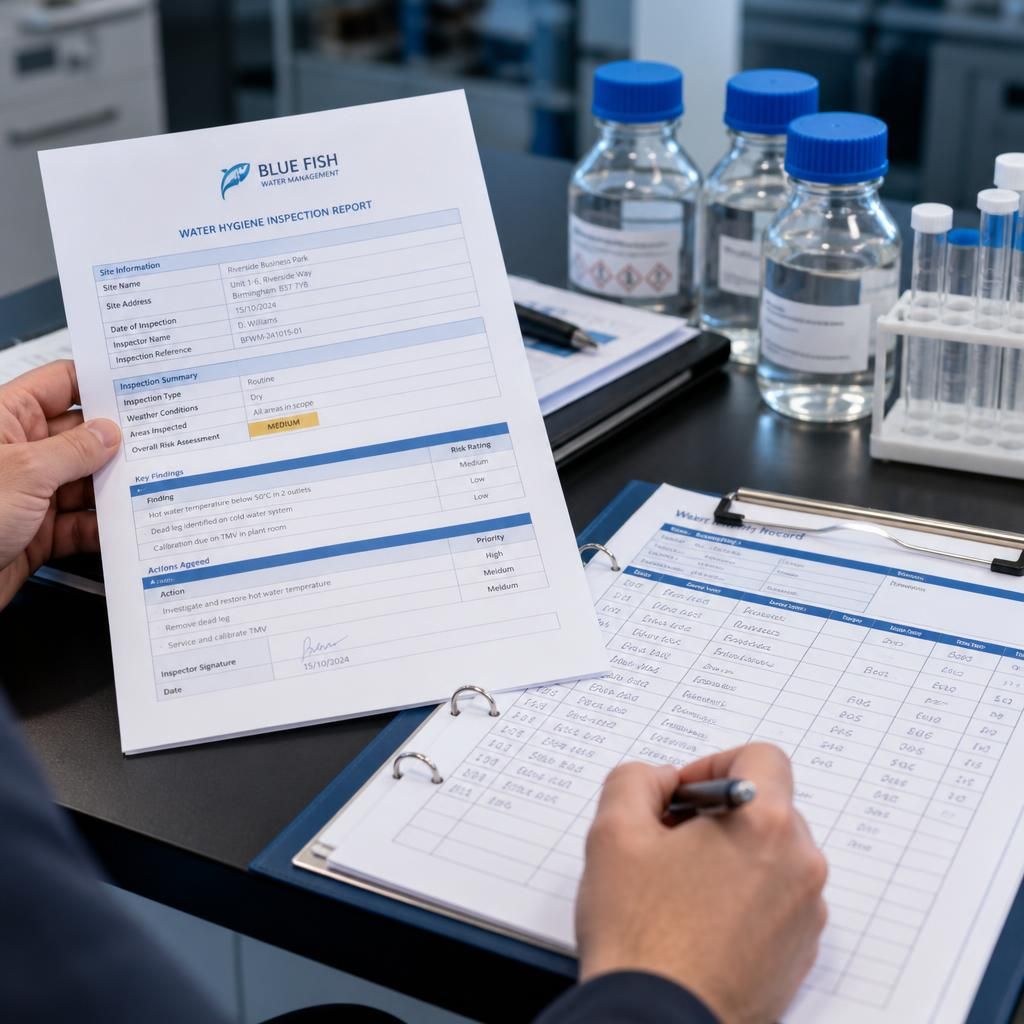
Ask us what evidence your water hygiene management service should provide
Discuss your evidence requirements with Blue Fish Water Management Ltd to establish which records and reporting arrangements are appropriate for your premises. This can help you define a practical information pack for ongoing water hygiene management and compliance review.