
When is specialist water hygiene management support necessary?
Specialist water hygiene management support is necessary when a water system presents significant legionella risk, has complex or vulnerable-user arrangements, or requires expertise beyond the responsible person’s competence. It is also appropriate after system changes, where monitoring identifies concerns, or when reliable risk assessments, testing, records and remedial controls are not in place to demonstrate compliance.

Specialist water hygiene management support is necessary when the organisation responsible for a water system cannot confidently assess its risks, specify suitable controls, interpret evidence or verify that those controls are working. The need is determined by the system, its use, the people exposed and the competence available—not simply by the size of the building or the presence of a water tank.
It is particularly important where technical judgement is required. Legionella control involves more than arranging occasional samples. A competent assessment may require an understanding of hot and cold water distribution, storage vessels, outlets, temperature control, secondary return circulation, dead legs, infrequently used outlets and points where biofilm or scale may develop. If the organisation’s responsible person cannot evaluate these features or connect them to practical control measures, external specialist input is appropriate.
Support is also needed when accountability is spread across several parties. Property owners, facilities teams, managing agents, maintenance contractors and tenants may each control part of a water system. This can create gaps over access, flushing, temperature checks, corrective work and record keeping. A specialist can help define responsibilities, establish a consistent control scheme and identify where a contractor’s work does not provide sufficient evidence that the system is being managed properly. External advice does not transfer the legal duties of the responsible person; it helps that person make and evidence informed decisions.
An independent review can be valuable when existing arrangements appear routine but are not clearly risk-based. For example, a site may have a written policy, a sampling schedule and several years of records, yet still lack a current asset description, a clear schematic, documented control limits or a process for acting on adverse results. A specialist review can test whether the arrangements reflect the actual installation and whether the selected checks are capable of detecting loss of control.
Specialist advice should be considered where results are difficult to interpret. An isolated laboratory result is not, by itself, a complete diagnosis of a water system. The significance of a result may depend on the sampling point, temperature history, system use, previous findings, remedial work and the quality of the sample. A suitably competent provider can help determine whether further investigation, targeted sampling, cleaning, disinfection, engineering work or changes to operational controls are proportionate.
Buildings with changing occupancy or complicated operating arrangements may need structured support even where no immediate concern has been identified. Examples include premises with multiple tenants, areas that are only periodically occupied, properties being brought back into use, and sites where outlets or plant are operated by different teams. The central issue is whether water use and maintenance remain predictable enough for the existing control measures to be reliable. If they are not, the management plan may need to be reassessed and supported by clearer procedures.
Support is commonly required when a business is commissioning or procuring water hygiene work and needs to distinguish between necessary controls and inappropriate routine activity. A specialist can help define the scope of a risk assessment, set sampling objectives, specify the information that contractors must provide and assess whether proposed remedial measures address the underlying cause. This is especially useful where a low-cost or generic schedule may overlook site-specific risks.
A specialist should normally provide more than a report with a risk rating. Useful support may include:
- a structured assessment of the water system and its use;
- clear identification of hazards, existing controls and residual risks;
- prioritised recommendations linked to responsible persons and timescales;
- sampling plans that explain the purpose and location of each sample;
- interpretation of results alongside operational and engineering information;
- practical procedures for temperature monitoring, flushing, cleaning and escalation; and
- auditable records showing what was checked, what was found and what action followed.
The choice between internal management and external support should be based on competence, independence and the complexity of the decision required. An organisation may be able to carry out straightforward routine checks internally if personnel are suitably trained and the system is well understood. It may still need specialist input for the initial assessment, a periodic independent review, difficult investigations or decisions involving significant remedial work.
When selecting support, the responsible person should check that the provider can explain its methodology, identify the competent individuals carrying out each task and separate factual findings from professional recommendations. For laboratory analysis, the relevant testing arrangements should be clear, including whether UKAS-accredited water testing is appropriate for the samples and purpose involved. The provider should also understand the requirements of the Health and Safety Executive’s guidance, including the principles set out in ACOP L8 and HSG274, while applying them to the actual site rather than treating them as a generic checklist.
In practical terms, specialist support is justified whenever the organisation cannot answer three questions with confidence: what could cause loss of control, how will that loss be detected, and what action will follow if it occurs? If the available information cannot support those answers, an appropriately competent water hygiene professional can provide the assessment, testing, advice and verification needed to strengthen the management arrangement.
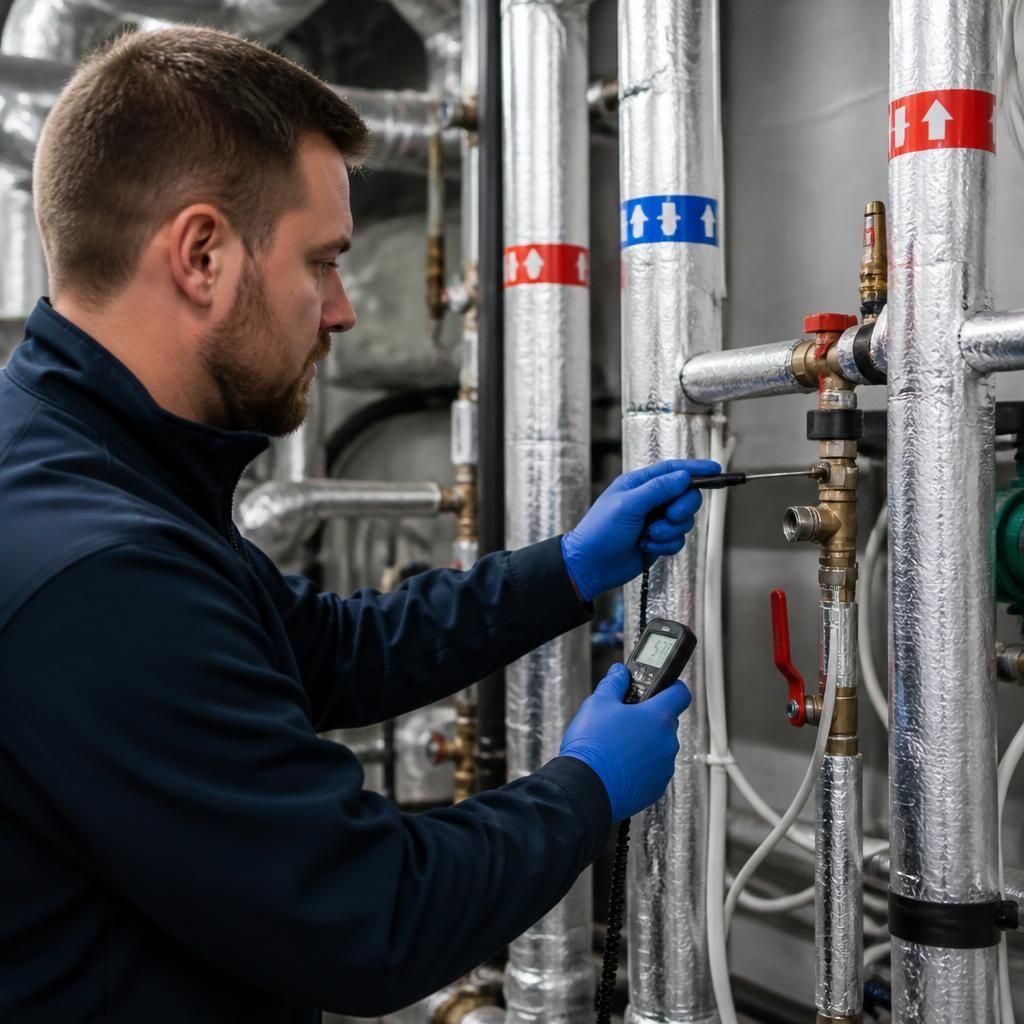
Specialist water hygiene support is necessary when a site is linked to a suspected legionella case or an unusual cluster of illness. At that point, routine monitoring may not provide enough information to establish whether the water system could have contributed to the risk. A competent specialist can help review the system history, recent maintenance, temperature records, sampling results, outlet use and any changes in occupancy or operation.
The investigation should be evidence-led rather than based on a single sample or assumption. Support may include identifying suitable sampling points, preserving relevant records, checking whether control measures were operating as intended and recommending proportionate actions while findings are assessed. The responsible organisation should also coordinate with the relevant health and safety or public health authorities where required; specialist advice supports that process but does not replace statutory reporting or medical investigation.
Discuss Whether Specialist Water Hygiene Support Is Necessary
If you are unsure whether your current arrangements provide sufficient specialist oversight, discuss your water hygiene management requirements with Blue Fish Water Management Ltd. The team can help identify the appropriate assessment, testing, monitoring or remedial support for your organisation.