
Which remedial action suits each water system condition?
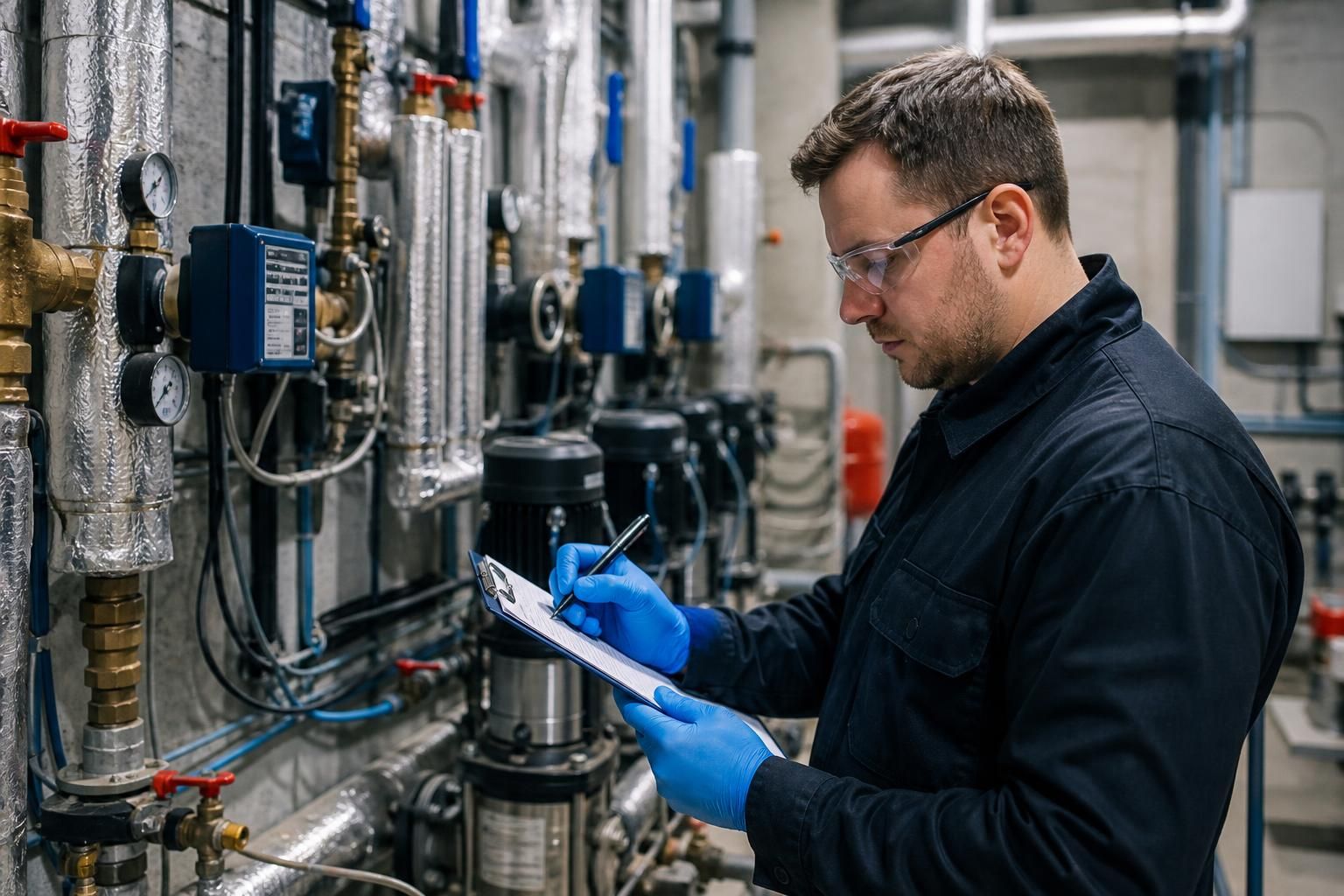
The suitable remedial action is determined by the specific defect or hazard affecting the water system. A confirmed microbiological concern may require cleaning and disinfection, whereas persistent low temperatures, stagnation, scale, corrosion or defective components usually need control changes, repair or redesign. The correct response addresses the underlying cause as well as the immediate water hygiene risk.
Where microbiological contamination is identified
Evidence of elevated bacterial counts, including legionella, should be considered alongside the system design, operating conditions, sampling locations and recent maintenance history. Cleaning and disinfection may be appropriate where contamination is associated with biofilm, sediment or a localised hygiene failure. The method must be suitable for the materials and equipment involved, and the system should be flushed and checked afterwards.
Disinfection alone is less likely to provide a lasting solution where contamination is being sustained by low temperatures, poor circulation, dead legs, infrequently used outlets or deposits within the system. In those circumstances, disinfection may form part of the initial response, followed by changes to temperature control, outlet use, circulation or system configuration.
Where hot water is not reaching the required temperature
Low hot-water temperatures can create conditions in which legionella may multiply, particularly where water remains within the system for prolonged periods. The first step is to establish whether the issue results from a faulty heater, inadequate storage temperature, poor secondary circulation, incorrectly set controls, heat loss or excessive demand.
A temperature-control remedy may include adjusting or repairing the heat source, balancing secondary return circuits, insulating pipework, correcting sensor or control faults, or reviewing storage and distribution arrangements. If the system has been contaminated as a consequence, cleaning and disinfection may also be necessary. Simply raising a temperature without checking scalding controls, system capability and outlet management does not resolve every underlying defect.
Where cold water is becoming too warm
Cold-water temperatures that rise above the intended operating range may indicate heat transfer from hot services, inadequate insulation, poor pipe routing or low flow. Remedial work can include separating hot and cold pipework, improving insulation, correcting routing defects and removing unnecessary lengths of pipe.
If warm conditions have persisted or sampling identifies contamination, the remedial plan should address both the thermal cause and the microbiological consequence. The system should then be monitored to confirm that the revised arrangement is maintaining suitable conditions.
Where stagnation or low use is the main problem
Stagnant water can occur in vacant areas, little-used outlets, oversized storage arrangements, redundant branches and pipework serving spaces with changing occupancy. Flushing may provide short-term control, but it is not always the most suitable permanent remedy if the branch is no longer needed.
Where an outlet or branch has no operational purpose, removing it may reduce the opportunity for stagnation. Where it remains necessary, a planned flushing regime, revised use pattern or modification to the distribution arrangement may be more suitable. Any change should consider the effect on other outlets and should be recorded within the water hygiene management arrangements.
Where scale, sediment or biofilm is present
Scale and sediment can restrict flow, reduce heat transfer and provide surfaces where microorganisms may persist. Visible deposits, blocked strainers, dirty tanks and fouled components generally call for physical cleaning or component treatment before the system is disinfected or returned to normal operation.
The appropriate action depends on the location and severity of the deposit. A storage tank may require cleaning and disinfection, while a blocked valve, shower fitting or strainers may need removal, cleaning or replacement. If deposits are recurring, the investigation should consider water quality, temperature performance, maintenance practices and the condition of the equipment rather than treating each occurrence as an isolated cleaning task.
Where a component is damaged or failing
Leaks, defective valves, failed thermostatic mixing valves, damaged storage tanks, faulty pumps and ineffective controls require repair or replacement of the affected component. Disinfection will not correct a mechanical failure, and replacing a component without managing contamination may leave a hygiene risk elsewhere in the system.
Component selection should take account of compatibility with the existing installation, the temperatures and pressures involved, access for future maintenance and the possibility of creating additional low-flow areas. Following repair, relevant outlets and connected sections may need flushing, testing or disinfection before being placed back into service.
Where water quality is poor
Changes in colour, taste, odour, turbidity or other water-quality characteristics may indicate sediment, corrosion, ingress, treatment issues or a deterioration in storage and distribution equipment. The remedial action should be based on suitable testing and inspection rather than appearance alone.
Possible measures include cleaning tanks, removing accumulated sediment, repairing corrosion, replacing unsuitable materials, improving filtration or correcting an identified source of ingress. Chemical treatment should only be used where it is appropriate to the water-quality issue and compatible with the system. A laboratory result should be interpreted in context with operational findings, since a single sample may not explain a system-wide problem.
Where corrosion or repeated leaks are found
Corrosion can weaken pipework, introduce debris and create rough internal surfaces that make cleaning and control more difficult. Localised damage may be addressed through repair or replacement of the affected section. Widespread or recurring corrosion may require a broader review of materials, water chemistry, flow conditions and the age or design of the installation.
Repeated leaks should not be managed solely through patch repairs if they indicate a deteriorating system. A planned replacement of vulnerable sections may provide a more appropriate control, particularly where continued failure would compromise water quality or make effective cleaning impractical.
Where a system is poorly designed or no longer suited to use
A system may remain difficult to control because of excessive pipe lengths, redundant storage, inaccessible sections, inadequate circulation or changes in how a building is occupied. In these cases, targeted alterations can be more proportionate than replacing the entire installation. Examples include removing redundant branches, reconfiguring circulation, relocating equipment or separating incompatible uses.
Full or partial replacement becomes more relevant where defects are widespread, the system cannot reliably maintain suitable operating conditions, or repair would leave inaccessible areas and recurring hygiene problems. The decision should consider the condition of the existing assets, the required standard of control, the effect on business operations and the practicality of maintaining the altered system.
How to confirm that the chosen action has worked
Remedial work should have a defined completion check. Depending on the issue, this may involve confirming temperatures and flow, inspecting cleaned equipment, checking that outlets are receiving water, reviewing control settings, undertaking microbiological sampling or carrying out UKAS-accredited water testing. Results should be compared with the original findings and assessed against the intended control measure.
Records should identify the condition found, the reason for selecting the remedy, the work completed, any restrictions or follow-up actions and the person responsible for verification. If results remain unsatisfactory, further investigation may be needed rather than repeating the same intervention.
Blue Fish Water Management applies this condition-based approach through legionella risk assessments, water testing, compliance audits, system monitoring and remedial works. This enables commercial and other managed premises to link the chosen intervention to the actual cause, the level of risk and the way the water system is operated.
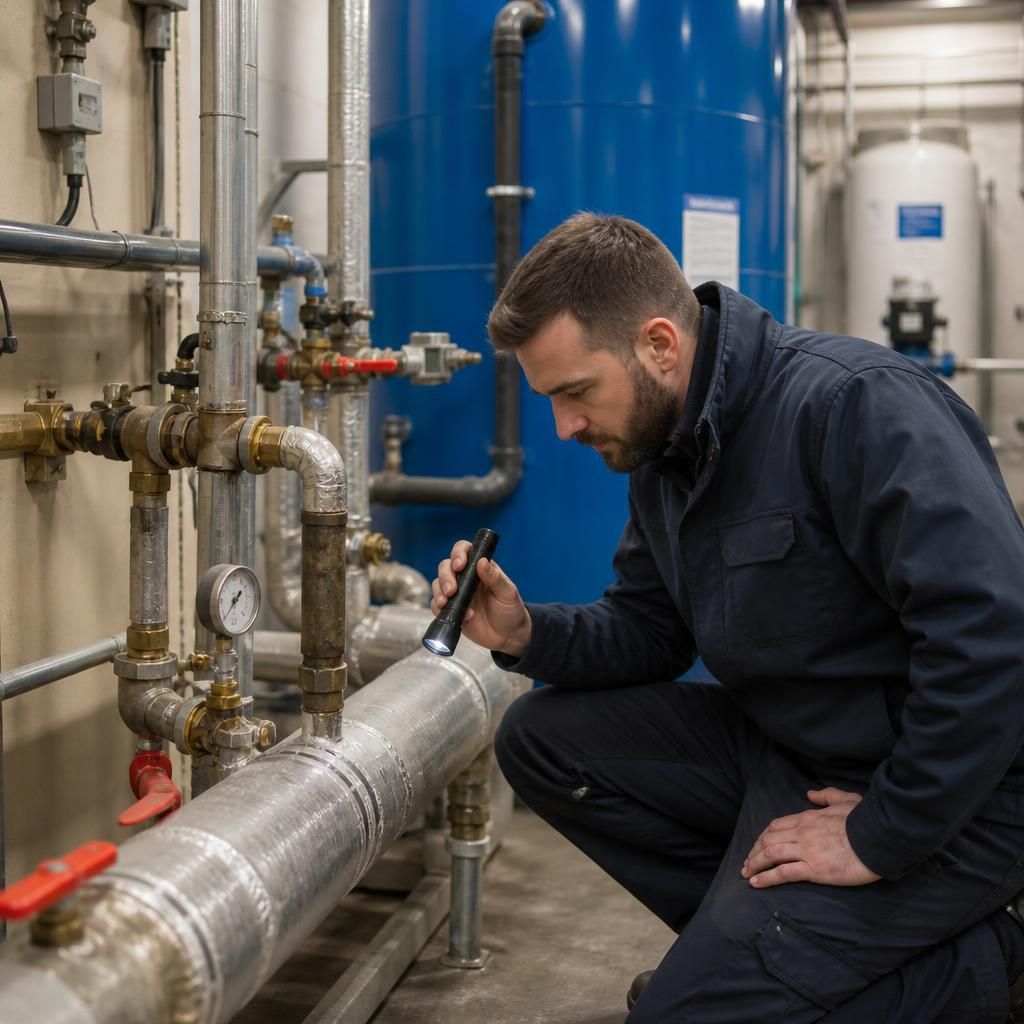
Remedial action should distinguish between immediate control and the permanent corrective measure. For example, restricting access to an affected outlet, increasing monitoring or applying a suitable interim treatment may reduce exposure while the underlying defect is investigated. These temporary measures should have a clear review point and must not replace work needed to correct the system condition.
The permanent remedy should be selected using evidence from inspection, test results, operating records and the system’s intended use. This helps avoid disproportionate work, such as replacing a serviceable installation when a defined control alteration is adequate, while also preventing repeated short-term fixes where the condition indicates a deeper design or asset problem.
Discuss the Right Remedial Action for Your Water System
Discuss your water system findings with Blue Fish Water Management to identify a proportionate remedial action based on the condition, risk and operational requirements of the system.