
How are water hygiene remedial actions prioritised after system findings?
Water hygiene remedial actions are prioritised by assessing the severity and extent of the system finding, the potential exposure to legionella, the people affected and the consequences of leaving the issue unresolved. Immediate controls address significant risks first, followed by corrective work planned around technical suitability, compliance requirements and the practical impact on operations.
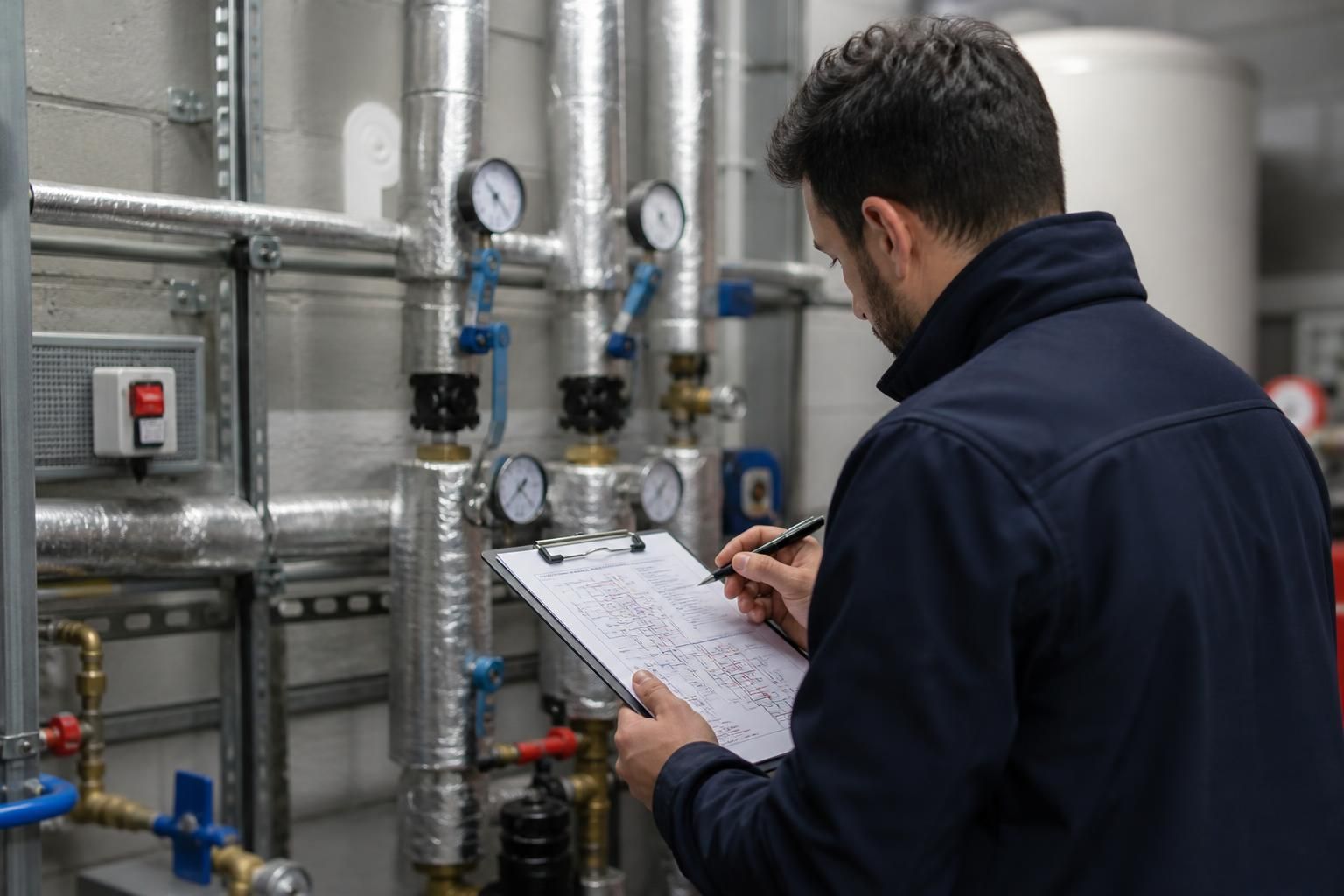
Water hygiene remedial actions should be prioritised through a documented, risk-based assessment of each finding, its likely effect on water safety and the consequences of delay. The order of work should reflect the level of exposure and control failure rather than simply the age, cost or physical size of the defect.
Start by validating the finding. A single temperature reading, sample result or inspection observation may indicate a wider problem, but it does not always define its full extent. The responsible person should confirm where the issue occurred, when the measurement was taken, whether the system was operating normally and whether previous records show a recurring pattern. Results should be considered alongside schematic drawings, monitoring logs, asset condition and the written control scheme.
The next step is to assess the pathway from the defect to potential exposure. Findings associated with aerosol-producing outlets, showers, spray taps, spa equipment or other devices capable of dispersing contaminated water generally require closer attention than defects with no credible exposure route. The assessment should also consider whether the affected pipework or equipment supplies occupied areas, how often outlets are used and whether the finding could affect several outlets rather than one isolated asset.
Occupant vulnerability can alter the order of work. Premises used by people who may be more susceptible to serious illness require a more cautious approach than a comparable system serving a lower-risk population. The person responsible for the premises should therefore consider the type of business, the users of the water system, the duration and frequency of exposure, and any known changes in occupancy or use.
Where a significant control failure is suspected, interim measures should be considered before permanent remedial work is completed. Depending on the circumstances, these may include taking an affected outlet out of use, restricting access, increasing targeted monitoring, implementing additional flushing or applying another technically suitable temporary control. Such measures should be selected by a competent person, recorded clearly and reviewed so that they do not become an unexamined substitute for permanent correction.
A practical priority structure can then be applied:
- Urgent actions: address conditions that could create a material and immediate exposure concern, such as widespread loss of temperature control, contamination associated with an aerosol-generating outlet or a failure affecting a vulnerable population.
- High-priority actions: correct persistent or expanding problems, including repeated unsuitable temperatures, poor circulation, significant stagnation or defects affecting multiple parts of the system.
- Planned actions: deal with localised defects that remain important for long-term control but do not indicate the same level of immediate exposure, such as redundant pipework, inaccessible components, scaling or deficiencies in monitoring arrangements.
These categories should not be treated as fixed labels. A local defect may become urgent if it is connected to a high-use shower or if monitoring shows that the problem is spreading. Conversely, a technically serious issue may be managed temporarily with suitable controls while a permanent repair is designed, provided the interim arrangement is documented and remains effective.
The nature of the corrective work also affects priority. Simple maintenance, such as restoring access for inspection or correcting an identified control setting, may be completed before more disruptive work involving pipework alterations or equipment replacement. However, ease of completion must not override risk. A quick task that leaves the underlying cause in place should not be recorded as a complete remedy.
For each finding, the action plan should identify the affected asset or system section, the reason for its priority, the control measure required, the person responsible, the evidence needed to confirm completion and the review point. This creates a clear link between the original finding and the decision taken. It also helps separate temporary controls from permanent remedial actions, which is important when several contractors or departments are involved.
Remedial work should be verified rather than closed solely because the repair or cleaning has been carried out. Verification may include repeat temperature checks, inspection of flow and circulation, confirmation that redundant sections have been dealt with, review of outlet use and appropriately selected water testing. The evidence required depends on the original finding and the control objective. If results remain unsatisfactory, the priority assessment should be reopened rather than simply extending the completion date.
Priorities should also be reviewed after changes to the system, occupancy, usage pattern or control regime. A finding that was previously contained may become more significant after a refurbishment, a change in water demand or the introduction of new outlets. Maintaining a current risk assessment, monitoring record and remedial action log ensures that decisions remain based on present system conditions rather than an outdated inspection snapshot.

Uncertainty should not be used as a reason to delay a potentially significant water hygiene remedial action. Where the available evidence is incomplete or conflicting, the priority should reflect both the credible risk and the consequences of waiting for further information.
A sensible approach is to separate actions that reduce exposure from investigations that improve understanding. For example, a competent person may recommend a proportionate temporary control while targeted checks establish whether an unusual result is isolated or indicative of a wider system issue. The investigation should have a defined purpose, such as confirming the affected pipework, identifying the source of poor circulation or determining whether other outlets are involved.
This prevents an action plan from becoming dependent on an open-ended search for certainty. Each investigation should lead to a decision: retain the existing control, escalate the remedial priority or amend the proposed corrective work. The reasoning and supporting evidence should be recorded so that the final priority reflects the risk being managed, rather than simply the amount of information available.
Discuss your water hygiene remedial priorities
Discuss your water hygiene remedial priorities with Blue Fish Water Management Ltd to consider how system findings can be translated into a documented, proportionate action plan.