
Who should authorise disinfected water hygiene remedial work?
Disinfected water hygiene remedial work should be authorised by the person or organisation responsible for the commercial water system, based on advice from a competent water hygiene professional. The authorisation should confirm the identified risk, agreed scope of work, safety controls and requirements for verification before the system is reinstated.
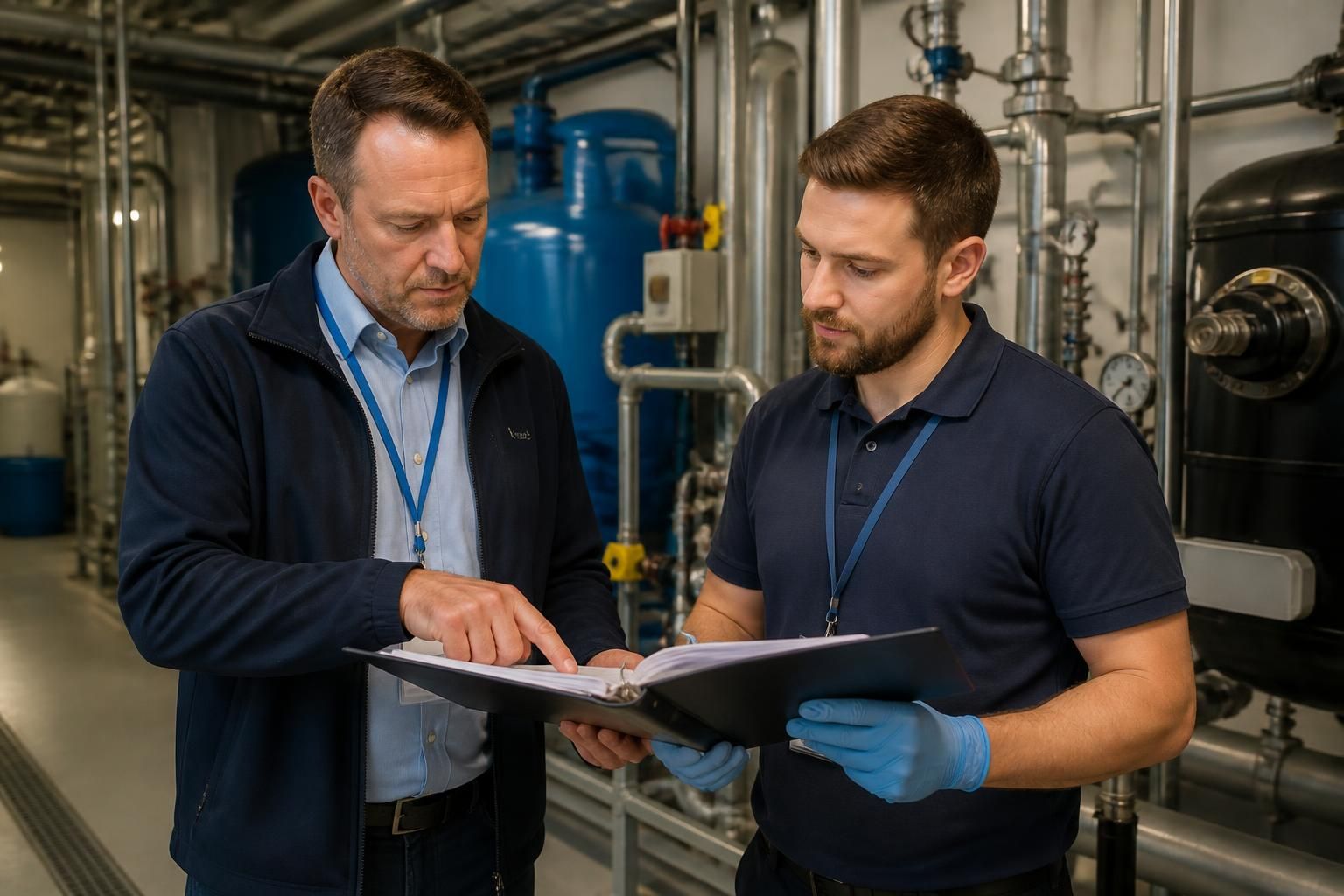
The person with legal and operational responsibility for the commercial water system should authorise disinfected water hygiene remedial work. This is usually the appointed responsible person or dutyholder, although the exact individual depends on the building’s ownership, occupation, management arrangements and contractual responsibilities.
The responsible person makes the decision. They should have sufficient authority to approve access, isolation, chemical use, alterations to the system and any interruption to water services. They should also understand the findings that led to the proposed work, the risks to occupants and operatives, and the evidence required before the system is returned to use. A facilities manager, estates manager, building manager or suitably authorised client representative may fulfil this role where their appointment gives them control of the relevant water system.
Responsibility may be divided between more than one organisation. For example, a property owner may retain responsibility for fixed water services while a tenant controls day-to-day operation within its premises. A managing agent may coordinate contractors without holding the underlying duty. In these circumstances, the parties should establish who can approve the work, who funds it, who controls access and who accepts the system back after treatment. A service contract should clarify these boundaries; appointing a contractor does not automatically transfer the dutyholder’s responsibilities.
The water hygiene specialist advises rather than replaces the authorising party. A competent provider can assess the findings, explain why disinfection or another remedial measure is being proposed, define the technical method and identify precautions. It may also prepare the method statement, risk assessment and sampling plan. The provider should not normally be treated as the party that authorises work on behalf of the building owner or operator unless it has been formally appointed with that decision-making authority and the arrangement is clearly documented.
Before approval is given, the responsible person should review the proposed work against the system’s risk assessment and current operating information. Relevant points include:
- the reason for the intervention, such as unsatisfactory microbiological results, suspected contamination, a system alteration or a control failure;
- the parts of the installation included, including storage tanks, pipework, outlets, secondary circulation and associated equipment;
- the proposed disinfectant, dosage, contact conditions, flushing requirements and controls for protecting people and equipment;
- the effect of isolation or restricted supply on occupants, critical processes and vulnerable users;
- the arrangements for notifying affected people and preventing use of outlets while the system is being treated;
- the method for confirming that disinfectant has been removed or reduced to an acceptable level before use; and
- the sampling, inspection and acceptance evidence needed before reinstatement.
The authorisation should be recorded in a form that can be linked to the job and retained within the water safety management records. It should identify the approving person, their role, the system or area covered, the agreed method, any limitations, the required controls and the conditions for completion. Where the proposed work differs materially from the approved method, the change should be referred back to the responsible person or another formally delegated authority rather than being agreed informally on site.
Operational approval is separate from technical verification. The person who permits remedial work to proceed may not be the person who checks the results. This separation can provide a clearer decision trail, particularly where the work follows a significant contamination event, involves a complex installation or affects a building with vulnerable occupants. The verifying party should assess the relevant records and test results against the agreed acceptance criteria, rather than relying solely on confirmation that the contractor has completed the treatment.
Senior management involvement may also be appropriate where the work carries substantial business, safety or continuity implications. However, seniority alone does not establish technical competence. The decision-maker should obtain advice from an appropriately competent water hygiene professional where the cause of contamination, the treatment method or the implications of the results are uncertain.
Blue Fish Water Management Ltd can support the authorising process through legionella risk assessments, water testing, compliance audits, system monitoring and remedial water hygiene work. Its role may include translating technical findings into a practical scope, identifying the information needed for a sound decision and helping the dutyholder maintain an auditable record. The final approval should remain aligned with the client organisation’s own responsibility structure and water safety management arrangements.
In practice, the correct authoriser is the person or organisation that controls the system and can accept the associated safety and operational consequences. A clear written delegation, competent technical advice and defined completion evidence help prevent uncertainty over who approved the work and whether the system was properly cleared for return to service.

Need advice on authorising disinfected water hygiene work?
Contact Blue Fish Water Management Ltd to discuss the technical information and documentation needed before disinfected water hygiene work is approved. Its team can support dutyholders with risk assessments, testing, compliance audits and remedial planning.