
What records should disinfected water hygiene remedial controls produce?
Disinfected water hygiene remedial controls should produce a complete, auditable record of the work, including the reason for treatment, affected system, control method, dates, responsible personnel and treatment results. The file should also contain verification evidence, such as water test results, inspection findings, clearance decisions and confirmation that the system was safe to reinstate, together with any ongoing monitoring requirements.
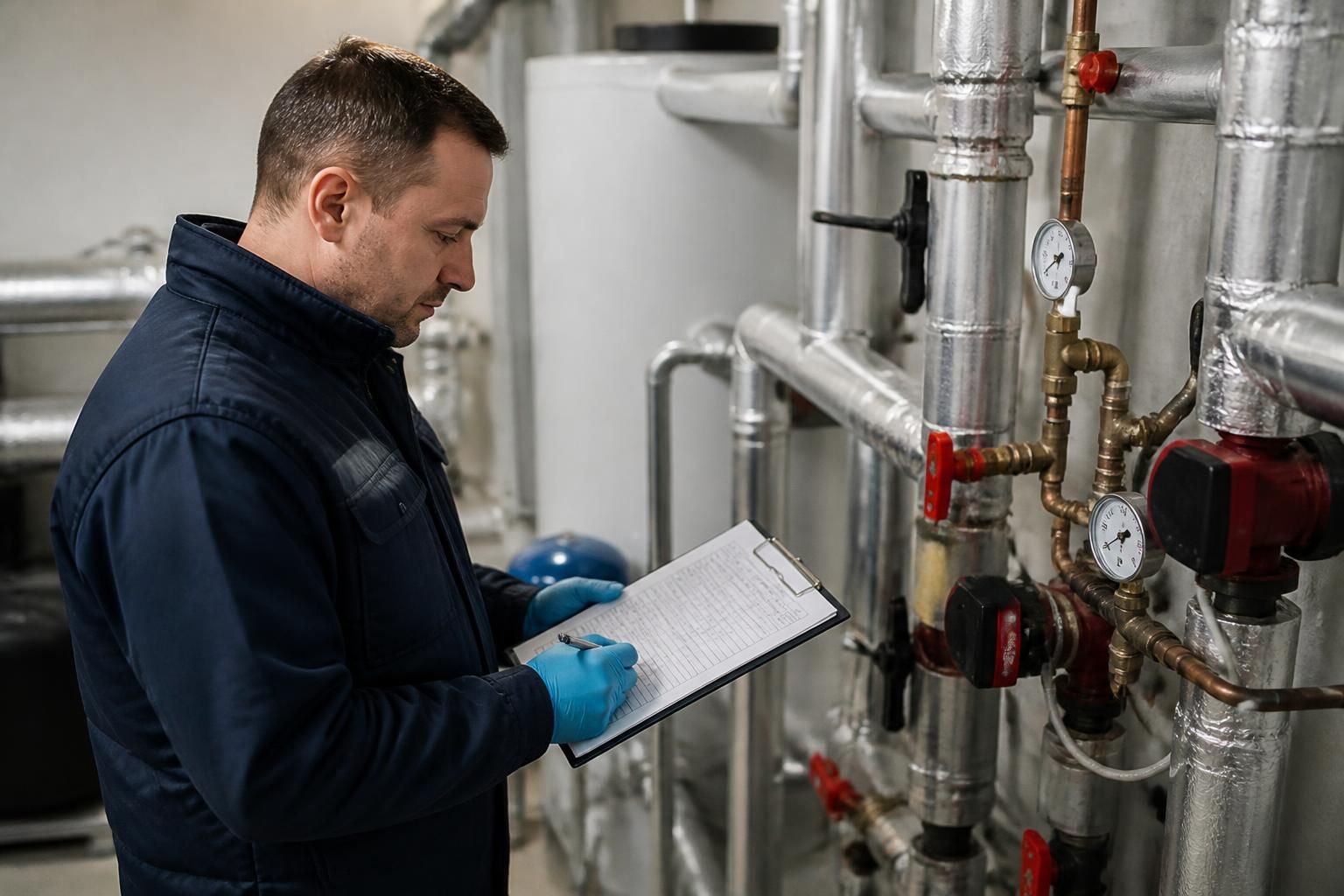
The record set for disinfected water hygiene remedial controls should show, in a traceable sequence, why the work was required, what was done, which parts of the system were affected, and how the decision to return the system to service was reached. It should be sufficiently detailed for the responsible person, auditor or inspecting authority to reconstruct the control process without relying on verbal explanations.
Scope and authorisation records should identify the premises, water system, relevant assets and areas taken out of use. They should link the remedial work to the relevant risk assessment, monitoring result, inspection finding, incident or compliance review. The file should also record who authorised the work, who accepted the proposed control method and any restrictions placed on system use while the work was undertaken.
- the reason for the intervention and the risk or defect being addressed;
- the system schematic, asset references or other location information needed to identify the affected pipework, tanks, outlets and components;
- the approved method statement, sequence of work and planned control measures;
- the names or roles of the people responsible for carrying out, supervising and reviewing the work; and
- any required notifications, access arrangements, isolation instructions or operational constraints.
Method and treatment records should provide an operational account rather than merely stating that disinfection took place. The entry should record the control method used, the products or agents involved, relevant preparation details, the parts of the system treated and the points at which the process was checked. Where chemicals are used, the documentation should be consistent with the applicable product information, risk assessments and control-of-substances requirements.
Useful treatment details include the start and finish dates, areas isolated, valves or outlets operated, flushing arrangements, contact or circulation stages, and any readings taken during the process. The record should identify deviations from the planned method, such as inaccessible outlets, incomplete circulation, damaged fittings or an inability to achieve the required condition. Each deviation should state its effect on the control outcome and the corrective action or follow-up decision.
Health and safety evidence should be retained where it relates to the remedial control. Depending on the work, this may include the relevant risk assessment and method statement, chemical handling controls, personal protective equipment requirements, access or confined-space controls, isolation and reinstatement instructions, and records of communication with affected building users. These documents demonstrate that the treatment was controlled safely as well as technically completed.
Sampling and laboratory records should allow every result to be connected to a particular outlet, asset, date and stage of the process. A sampling schedule or sample register should identify the sampler, sample location, reason for sampling and whether the sample was taken before, during or after treatment. Laboratory reports should be retained with sample identifiers, collection details, the analytical parameter, result, reporting basis and any interpretation supplied by the competent person.
Where samples are submitted to a laboratory, chain-of-custody information can be important. The record should show how samples were labelled, transferred and received, including any rejected, delayed or compromised samples. A failed, inconclusive or unsuitable result should not be removed from the file; it should be accompanied by the assessment made and the additional action taken.
Inspection and verification records should capture the checks that support the clearance decision. These may include inspection of tanks, calorifiers, pipework, strainers, thermostatic mixing valves, dead legs, outlets and other relevant components. Photographs, marked-up schematics, instrument readings and inspection forms can provide useful supporting evidence where they clearly identify the location and date.
The verification record should explain how the results were assessed against the applicable control criteria and who made that assessment. It should distinguish between a system that has passed the required checks, one that has been conditionally reinstated with restrictions, and one requiring further remedial work. A sign-off should therefore record the decision, its date, the approving person’s role and any conditions attached to continued use.
Reinstatement and follow-up records should show how the system was returned to normal operation. This can include confirmation that temporary isolations were removed safely, outlets or components were restored, users were informed of any restrictions, and required flushing or operational checks were completed. If additional monitoring, resampling, cleaning, component replacement or management action is needed, the record should state the action, owner, review point and completion status.
Records should be controlled as part of the site’s wider water safety management arrangements. Keep the current version of relevant schematics, procedures and risk assessments with the completed remedial documentation, clearly mark superseded documents, and protect records from alteration or loss. Retention periods should follow the applicable legal duties, HSE guidance, the organisation’s written control scheme and any contractual or insurance requirements.
A practical completion file normally contains the work instruction, treatment log, safety documentation, asset and location information, sample register, laboratory reports, inspection evidence, photographs where relevant, deviation log, reinstatement decision and follow-up plan. Reviewing this file against the site’s written scheme helps identify missing evidence before an audit or future investigation and ensures that later monitoring is based on what actually occurred.
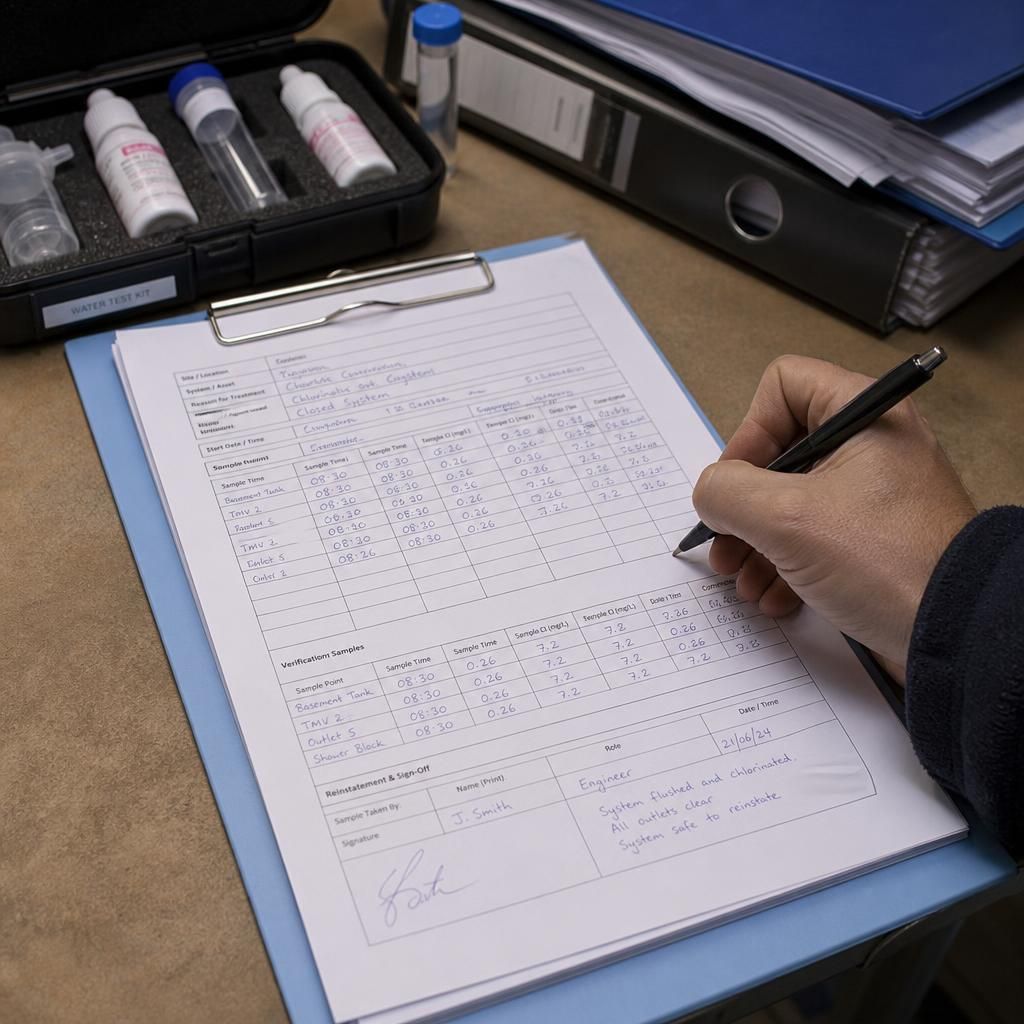
Records should be proportionate to the complexity and risk of the water system, while still allowing the remedial decision to be understood later. A focused intervention affecting one identifiable outlet may require a concise record, whereas work involving multiple zones, shared storage or several treatment stages will need linked documentation covering each relevant part of the system.
Where the record is deliberately limited, it should make clear why that level of documentation was considered sufficient. This prevents a brief entry from appearing incomplete and helps the responsible person distinguish a genuinely narrow intervention from a wider control failure that requires more detailed investigation.
Need help reviewing your remedial control records?
Blue Fish Water Management Ltd can review your remedial control records against your water safety management arrangements and identify evidence that may need clarification or completion. Contact the team to discuss a compliance audit or practical advice for your site.