
How is disinfected water hygiene treatment verified before system reinstatement?
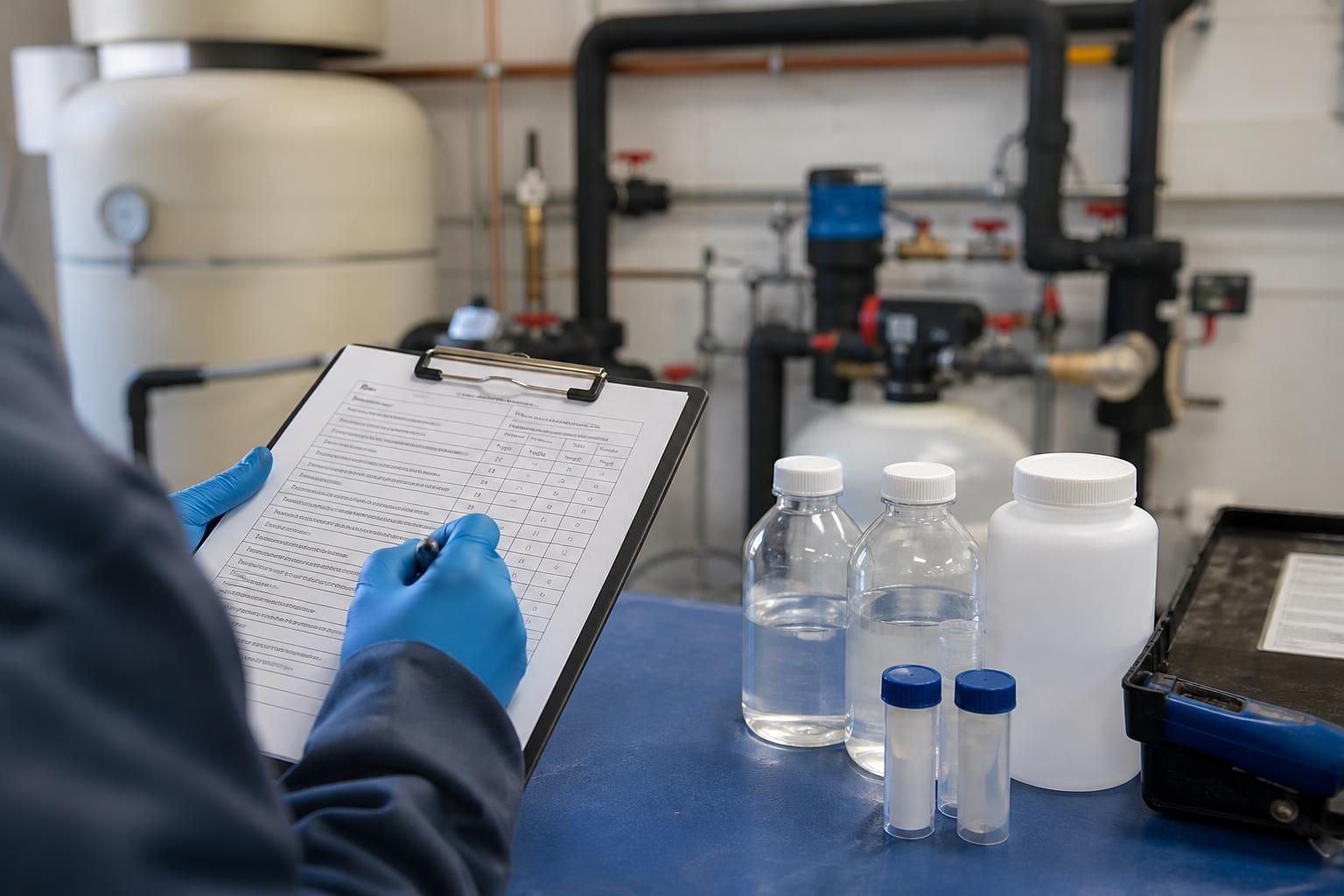
Verification is an evidence-based decision that the treatment has achieved its intended control objective and that the water system can be placed back into normal operation without leaving an unacceptable risk. It should connect the treatment method, the parts of the system treated, the operating checks and the resulting test evidence in one clear record.
The verification process should first establish that the treatment covered the full affected system. This includes checking the identified tanks, calorifiers, pipework, secondary returns, outlets, dead legs and other components against the agreed scope. Any areas isolated from the treatment, inaccessible components or deviations from the method should be recorded and assessed rather than assumed to be satisfactory.
Before samples are taken, the system should be returned to a defined sampling condition. Depending on the treatment used, this may involve flushing until disinfectant levels are controlled, confirming that water is suitable for use, or allowing the system to stabilise after thermal disinfection. Relevant operational checks can include:
- disinfectant residuals or other treatment-specific parameters;
- hot and cold-water temperatures at representative outlets and return points;
- the condition and operation of tanks, valves, pumps and secondary circulation;
- evidence that filters, strainers, outlets or components removed during the work have been cleaned or reinstated; and
- confirmation that flushing has reached parts of the system that may otherwise retain treated or stagnant water.
Water samples should be collected from locations selected for their relevance to the risk, not simply from the most convenient outlets. The sample plan may include sentinel points, areas associated with the original concern, storage vessels, return circuits and outlets representing different parts of the distribution system. Sampling details should identify the location, date, time, conditions at the outlet and the person who collected the sample. Appropriate containers, preservation and transport arrangements are needed so that the result reflects the system rather than poor sample handling.
Testing should be carried out by a suitably competent laboratory, with UKAS-accredited water testing used where the specification or compliance process requires it. The report should be checked for the determinand tested, the method used, the sample identification and any qualifications or limitations attached to the result. A result cannot be interpreted properly if the sampling point, treatment history or system condition is unclear.
Results should be considered alongside the risk assessment, the reason for treatment and the control criteria agreed before work began. A single result should not be treated as conclusive evidence if sampling was incomplete, the system was not in the required condition, or operational controls remain defective. Where results are unsuitable or inconclusive, the responsible person may need to investigate the cause, repeat flushing or treatment, take further samples, and review the system design or management controls.
Reinstatement should therefore be authorised only when the evidence has been reviewed by the responsible person or competent authority for the site. The completed record should normally include:
- the reason for treatment and the affected system or risk area;
- the method, products or parameters used, together with relevant contact or exposure information;
- the treatment dates, personnel and equipment checks;
- flushing, residual and temperature records where applicable;
- sample locations, laboratory reports and interpretation of the findings;
- details of defects, exclusions, follow-up actions and their status; and
- the name, role and date of the person approving reinstatement.
The final check is practical as well as documentary: outlets must be available for normal use, protective controls must be restored, warning notices or restrictions must be removed only when appropriate, and the routine monitoring regime must be updated. Blue Fish Water Management Ltd can support this process through risk-based verification, water sampling, compliance review and advice on any remedial work needed before a commercial system is reinstated.
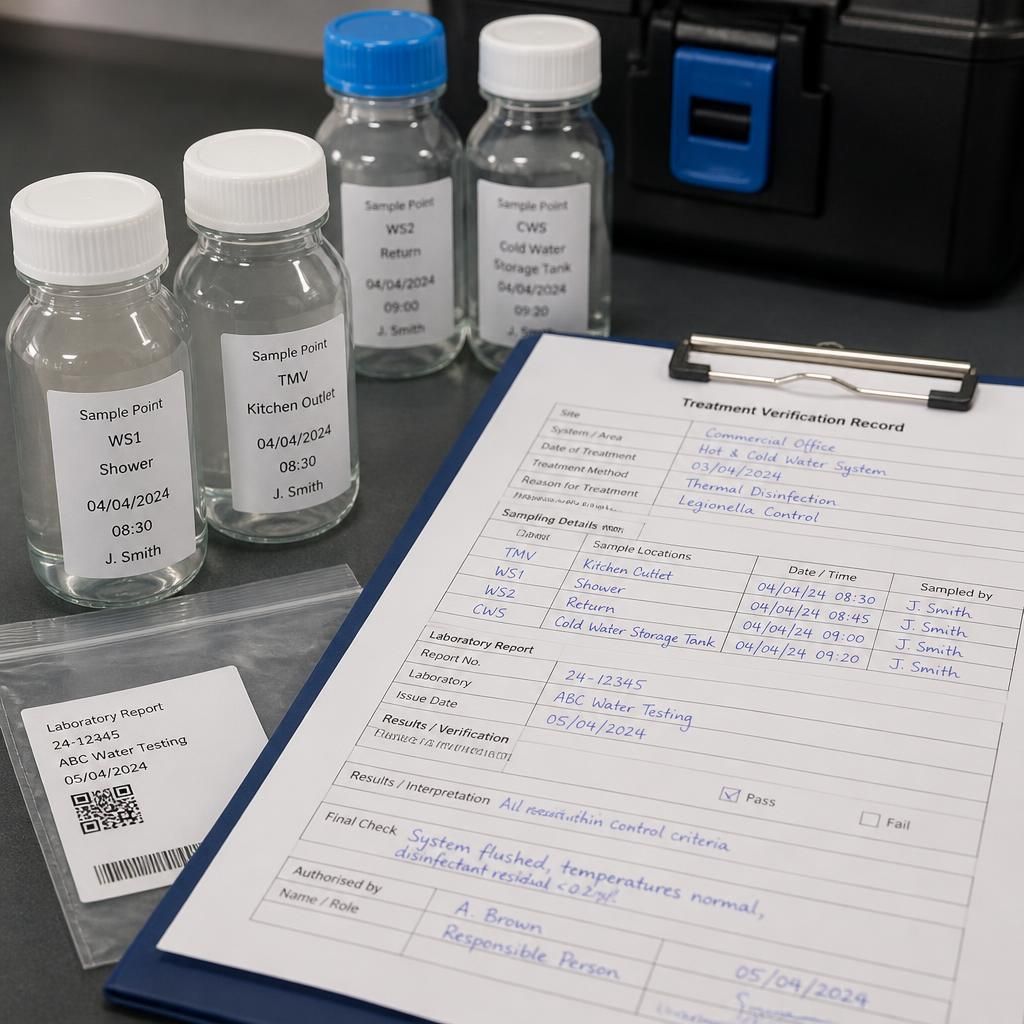
Verification confirms the condition of the water system at the time of assessment; it does not, by itself, demonstrate that the system will remain controlled indefinitely. A satisfactory post-treatment result should therefore be followed by continued temperature checks, disinfectant monitoring where relevant, inspection of storage and circulation components, and any other controls specified by the risk assessment.
This distinction is particularly important where the underlying cause has not been fully removed. Poor circulation, low use, inadequate temperatures or recurring contamination can undermine the treatment after the system is reinstated. The verification record should make clear which findings demonstrate treatment completion and which ongoing controls are required to maintain safe operation.
Discuss Your Disinfected Water Hygiene Treatment Verification
Discuss your planned system reinstatement with Blue Fish Water Management Ltd to review the verification evidence and identify any further checks required before approval.