
When should water chemistry testing use laboratory analysis rather than on-site testing?
Laboratory analysis is preferable when results must support regulatory compliance, provide defensible records, detect low-level or complex contaminants, or confirm an unexpected on-site result. On-site testing is useful for immediate indicative checks, but laboratory methods generally offer broader analytical capability and stronger quality assurance.
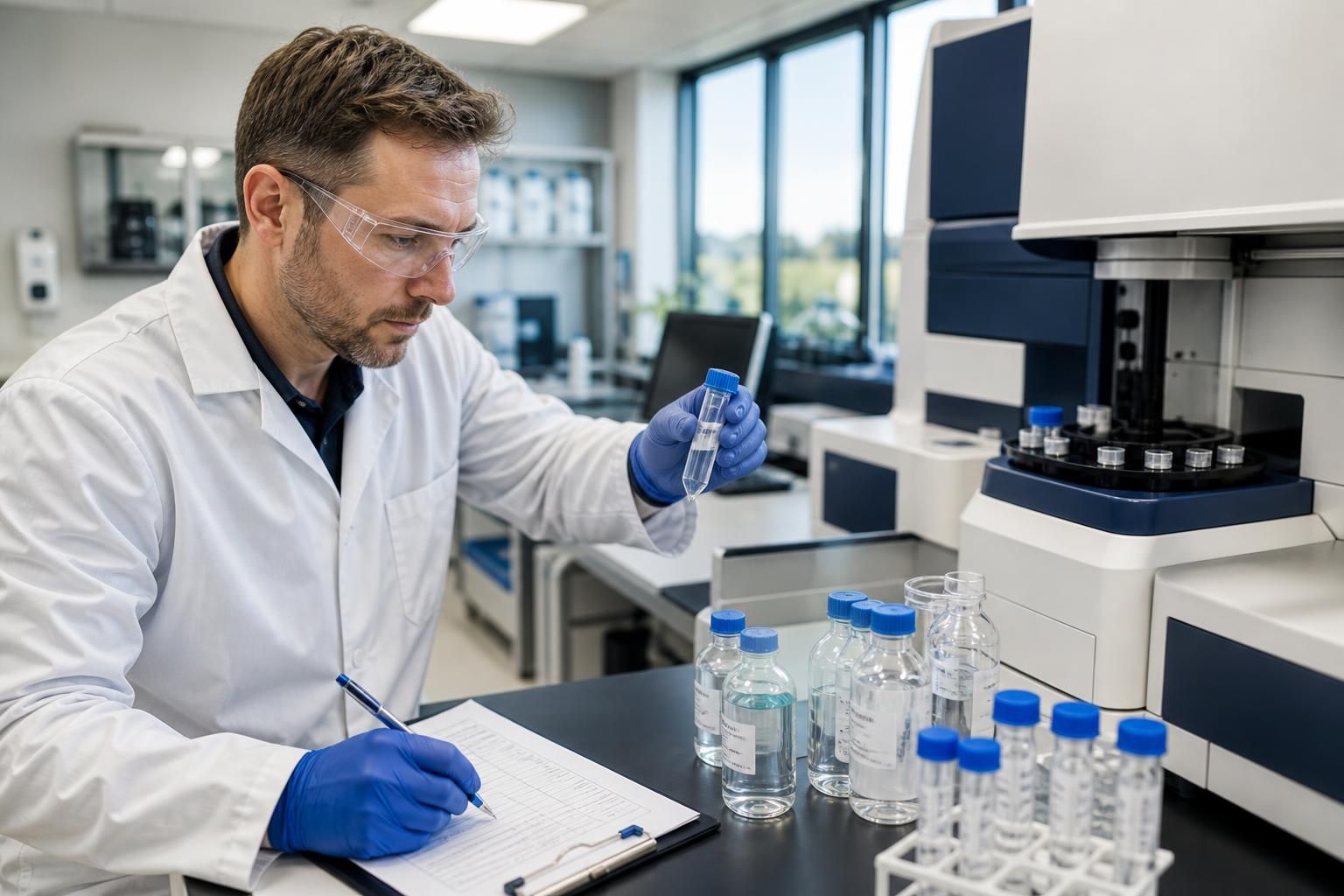
Laboratory analysis is the better choice when the result must be traceable, technically robust and suitable for decisions affecting compliance or system management. It is particularly appropriate where the required parameter cannot be measured reliably with a field kit, where concentrations may be low, or where the result needs to be reviewed alongside a documented sampling record and defined analytical method.
On-site testing remains useful for measurements that can change rapidly or need to guide an immediate operational decision. Examples may include temperature, pH, conductivity, free chlorine and other routine indicators, provided the equipment is suitable, correctly maintained and used by a competent person. These checks provide a picture of conditions at the time and location of sampling, but they do not always provide the analytical range or evidential strength required for a formal investigation.
Use laboratory analysis when the sample or decision has one or more of the following characteristics:
- The result may be challenged or audited. A laboratory report normally records the sample identity, collection details, analytical method and reported result, creating a clearer evidence trail for compliance records, investigations and management review.
- The parameter is complex or present at a low concentration. Laboratory instruments and controlled procedures can provide greater selectivity and sensitivity than a portable test kit. This is relevant where an indicative field result is close to a threshold or where several substances could interfere with the measurement.
- The water quality problem is uncertain. A laboratory can analyse a wider panel or apply different techniques to help distinguish between possible causes, rather than relying on a single field indicator that may only show that a change has occurred.
- Results need to be compared over time. Consistent sample handling and a defined analytical method make laboratory results more useful for identifying trends between sampling rounds. Comparisons are less meaningful when the equipment, technique or reporting basis changes from one check to the next.
- The sample must be preserved or transported under controlled conditions. Some chemical characteristics alter after collection. Laboratory sampling instructions can specify the correct container, preservative, storage conditions and maximum holding time for the parameter concerned.
- The finding has implications beyond an immediate operational adjustment. Where results will inform remedial work, changes to treatment, investigation of a complaint or an assessment of potential exposure, a controlled laboratory process provides a stronger basis for deciding what happens next.
Sampling quality is as important as the analytical method. A sophisticated laboratory result cannot compensate for a sample that is taken from the wrong outlet, collected in an unsuitable container, contaminated during collection or stored incorrectly. The sampling plan should identify the system, point of collection, date, time, water condition and any relevant operational circumstances. If the purpose is to investigate a change in water quality, samples may need to be taken from both an affected point and a suitable comparison point.
The sampling objective should be agreed before analysis is commissioned. A compliance sample, a baseline sample and an investigative sample may require different locations, frequencies and analytical suites. Testing too narrowly can miss the reason for a change, while ordering unnecessary parameters can make the report harder to interpret. The chosen laboratory method should therefore match the question being asked, the expected concentration range and any relevant acceptance criteria.
On-site and laboratory testing can also be used together. A field reading can document the condition of the system at collection and help identify whether further sampling is warranted. The same sample, or a separately collected sample handled in accordance with the laboratory's instructions, can then be submitted for confirmatory analysis. Differences between the two results should not automatically be treated as an error: they may reflect different methods, detection limits, sample age, preservation, temperature or changes in the system between measurements.
When a laboratory report is received, review more than the headline result. Check the sample description, collection date, analytical date, units, detection or reporting limit, method reference, any qualification notes and whether the result is reported as an actual measured value or below a limit of detection. Results should then be considered with system configuration, treatment arrangements, operating conditions, previous records and the reason for sampling.
Where an on-site result is unexpected, laboratory analysis is often useful as a confirmation step, but repeat sampling should be planned rather than used simply to obtain a more convenient result. The cause may be sampling technique, instrument condition, reagent age, a transient system change or a genuine deterioration in water quality. Comparing field observations with a properly documented laboratory result helps separate these possibilities.
For business water systems, a proportionate approach is usually most effective: define the decision the test must support, use competent on-site checks for suitable routine indicators, and commission laboratory analysis where the result requires greater analytical breadth, traceability or confidence. A water hygiene specialist can help translate the system's risk assessment and operational history into an appropriate sampling and testing plan without treating every water-quality question as identical.
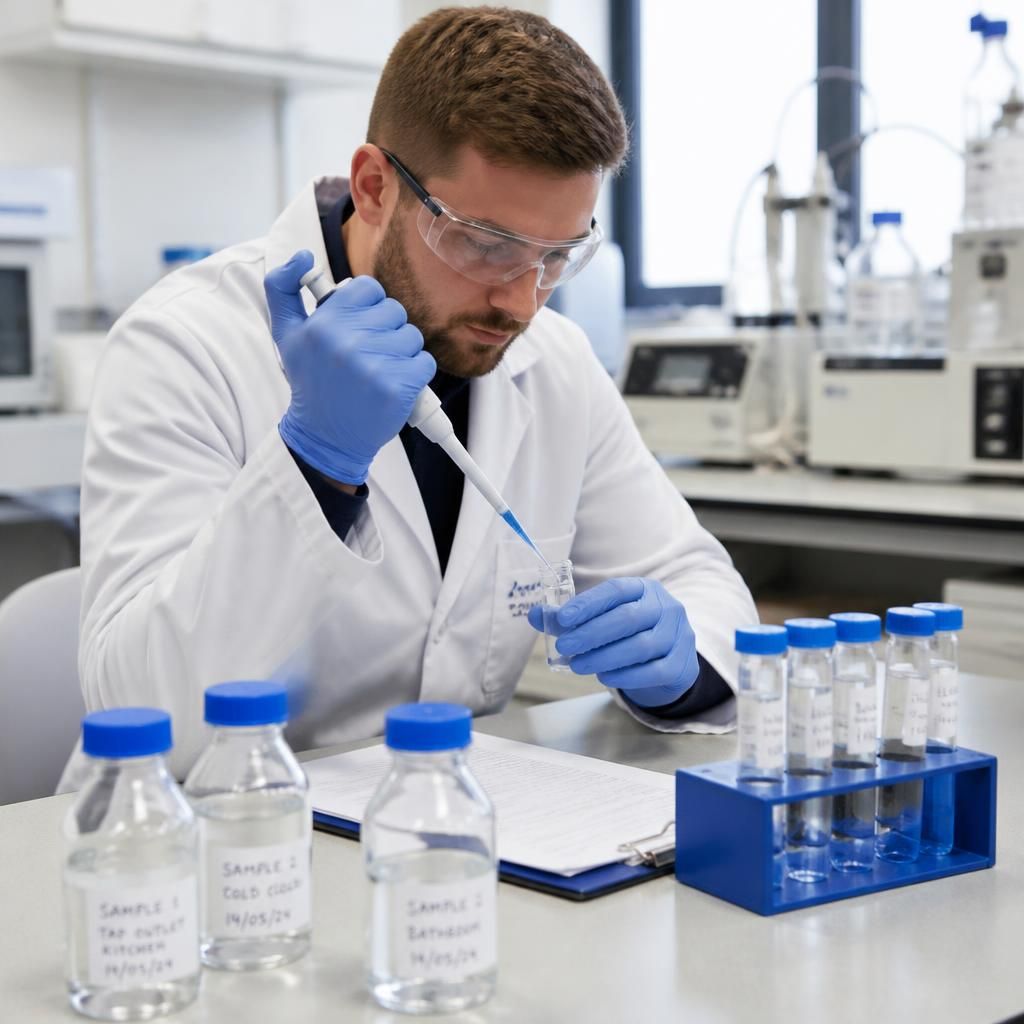
Laboratory analysis is most appropriate when the result must stand up to formal scrutiny, but the laboratory’s scope must match the parameter and method required. A laboratory may be competent in one type of water chemistry while using a different method, reporting limit or sample requirement for another. Confirm these details before sampling so the result is suitable for the decision it needs to support.
For compliance or investigation work, agree the reporting requirements in advance. This may include the units, acceptance criteria, method reference and any required quality controls. Clarifying these points before the sample is collected reduces the risk of receiving a technically valid result that cannot answer the specific compliance question.
Discuss the right water chemistry testing approach for your system
Discuss your sampling objective and system conditions with Blue Fish Water Management Ltd to determine whether laboratory analysis, on-site testing or a combination of both is appropriate.