
When should water chemistry testing be repeated?
Water chemistry testing should be repeated at intervals defined by the system’s risk assessment, monitoring plan and applicable compliance requirements, rather than according to one universal schedule. Testing may need to be brought forward after system alterations, water-quality incidents, abnormal results or changes in use that could affect water safety.
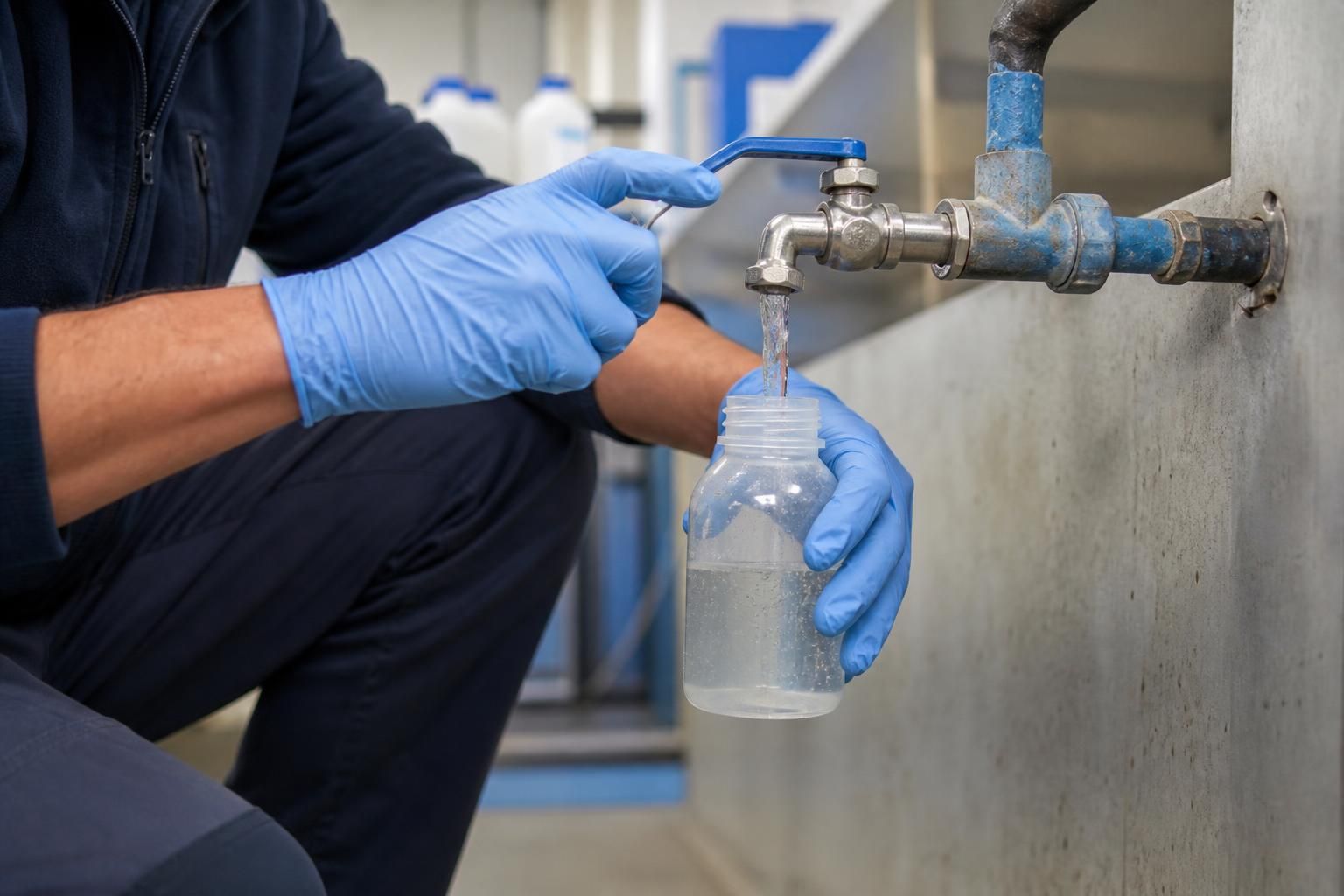
The appropriate repeat interval is the shortest practical period that will identify a meaningful deterioration in water quality before it affects system control, regulatory compliance or users. It should therefore be set within the site’s documented water management plan, using the system’s history, operational risks and the purpose of each test rather than applying the same timetable to every installation.
Routine monitoring should be consistent. Samples need to be taken at planned locations and recorded in a way that allows results to be compared over time. The schedule should specify the parameters to be tested, sampling points, responsibilities, laboratory requirements and the action to take when a result is outside the expected range. Consistent sampling is important because a single result may be difficult to interpret without previous results from the same location and comparable operating conditions.
The testing interval may differ by parameter. Total organic carbon, chemical oxygen demand and biological oxygen demand provide different information about organic material in water. A test that is useful for identifying a general change in organic loading may not need to be repeated at the same frequency as a test used to investigate biodegradable material or a particular treatment process. The frequency should reflect how quickly the relevant characteristic could change and how much reliance is placed on the result for operational decisions.
Past results should influence future scheduling. Stable results over a sufficiently representative period may support a review of the sampling frequency, but they do not automatically justify reducing it. Conversely, a gradual trend can be significant even when individual results remain within an accepted range. Repeated deterioration, increasing variation or inconsistent results should prompt investigation and may justify more frequent sampling until the cause is understood and control has been demonstrated.
Testing should also be considered as part of planned maintenance and operational review. Relevant events can include:
- cleaning, disinfection, flushing or treatment-process work;
- changes in source water, chemical dosing, filtration or storage arrangements;
- periods of low demand, shutdown or unusual occupancy;
- evidence of stagnation, corrosion, deposits, fouling or reduced treatment performance;
- complaints, odour, colour or other observations that indicate a possible change in water quality; and
- an inspection, audit or laboratory finding that calls the existing monitoring plan into question.
These events do not all require the same response. Some call for a targeted sample, while others require a short period of intensified monitoring, an investigation of the system and confirmation testing after corrective work. The decision should be based on the nature of the event, the affected part of the system and the potential consequences if the issue remains unresolved.
Seasonal conditions may also matter. Temperature, demand, occupancy and operating patterns can change during the year, so a schedule based only on one season may not represent the system’s full range of conditions. Where seasonal variation is relevant, the monitoring plan should include sampling during the periods most likely to produce a meaningful change.
Results should be reviewed by someone who understands the system and the selected analytical methods. Interpretation should consider sample location, collection conditions, laboratory reporting limits, previous findings and any work carried out since the last sample. If a result appears unusual, repeating the test may help confirm whether it reflects a genuine change, but repeat sampling should not be used to dismiss an unfavourable result without investigating the underlying cause.
A review of the testing schedule should be recorded whenever the plan is changed. The record should explain why the interval was retained, increased or reduced, what evidence was considered and who approved the decision. This creates an auditable link between water chemistry results, operational controls and the wider water safety management process.
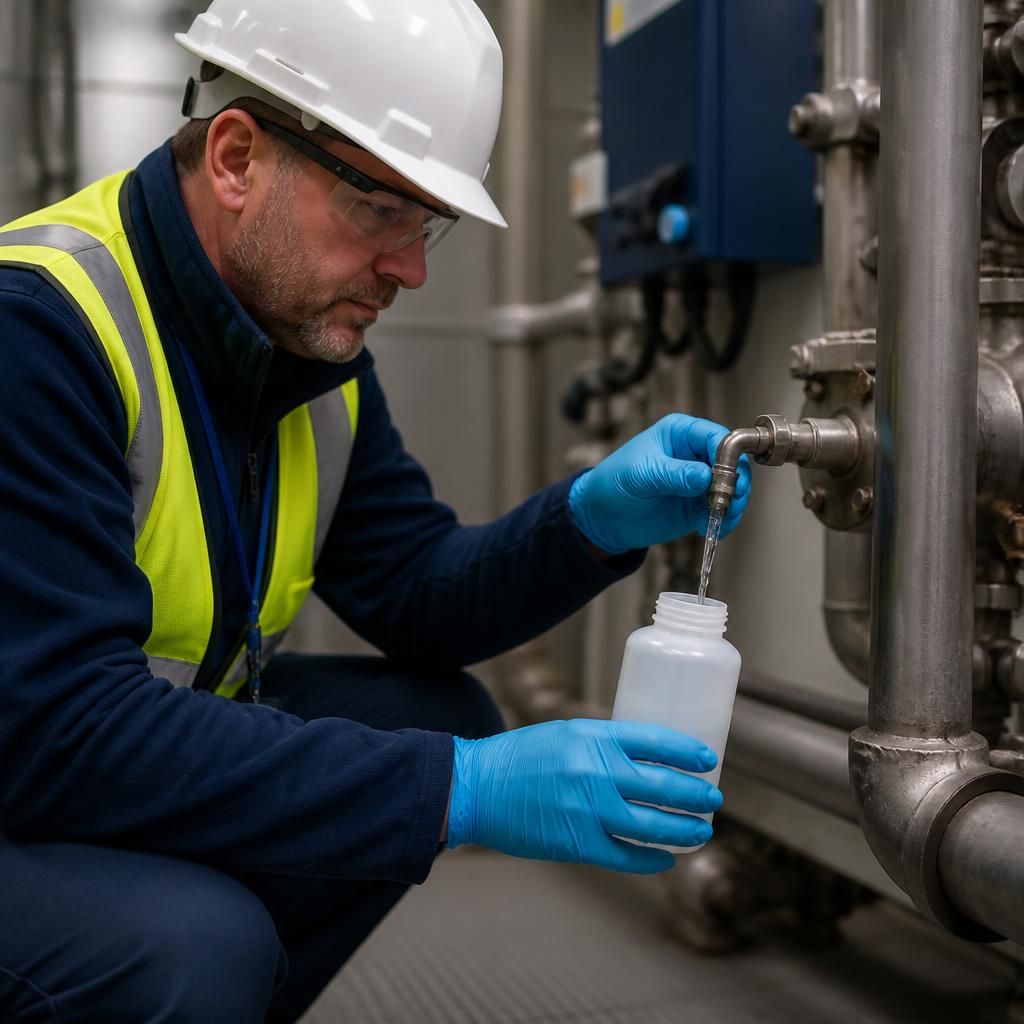
After corrective work, water chemistry testing should be repeated once the system has returned to representative operating conditions. A sample taken while flushing, dosing, cleaning or disinfection is still in progress may reflect the temporary intervention rather than the water quality that users will normally encounter.
The follow-up sample should be collected from the same relevant location, using the same analytical approach where possible, and alongside a record of the work completed and the system’s operating state. This makes the result more useful for confirming whether the underlying issue has been addressed. If conditions remain abnormal, further investigation and additional testing may be more appropriate than treating one improved result as proof of sustained control.
Discuss your water chemistry testing schedule
If your water chemistry testing schedule is not clearly linked to your system’s risks and operating history, discuss it with Blue Fish Water Management Ltd. An expert review can help identify whether the current plan remains appropriate and what evidence should support any change.