
How do water chemistry testing methods differ in cost, scale and timescale?
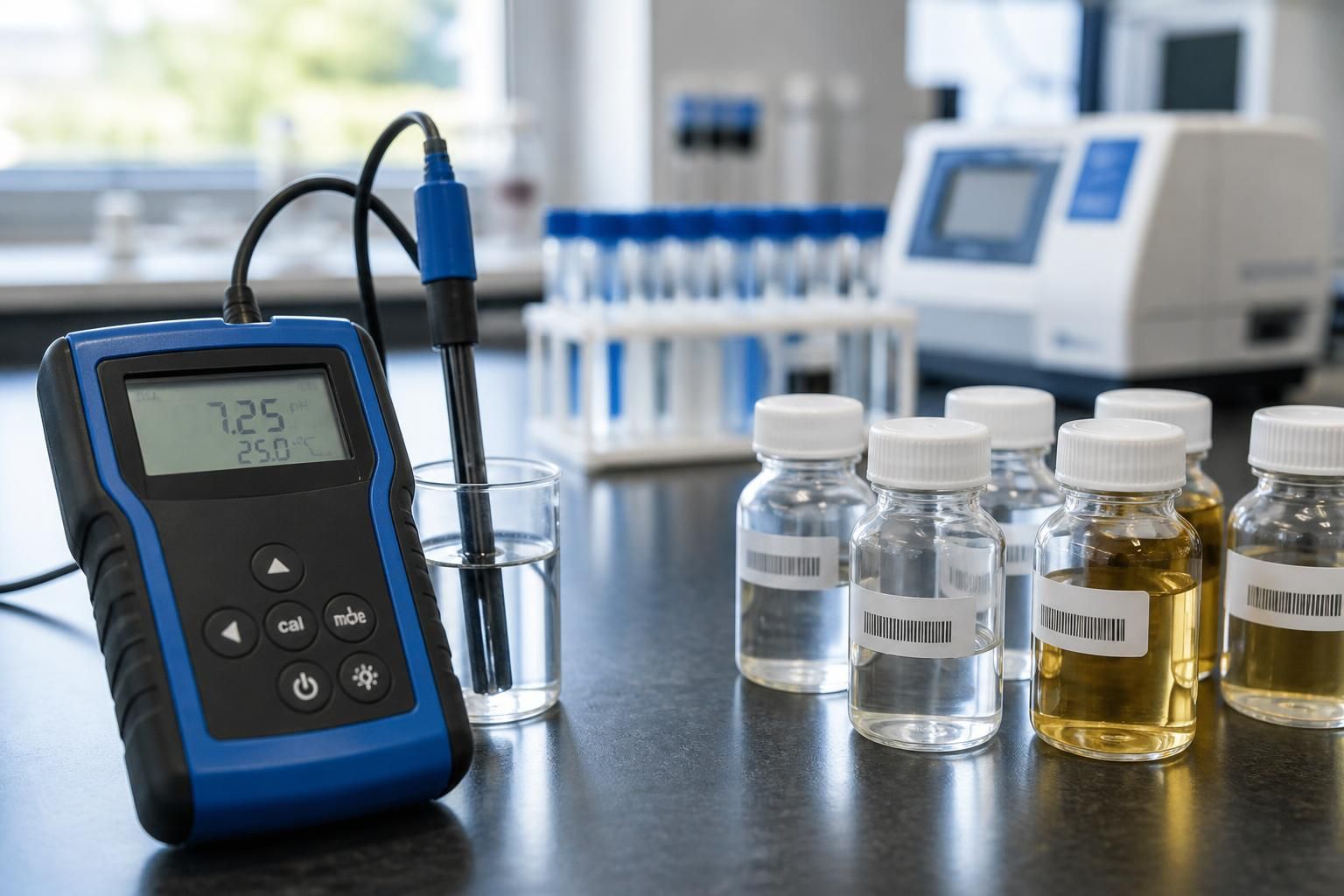
Water chemistry testing methods vary in cost and timescale because they provide different levels of measurement, control and evidential detail. Portable tests and meters are generally suited to operational checks at individual points, whereas laboratory analysis is better suited to formal investigations, multiple sampling locations and results that may need to support compliance records. Automated or repeated monitoring can extend coverage over time, but involves additional equipment, installation and data-management requirements.
On-site testing is usually the most practical option for immediate checks. A trained operator may use a calibrated meter, test strip, titration kit or portable photometer to assess parameters such as temperature, pH, conductivity, total dissolved solids or hardness. These methods can be applied directly at selected outlets, tanks, process stages or treatment points, allowing readings to be interpreted alongside the system's operating conditions.
The cost of on-site testing depends on the type of instrument, the range of parameters, calibration requirements, consumables and the number of locations tested. A basic single-parameter check has a different cost profile from a multi-parameter field programme requiring specialist equipment and trained personnel. Although field testing can produce results during the visit, sampling technique and instrument condition remain important. Poor calibration, contamination of the sample vessel or inconsistent sampling points can make results difficult to compare.
Laboratory testing normally involves more preparation and handling. Samples must be collected in suitable containers, labelled correctly, stored under the required conditions and transported to the laboratory within the relevant holding time. The laboratory then applies a defined analytical method and reports the result with the associated units and, where applicable, reporting limits or quality-control information.
Laboratory costs are influenced by the number of samples, the parameters requested, the analytical method, sample preservation, transport and any additional interpretation or reporting required. Testing several parameters from the same sampling exercise can be more informative than ordering isolated tests, but it also increases the analytical scope. A laboratory programme may therefore be more expensive than a simple field reading while producing a stronger evidence base for investigation or compliance documentation.
Timescale is affected by more than the time spent analysing the sample. Field results may be available during the sampling visit, subject to the method and equipment used. Laboratory results require time for receipt, registration, preparation, analysis, quality checks and reporting. The required holding time for a particular parameter may also restrict when the sample can be analysed. For that reason, the expected reporting timescale should be agreed before samples are collected, especially where results are needed to inform remedial work or an investigation.
The scale of testing is a key cost distinction. A single reading can help establish the condition at one point, but it may not represent the wider water system. A larger programme can compare incoming water, storage, distribution outlets, return lines, treatment stages or areas with different operating patterns. This increases the number of samples and the associated labour, equipment, transport and analytical charges, but it can reveal whether a result is isolated or part of a broader trend.
For larger systems, the sampling plan should be designed before the method is selected. It should identify representative and higher-risk locations, the parameters relevant to the system, the sampling frequency and the reason for each test. Repeated sampling may be more useful than a single extensive exercise when the objective is to understand variation over time. For example, changes in source water, treatment performance, stagnation, temperature or system use may affect results between sampling events.
Continuous and scheduled monitoring sits between a one-off field check and a laboratory programme in terms of coverage. Fixed sensors can record parameters such as temperature, pH or conductivity at selected points, creating a time series rather than a single observation. This may help identify gradual changes, intermittent events or operating patterns that are missed by occasional samples. The total cost includes the device, installation, calibration, maintenance, data storage and review. Continuous monitoring does not automatically replace laboratory analysis: sensors measure only the parameters for which they are designed, and unusual results may still require confirmatory sampling.
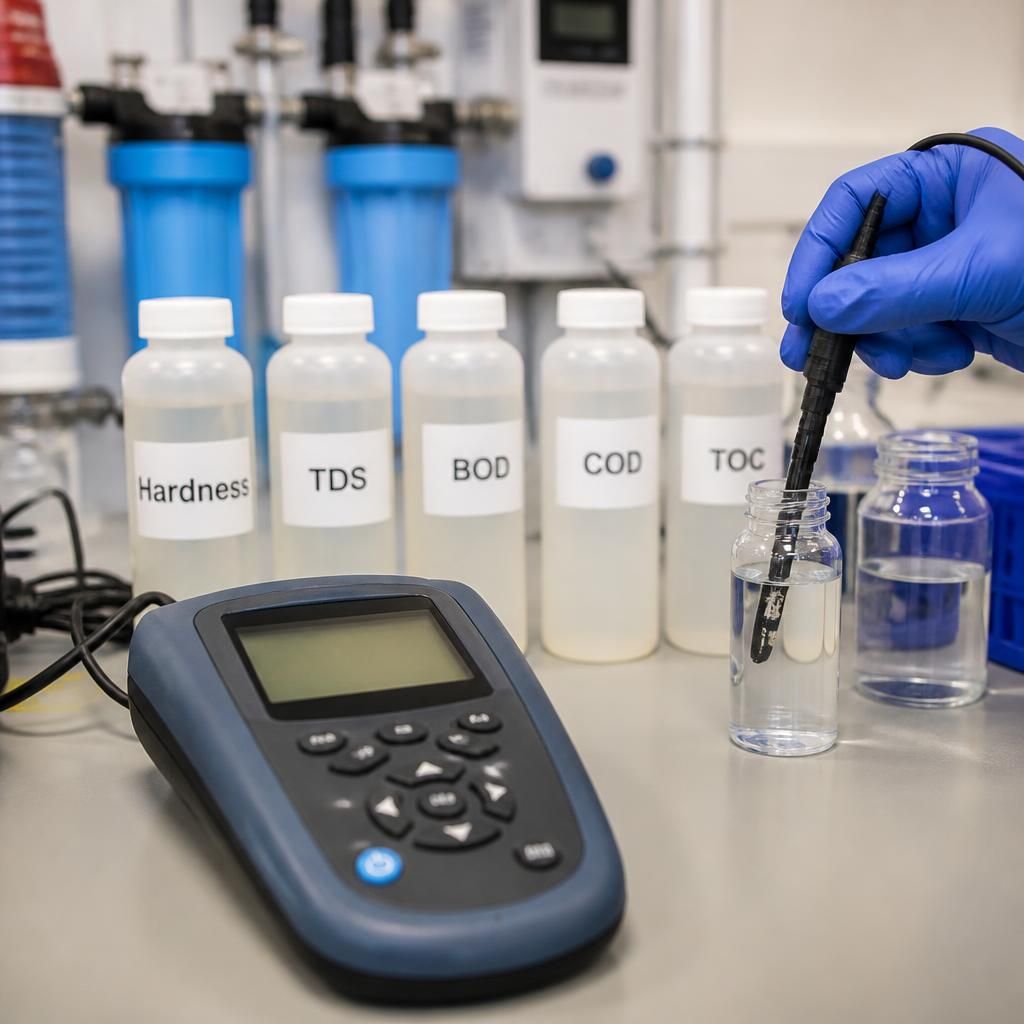
Testing for hardness and total dissolved solids is often relatively straightforward when the purpose is routine system monitoring or checking treatment performance. These measurements can help identify scaling risk, changes in source water or the effect of softening and filtration. However, the appropriate method still depends on the required accuracy, the number of sampling points and whether the result is being used for an operational decision or as part of a formal report.
Biochemical oxygen demand, chemical oxygen demand and total organic carbon involve different analytical principles and may require laboratory equipment or controlled procedures. They are not interchangeable measures. BOD reflects oxygen consumed by biological activity over a defined test period, COD measures oxygen demand under chemical oxidation conditions, and TOC measures organic carbon. Their differing procedures affect cost, reporting timescale and the type of system condition they can help assess. The test should therefore be selected for the question being investigated rather than simply because it is available.
When results may be used to demonstrate compliance, the reliability of the whole process matters. This includes the sampling plan, staff competence, equipment calibration, sample identification, preservation, transport, analytical method and interpretation. UKAS-accredited laboratory testing can provide an appropriate level of formal assurance where the relevant test is within the laboratory's accredited scope. It does not remove the need for representative sampling or sound interpretation.
A sensible comparison can be made by asking four questions:
- Is the objective an immediate operational reading, a diagnostic investigation or documented compliance evidence?
- How many locations and samples must be assessed to represent the system?
- Are results needed at the sampling point, or can they be reported after laboratory processing?
- Which parameters, detection limits and quality controls are required?
For a small, clearly defined check, on-site measurement may provide the most proportionate approach. For a complex system, an unexplained change or a need to compare many locations, laboratory analysis or a combined field-and-laboratory programme is often more appropriate. A combined approach can use field readings to understand immediate conditions while laboratory results provide more detailed confirmation. The correct balance is not simply the cheapest or fastest method; it is the method that produces sufficiently representative and reliable information for the decision that follows.
The cheapest water chemistry test is not always the least costly option overall. If a result is close to an action threshold, a basic screening method may not provide enough resolution to support a confident decision. Repeating an inconclusive test, investigating an apparent anomaly or carrying out unnecessary remedial work can add to the total cost.
Method selection should therefore reflect the decision the result must support. A screening measurement may be adequate where a clear difference between normal and abnormal conditions is expected. Where results will be compared with a specification, trigger level or compliance requirement, consider the method’s detection limit, measurement uncertainty, reporting units and quality-control requirements. These factors affect whether results from different dates, locations or laboratories can be meaningfully compared.
For this reason, the sampling brief should state the intended use of the result before testing begins. Defining the decision point in advance helps prevent an inexpensive but unsuitable test from creating additional work, while avoiding unnecessarily detailed analysis where a straightforward operational check is sufficient.
Discuss your water chemistry testing requirements
Discuss your water chemistry testing requirements with Blue Fish Water Management Ltd to identify a proportionate testing approach for your system and intended use of the results.