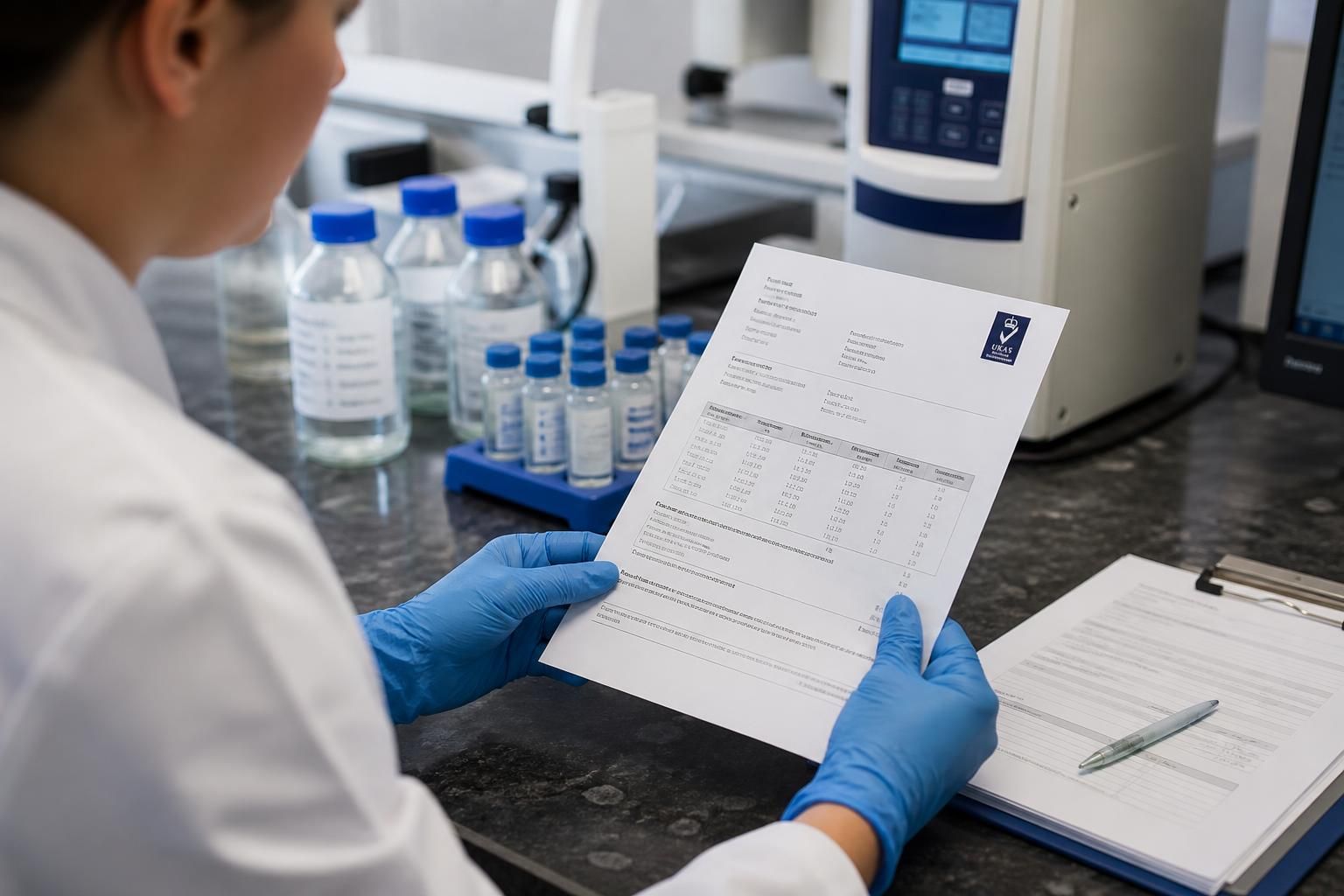
A suitable UKAS Legionella water testing report is a controlled, traceable record that links each analytical result to the correct water system, sample and laboratory method. It should allow a duty holder, consultant or auditor to establish what was tested, how the result was produced, whether the test fell within the laboratory’s accredited scope, and how the finding should be considered alongside the system’s risk controls.
Sample traceability is fundamental. Each sample should have a unique reference that remains consistent across the submission record, laboratory worksheet and issued report. The report should also distinguish between sample types, such as hot-water outlets, cold-water outlets, storage vessels or other system components, rather than presenting results without their operational context. Where relevant, it should record the sampling point description, whether an outlet was flushed or represented normal use, and any factors that could affect the sample’s condition.
The report should make the
sample journey auditable. This normally includes the date and time of collection, receipt by the laboratory, the condition on receipt and any transport or preservation requirements. If a sample arrived outside the laboratory’s acceptance criteria, was delayed, damaged, insufficient or otherwise unsuitable, that fact should be recorded with an explanation of how it affects confidence in the result. A clear chain of custody helps the reader confirm that the reported result relates to the intended location and collection event.
Results need more than a single numerical value. For each sample, the report should state whether Legionella was detected and, where enumeration is carried out, give the result in the appropriate units. It should explain the meaning of terms such as “not detected”, “below the reporting limit” or “estimated result”, because these expressions do not necessarily mean that the organism is completely absent. The reporting limit, dilution or calculation basis should be available where it is needed to understand the result. If species or serogroup identification has been undertaken, the report should identify what was confirmed and what was not examined.
A technically sound report also identifies the
analytical controls behind the result. Relevant information can include the test standard or validated procedure, the date of analysis, the laboratory’s quality-control status and the person authorised to release the report. Where measurement uncertainty is relevant to the method or result, it should be stated or made available in a way that helps the reader assess the significance of borderline findings. Amendments should be clearly marked, dated and linked to the original report rather than silently replacing information.
UKAS status should be specific, not implied. The report should show the laboratory’s accreditation identity and indicate which examination or test method is covered by its current scope. A laboratory may perform activities that are outside its accredited scope, so the presence of a UKAS mark alone does not establish that every item in the document is accredited. Any subcontracted examination, non-accredited activity or departure from the validated method should be clearly identified. The laboratory’s scope should be checked where accreditation is a contractual, regulatory or procurement requirement.
The report should include enough
document control to support later review. Useful controls include a report reference, issue date, page numbering, laboratory contact details, the name or role of the authorised signatory and a clear distinction between draft and final versions. These details matter when results are compared over time, supplied during an audit or used to demonstrate that a particular record was relied upon when water safety decisions were made.
Interpretation should connect the laboratory finding with the wider management process without overstating what a sample can prove. A single result represents the sampled water at a particular location and time; it does not by itself describe every part of a building’s water system. The reader should therefore consider the result with system design, water temperatures, usage patterns, maintenance records, control monitoring, previous trends and the vulnerability of exposed individuals. A report is most useful when it makes clear which conclusions arise directly from the test and which require further assessment by the person responsible for managing the system.
Before accepting a report for compliance records, check that it contains:
- an unambiguous link between each result and its sample reference and location;
- sample receipt and integrity information sufficient to identify handling concerns;
- the result format, units and reporting limits used by the laboratory;
- the method, accreditation status and any non-accredited or subcontracted work;
- authorisation, issue control and a record of any corrected or amended version; and
- interpretive information that can be considered alongside the water safety management system.
Where a report lacks these elements, the issue is not necessarily that the laboratory result is unusable, but that its evidential value and suitability for compliance review may be reduced. Clarification should be obtained from the laboratory or the organisation responsible for sampling before the result is used to close an investigation or update the system’s risk record.