
Who is responsible for arranging legionella water testing?
The dutyholder, usually the building owner, landlord, employer or managing agent, is responsible for arranging legionella water testing where the water system risk assessment identifies it as necessary. They may appoint a competent water hygiene provider to take and analyse samples, but the legal responsibility for managing the risk and acting on the results remains with the dutyholder.
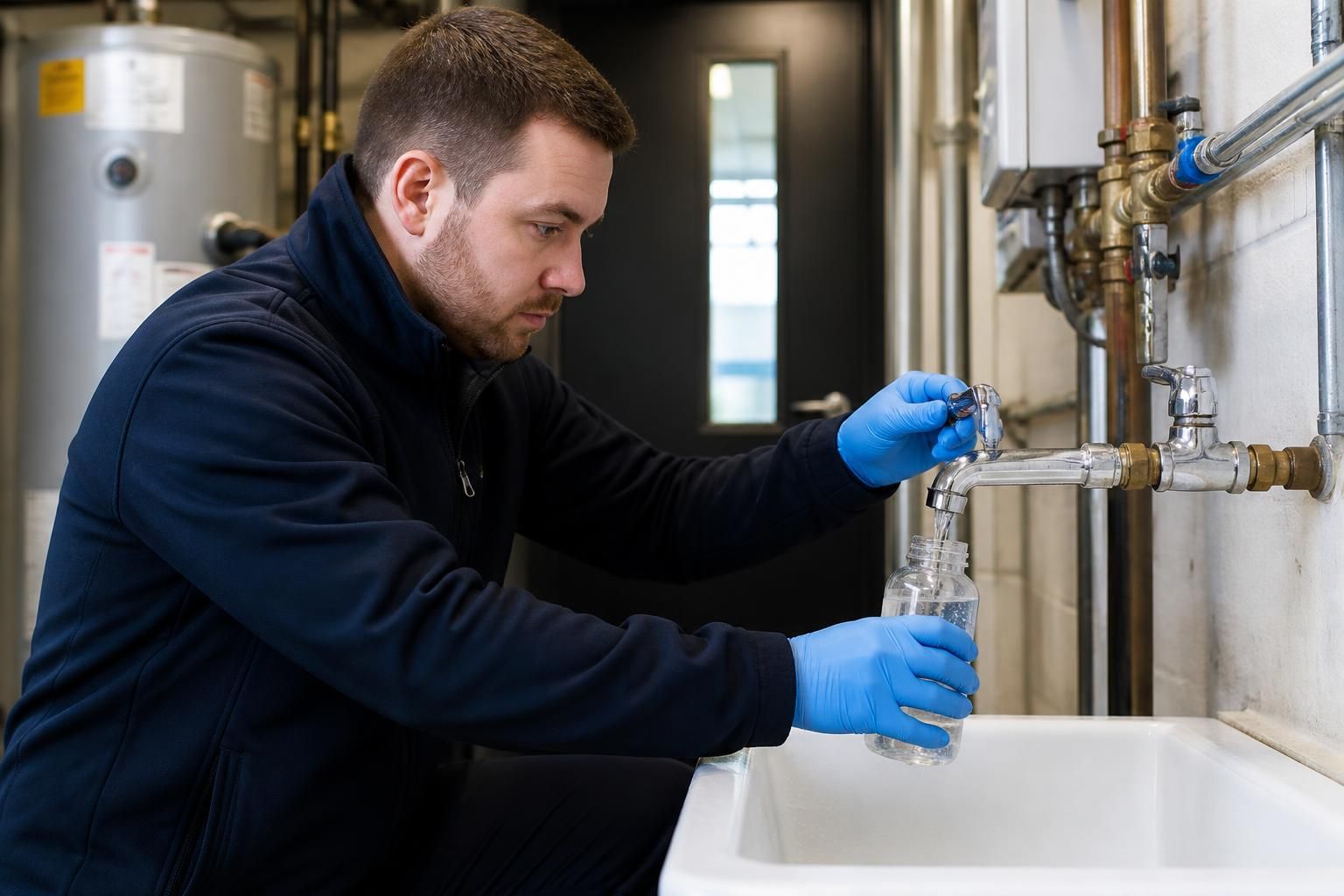
Responsibility is allocated through the organisation or individual who has control of the premises, water systems or operational decisions affecting them. This person or organisation must ensure that legionella risk is assessed, suitable control measures are implemented and any water testing identified as necessary is arranged and acted upon.
Who may hold the responsibility?
- Building owners: An owner with control of the water systems will normally need to ensure that risk management arrangements are in place, even where another organisation occupies the building.
- Employers: An employer is responsible for protecting employees and others affected by work activities where the business controls the premises or its water systems.
- Landlords: A landlord may be responsible for communal, domestic or commercial water systems under their control. The precise duties depend on the property, the tenancy arrangements and which party controls maintenance and water services.
- Managing agents and facilities managers: These organisations may be appointed to organise assessments, sampling, maintenance and contractors. Their duties should be clearly defined in the management agreement.
- Occupiers and tenants: A tenant that controls its own water systems may have direct responsibilities, while a tenant without that control must usually cooperate with the party managing the building and report relevant changes or problems.
More than one dutyholder can be involved in the same building. For example, an owner may retain responsibility for shared water services while a tenant controls systems within its occupied area. Each party should understand its specific responsibilities, communicate with the others and avoid gaps between contractual arrangements. Simply naming a contractor in a contract does not remove the need for effective oversight.
How the testing requirement is decided
Legionella sampling is not automatically required at every premises or at a fixed interval in every situation. The need for testing should arise from a suitable and sufficient legionella risk assessment, taking account of factors such as water system design, stored water, temperatures, stagnation, vulnerable occupants, previous results, operational changes and the effectiveness of existing controls.
Where testing is recommended, the dutyholder should ensure that the sampling plan is specific to the systems and risks identified. It should establish which outlets or parts of the system will be sampled, when samples will be taken, which tests are required and how results will be reviewed. Sampling may also be needed after remedial work, significant changes to a water system or an unexpected control failure.
What the dutyholder must arrange
- Commission or review the legionella risk assessment and confirm whether routine or investigative testing is appropriate.
- Select a competent organisation or individual to take representative samples and use a laboratory with suitable UKAS-accredited testing capability for the relevant method.
- Provide the sampler with accurate information about the building, outlets, water systems, previous results and any known control issues.
- Ensure that samples are taken, transported and analysed in accordance with the applicable method and laboratory requirements.
- Review the reports and compare the findings with the control strategy and the advice of the competent person.
- Arrange investigation and remedial action where results, system conditions or trends indicate that controls are not working as intended.
- Keep appropriate records, including the risk assessment, sampling plan, laboratory reports, remedial actions and evidence that issues have been closed out.
The person arranging the work should also check whether the provider is competent to sample as well as whether the laboratory is appropriately accredited. Laboratory accreditation relates to the laboratory's technical testing activities; it does not, by itself, demonstrate that every sampling arrangement or site decision is suitable. The dutyholder should therefore confirm who is responsible for site assessment, sample selection, chain of custody, result interpretation and follow-up.
Guidance such as the Health and Safety Executive's Approved Code of Practice L8 and HSG274 can help dutyholders establish suitable control arrangements in Great Britain. Organisations should also consider the requirements of the relevant UK jurisdiction, sector-specific guidance and any conditions imposed by their own regulators or clients. Healthcare, care and other settings with vulnerable occupants may require particularly careful arrangements.
A water hygiene provider can carry out the practical work, but the dutyholder should retain enough involvement to understand the risks and verify that recommendations are implemented. Blue Fish Water Management Ltd can support this process through legionella risk assessments, UKAS-accredited water testing, compliance audits, system monitoring, training and remedial works. The appropriate scope depends on the building's risk assessment and the extent of control held by each responsible party.
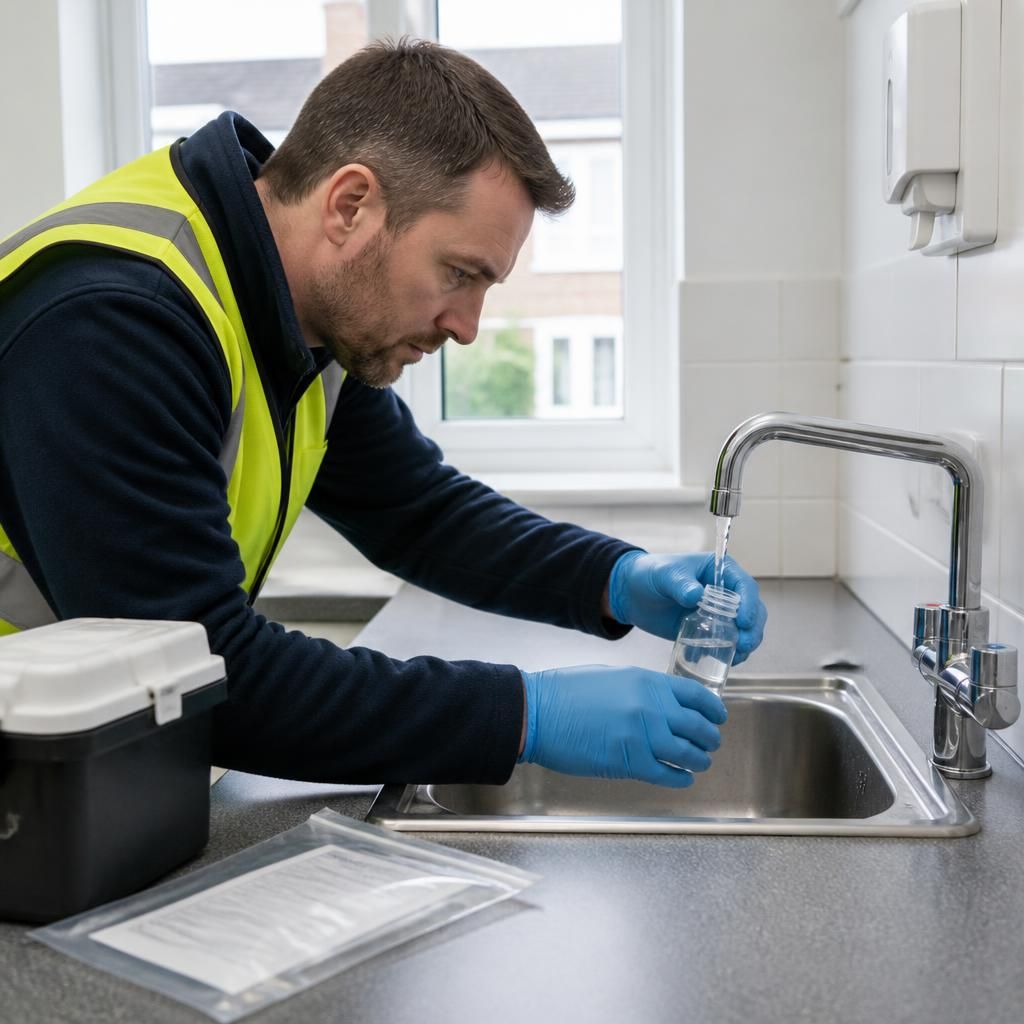
Where responsibility is unclear, it should be established by tracing who controls each part of the water system rather than relying on property ownership alone. Review the lease, facilities management agreement, maintenance arrangements and risk assessment to identify the party authorised to commission testing, access outlets and instruct remedial work.
The written arrangements should name a responsible lead for each system, explain how testing decisions are approved and set out who receives and acts on laboratory findings. This avoids a situation where a landlord, managing agent and occupier each assume that another party has arranged the required sampling. Any change in occupancy, contractor or system control should trigger a review of those arrangements.
Discuss your legionella water testing responsibilities
Discuss your legionella water testing responsibilities with Blue Fish Water Management Ltd to identify an appropriate assessment, sampling and follow-up arrangement for your premises.