
When should legionella water samples be retaken?
Legionella water samples should be retaken when an initial result is positive, inconclusive or affected by a sampling issue, and after remedial work or significant changes to the water system. The timing and extent of repeat sampling should follow the risk assessment, the result’s significance and advice from a competent water hygiene professional.
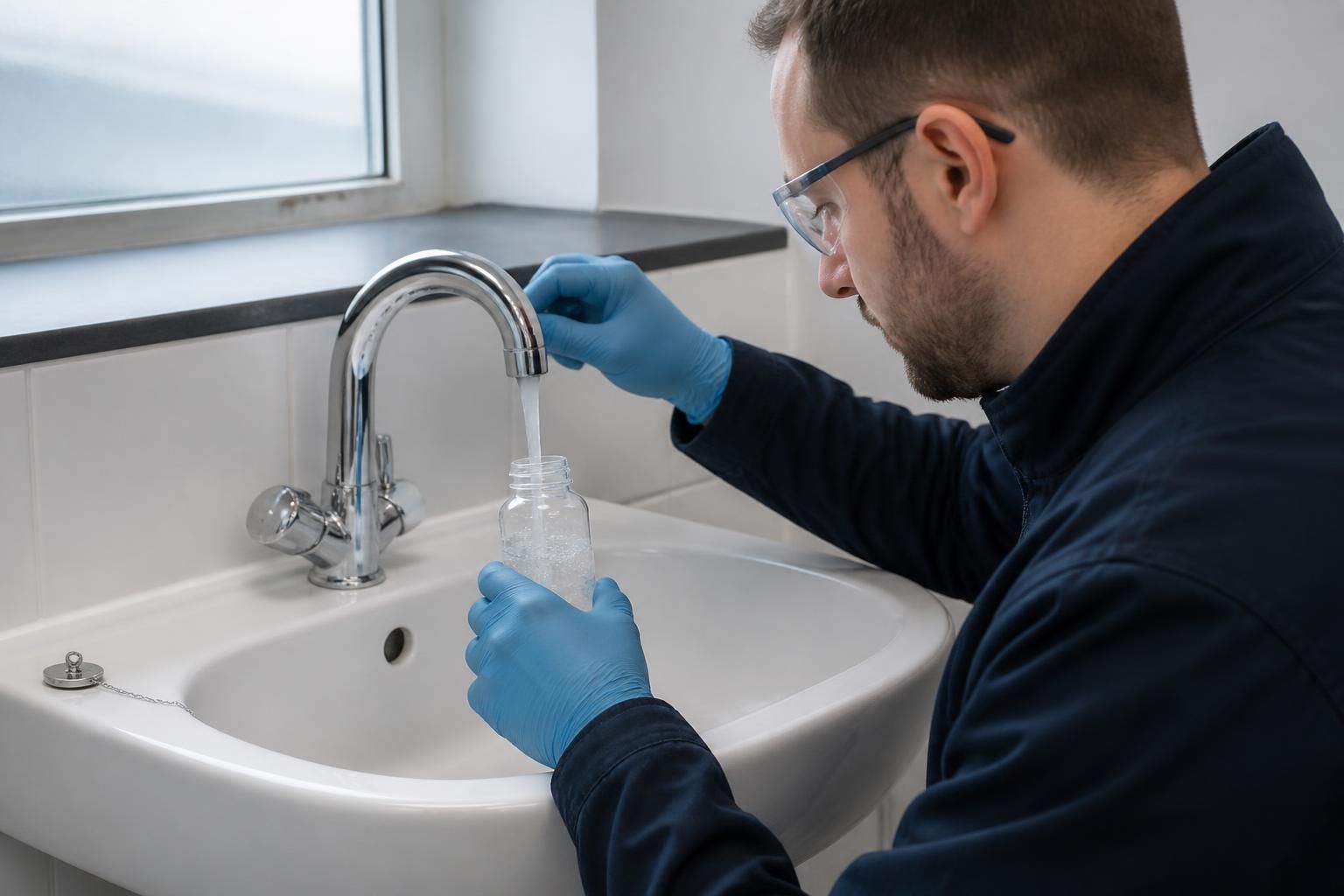
Repeat legionella sampling is a verification exercise: it checks whether a water system remains controlled after an abnormal result, a corrective action or a change in operating conditions. There is no single retesting interval that applies to every building. The appropriate date, sample locations and number of samples should be set by the risk assessment, the nature of the finding and advice from a competent water hygiene professional.
Retesting after a positive result
A positive laboratory result should be considered alongside the sample location, the level detected, the type of water system and the people using the building. The immediate response may include reviewing temperatures and flow, checking for stagnation, inspecting tanks and calorifiers, improving outlet usage, cleaning or disinfecting parts of the system, or carrying out more extensive remedial work.
Repeat samples should then demonstrate whether the corrective action has worked. They may need to be taken from the original positive outlet as well as nearby outlets, upstream and downstream points, storage vessels or other representative parts of the system. Sampling only the original tap can miss contamination elsewhere. The risk assessment should identify the points needed to provide meaningful evidence of control.
A further positive result does not simply mean that another isolated sample is required. It may indicate that the underlying cause has not been removed, that contamination is recurring, or that the investigation did not cover the whole system. The control measures should be reviewed before further samples are collected.
Retesting after remedial work
Where a system has been cleaned, disinfected, modified or otherwise brought back under control, samples should be taken at a suitable stage after the intervention. Sampling too early may not show how the system behaves once it has returned to normal operation, while waiting too long can delay action if the problem remains. The timing should therefore be specified by the competent person carrying out or overseeing the work.
Post-remedial sampling should be supported by operational checks. These can include confirming hot and cold water temperatures, checking disinfectant residuals where relevant, verifying that outlets are being used, and confirming that storage and distribution arrangements are functioning as intended. The laboratory result is one part of the verification process; it does not replace inspection and monitoring.
Retesting after an inconclusive or unsuitable sample
A sample may need to be retaken if the laboratory reports that it was unsuitable for analysis, the container or paperwork was incorrect, the sample was delayed or compromised in transit, or the sampling method did not meet the required procedure. An inconclusive result should not be treated as either a confirmed negative or a confirmed positive.
The replacement sample should be collected using the correct sterile container and documented with the necessary details, including the outlet, date, time and relevant water-system information. The sampler should also consider whether the original issue affected only the individual sample or indicates a wider weakness in the sampling process.
Retesting when routine results change
Repeat testing can be appropriate even when a result does not show legionella. A rising pattern across routine samples, repeated low-level detections, deteriorating temperature control, evidence of stagnation or a change in building use may justify additional investigation. A single result is only a snapshot and cannot demonstrate that every part of a water system is free from legionella.
Additional sampling may also be needed after changes such as new outlets, alterations to pipework, periods of low occupancy, recommissioning, changes to hot-water settings or the introduction of areas used by people who may be particularly susceptible to infection. The risk assessment should be reviewed to confirm whether the existing monitoring plan is still suitable.
How the retesting decision should be recorded
- Record the original result, sample location and laboratory report.
- Document the investigation and any remedial measures undertaken.
- State why repeat sampling is required and which points will be tested.
- Set out who is responsible for arranging the samples and reviewing the findings.
- Compare the new results with previous results and operational records.
- Update the risk assessment and control scheme if the evidence shows that the system has changed.
If a retest remains positive, or if there is a suspected case of legionnaires’ disease associated with the premises, the matter requires prompt escalation through the organisation’s health and safety and public health procedures. Sampling should support the investigation, not delay necessary control measures.
Results should be interpreted by someone who understands both legionella analysis and the building’s water system. A competent water hygiene adviser can help determine whether the evidence supports continued routine monitoring, targeted additional samples or further remedial work, while a suitably qualified UKAS-accredited laboratory should carry out the relevant testing.
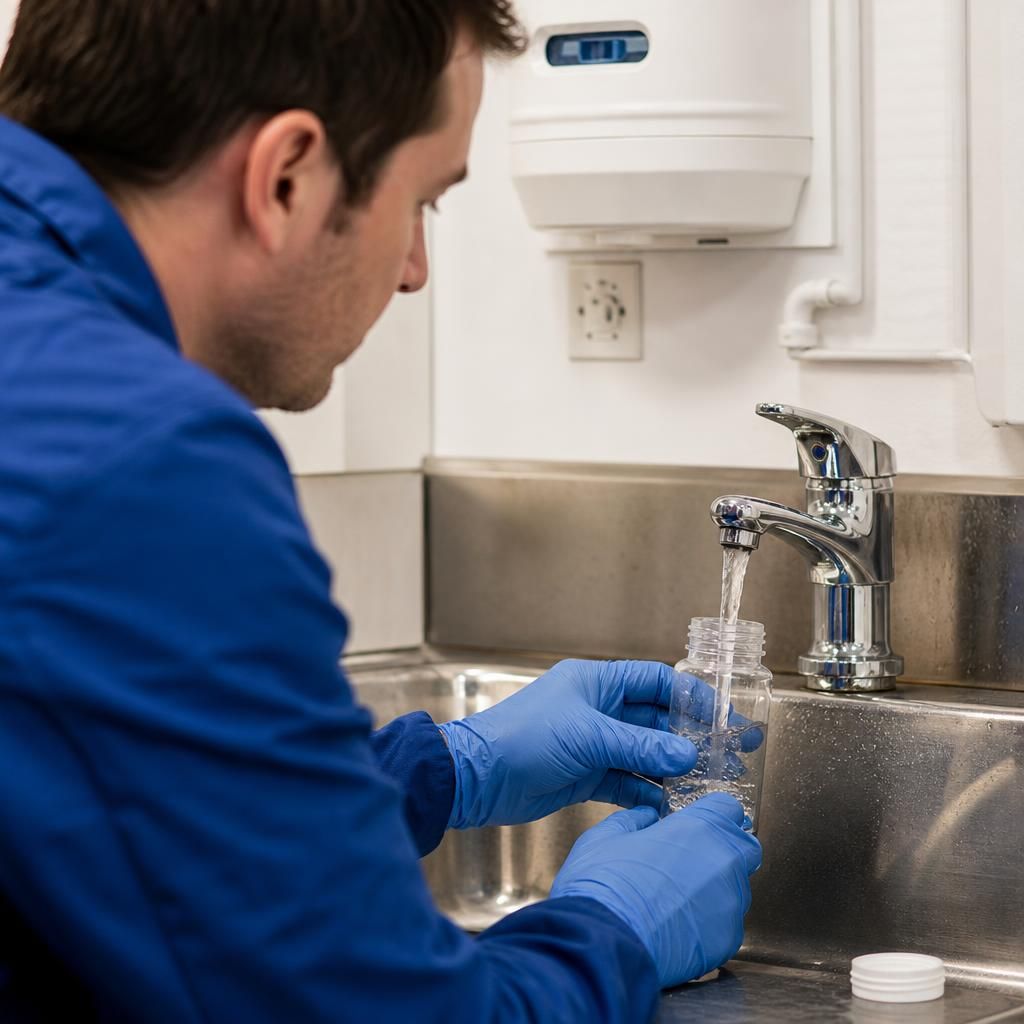
A negative repeat sample does not automatically cancel an earlier positive result. It shows that legionella was not detected in that particular sample under the conditions at the time; the original finding remains part of the system’s history and should be considered alongside remedial records, operational checks and subsequent monitoring.
Return to routine sampling should therefore be based on the overall evidence, not on one favourable result. The responsible person should record the retest outcome, confirm that the relevant control measures remain effective and ensure the risk assessment supports the revised monitoring approach.
Discuss your legionella retesting requirements
Discuss your legionella retesting requirements with Blue Fish Water Management Ltd for practical advice on selecting an appropriate sampling approach and reviewing the evidence from your water system.