
What type of UKAS legionella water testing does my building need?
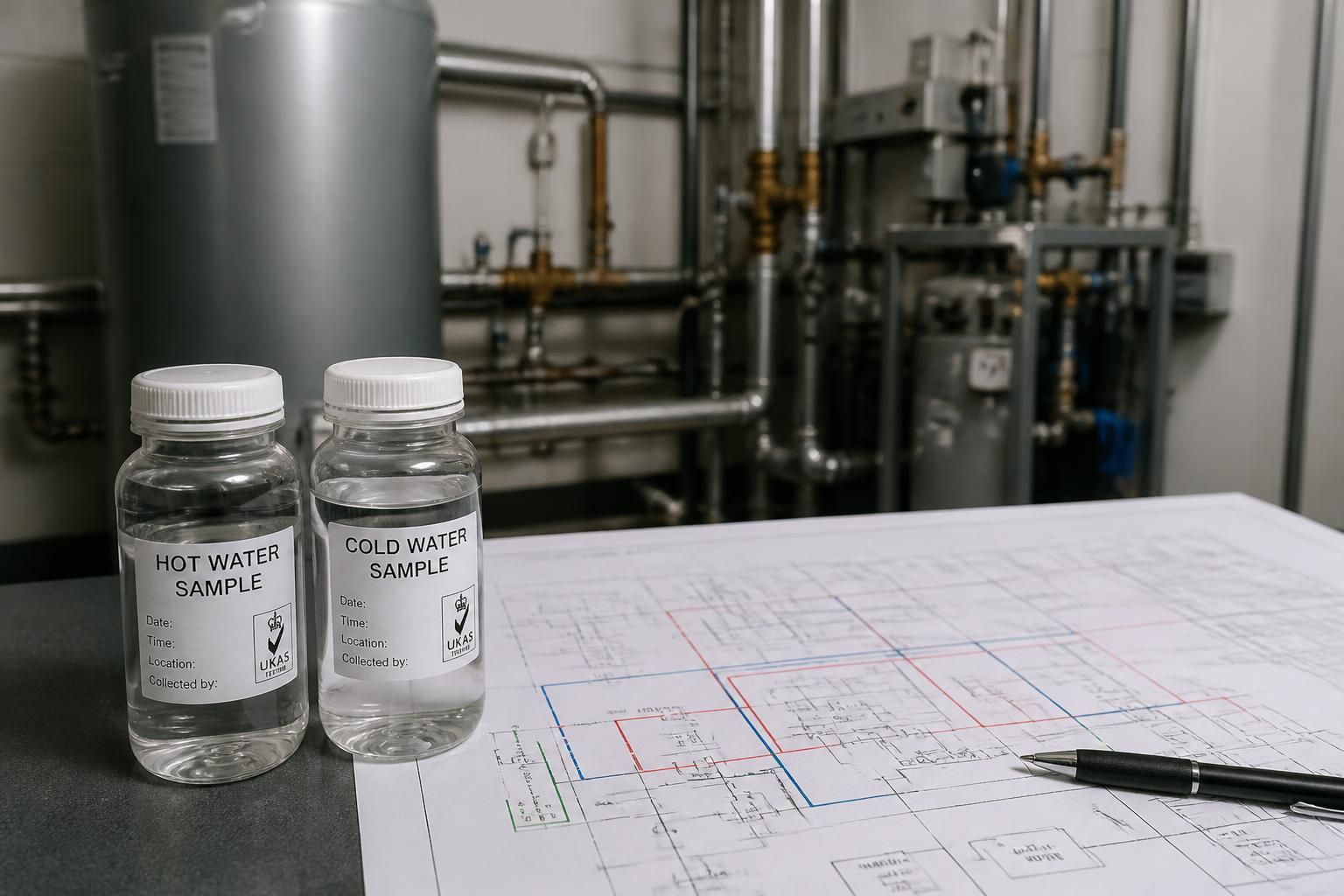
The right UKAS legionella water testing programme is determined by the risk assessment, not by the building name alone. It should reflect the water systems present, how they are used, the number and vulnerability of occupants, temperature-control performance, periods of low use, and any previous evidence of Legionella or inadequate control.
For domestic hot and cold water systems, testing commonly focuses on representative outlets and parts of the system where conditions could allow Legionella to multiply. Depending on the risk assessment, this may include:
- sentinel outlets, such as the first and last outlets on a supply run;
- showers, infrequently used taps and other low-use outlets;
- hot-water cylinders, calorifiers, storage tanks and associated return circuits;
- cold-water storage tanks and outlets supplied by them; and
- areas affected by low temperatures, stagnation, dead legs, insufficient circulation or suspected contamination.
A standard office with a well-maintained mains-fed system may need a different sampling plan from a building with stored water, extensive pipework, multiple hot-water systems or many seldom-used rooms. A residential block may require representative sampling across different risers, floors or dwelling types, while a care setting or healthcare premises may need a more cautious approach because some occupants could be particularly vulnerable to infection.
Buildings with cooling towers or evaporative cooling systems need testing designed for those systems rather than a domestic hot-water sampling plan. Samples may need to cover the cooling-water circuit, points representative of system operation and locations identified by the site-specific risk assessment. The control programme should also consider system condition, water treatment, cleaning, dosing and any periods when the system has been idle or altered.
Industrial and process-water systems require an assessment of how water is stored, heated, recirculated, sprayed or released as an aerosol. Testing can be relevant to equipment such as process tanks, humidification systems, vehicle wash systems, emergency showers or other specialist installations where the conditions create a plausible exposure route. The sample locations should be selected from the actual system design, not copied from a generic schedule.
There are several reasons for taking UKAS legionella samples, and each calls for a different approach:
- Baseline or initial assessment: establishes whether Legionella is present and helps confirm that the proposed control regime reflects the system’s actual condition.
- Routine verification: checks whether existing control measures continue to perform as intended. The sampling schedule should be justified by the risk assessment and reviewed when the system or occupancy changes.
- Investigative sampling: examines a suspected problem, such as persistently poor temperatures, repeated positive results, unusual odour or appearance, contamination, or a failure in water treatment.
- Post-remedial or follow-up sampling: helps assess whether cleaning, disinfection, temperature correction, replacement work or other remedial action has addressed the identified issue.
- Commissioning and change-related testing: may be appropriate after a new system is installed, a building is refurbished, pipework is modified or a system has been taken out of service and returned to use.
Routine samples should not be treated as a substitute for operational monitoring. Temperature checks, inspection of tanks and outlets, flushing of low-use points, water-treatment records and maintenance evidence remain important parts of legionella control. A laboratory result is only one source of evidence about whether the system is being managed effectively.
The sampling plan should also specify whether samples are taken before or after flushing, because the two approaches answer different questions. A pre-flush sample can provide information about water standing in an outlet or nearby pipework; a post-flush sample may give a better indication of the wider circulating system. The sampling method, location, date, water temperature and relevant system conditions should be recorded so that results can be assessed in context.
Samples should be collected, labelled, transported and examined in accordance with the laboratory’s instructions. Choose a laboratory whose UKAS accreditation covers the relevant legionella examination and confirm that the proposed sampling and reporting arrangements match the requirements of the building’s risk assessment. If a result is positive or unexpected, further sampling should be planned alongside a review of control measures rather than treated as an isolated pass-or-fail check.
For a building manager, the practical starting point is to provide the risk assessor or water hygiene specialist with current schematics, asset details, temperature records, occupancy information, previous results and details of any changes or remedial work. That information allows the testing programme to distinguish between routine surveillance, targeted investigation and verification after corrective action, producing results that are relevant to the building’s actual water systems.
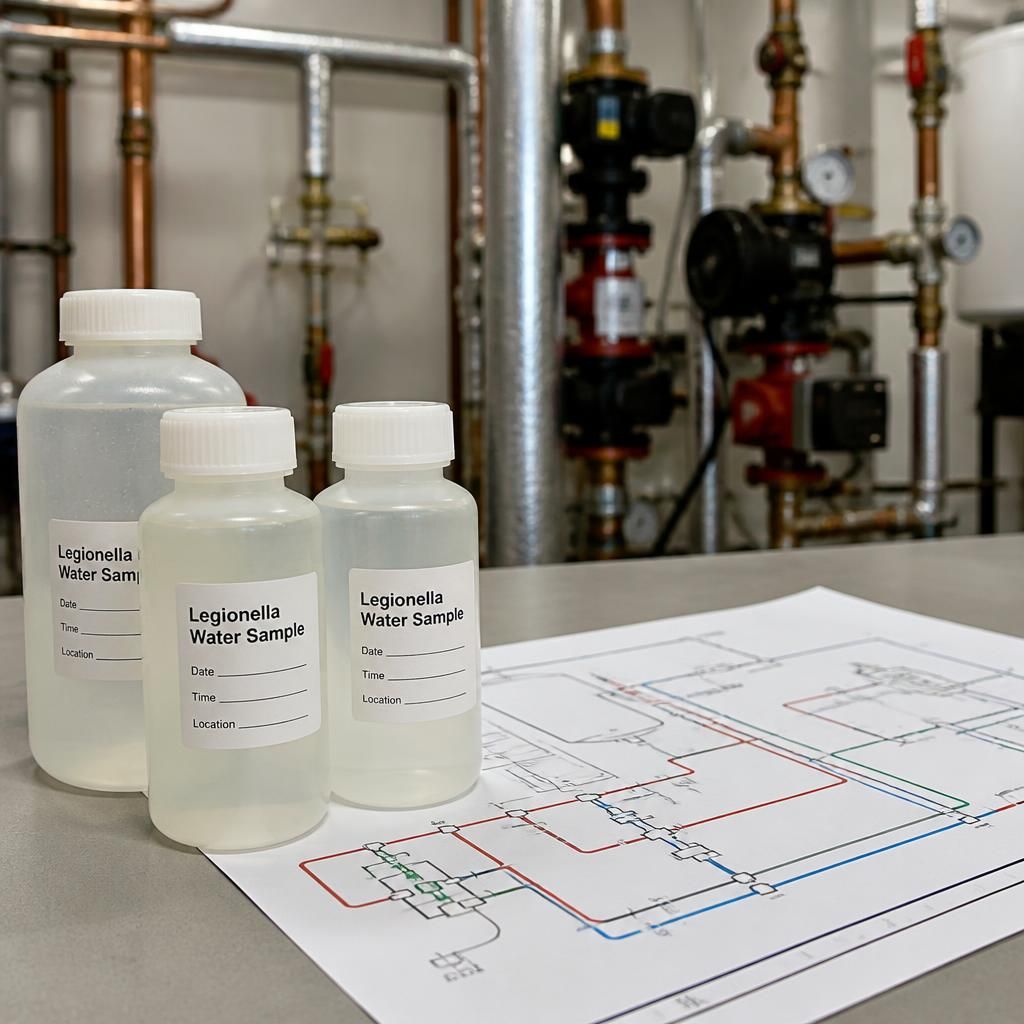
A building with more than one water system may need separate UKAS legionella testing scopes rather than one blanket sampling schedule. Domestic hot and cold water, cooling systems and process-water installations should be considered independently because they have different operating conditions, exposure routes and control measures.
For each system, the testing brief should identify:
- the system or asset being examined;
- the reason for taking the sample, such as baseline assessment, routine verification or investigation;
- the locations that provide meaningful evidence about that system; and
- the control information needed to assess the result, including recent changes, treatment activity or unusual operating conditions.
This prevents results from unrelated systems being treated as though they describe the building as a whole. It also gives the responsible person a clearer basis for deciding whether an unexpected result requires further investigation, a review of controls or remedial action.
Discuss the right UKAS legionella water testing for your building
If you need to confirm which UKAS legionella water testing is appropriate for your building, discuss your system details and existing risk assessment with Blue Fish Water Management. Their team can help you identify a testing approach that reflects your water systems and current control arrangements.