
Which water systems need UKAS legionella water testing?
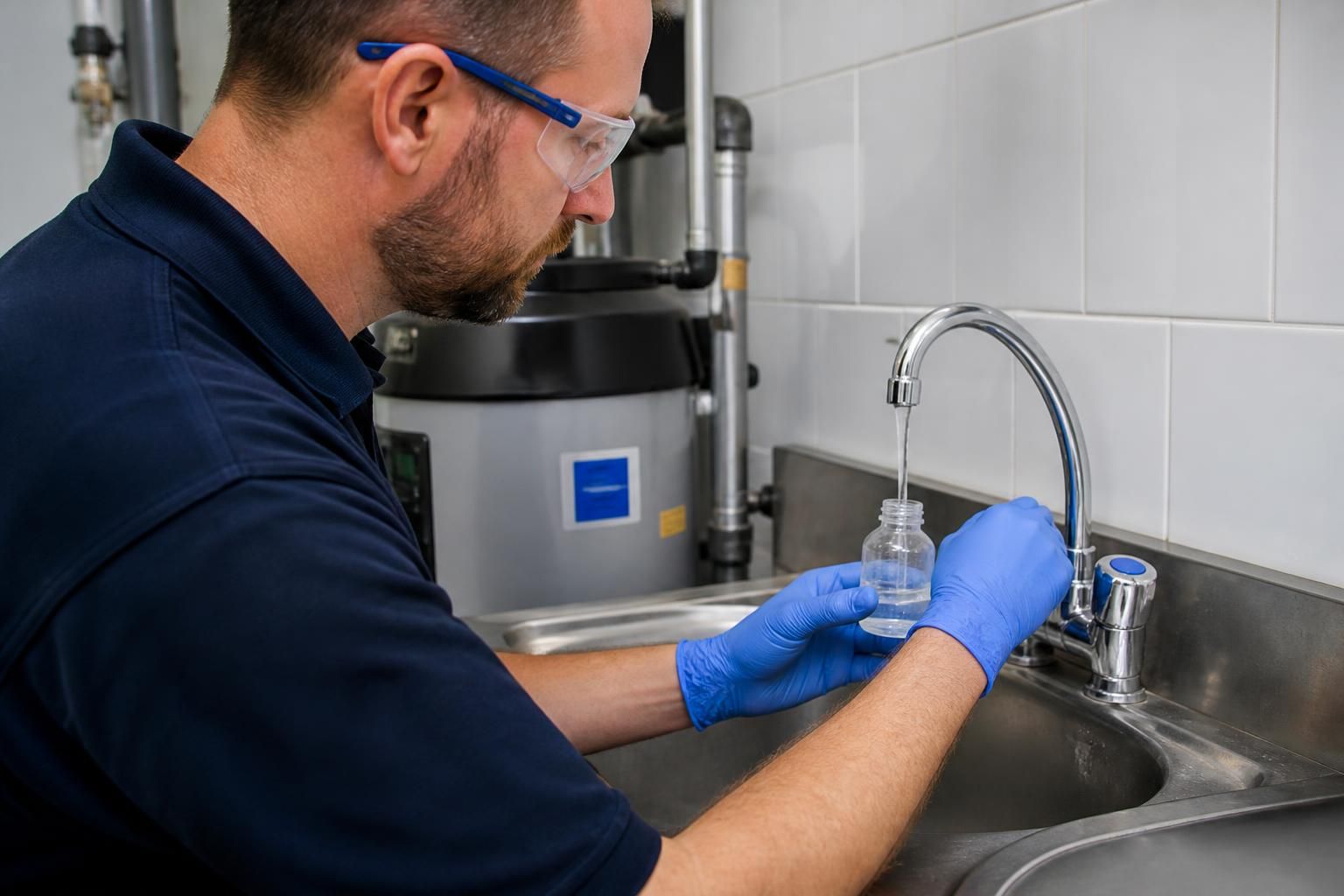
The systems most likely to need UKAS legionella water testing are those with conditions that can allow Legionella to multiply or become airborne, particularly stored or recirculating water systems, systems with aerosol-generating outlets, and installations serving people who may be more vulnerable to infection. Testing should follow a suitable and sufficient risk assessment rather than being applied automatically to every water system.
Water system features that increase the case for testing
A system should be considered for sampling where one or more of the following features are present:
- Stored hot or cold water, including tanks, cisterns and calorifiers.
- Hot-water circulation systems with secondary returns, multiple branches or inconsistent temperatures.
- Showers, spray taps, hoses, spas or other outlets capable of producing fine water droplets.
- Long pipe runs, infrequently used outlets, dead legs or areas where water can stagnate.
- Complex distribution arrangements serving several buildings, floors, tenants or operational areas.
- Evidence of temperature control problems, sludge, scale, corrosion, biofilm or poor system condition.
- Water systems that have been altered, recommissioned, extended or left unused for a significant period.
These factors do not each create an automatic testing requirement. They indicate that the system needs a more detailed assessment of the likelihood of Legionella growth and exposure. A simple, well-maintained installation with little opportunity for stagnation or aerosol production may not need routine laboratory sampling, provided the risk assessment supports that conclusion and control measures are maintained.
Systems requiring particular consideration
Domestic hot- and cold-water installations in rented, shared or managed premises may need testing where responsibility extends beyond a single household, where several people use the same outlets, or where the building contains vulnerable occupants. Shared systems should be assessed as a whole, including storage vessels, distribution pipework, return loops and representative outlets, rather than sampling only the most convenient tap.
Cooling towers, evaporative condensers and other wet cooling equipment also require specific consideration because they can generate aerosols and may contain conditions that support bacterial growth. The assessment should account for the design and operation of the equipment, water treatment arrangements, drift control, maintenance history and the potential for exposure beyond the immediate plant area.
Other systems may warrant targeted testing where the risk assessment identifies a credible exposure route. Examples include humidification equipment, spa and whirlpool systems, decorative water features, process-water installations and specialist equipment containing warm or stagnant water. Testing of these systems should be designed around how the water is used and how droplets or aerosols could reach people; a generic sampling plan may not provide meaningful evidence.
When testing is especially useful
Sampling is commonly considered when commissioning a new or altered system, after corrective work, where control results are inconsistent, or where a risk assessment identifies an unresolved risk. It may also be appropriate when investigating suspected exposure, confirming the effect of remedial measures or establishing a baseline for a previously poorly understood system. The sampling rationale should be recorded so that the results can be interpreted in relation to the system's design and operating conditions.
Samples should be selected by someone who understands the installation. Depending on the risk, this may involve points close to storage or heat-generation equipment, sentinel outlets, return circulation points, low-use outlets and areas with known temperature or flow concerns. A single negative result cannot demonstrate that every part of a complex system is free from risk, just as a positive result needs to be considered alongside temperature records, maintenance information and the physical condition of the system.
What UKAS testing means
UKAS accreditation applies to the laboratory's competence for the relevant testing activity, not to the water system itself. Using a UKAS-accredited laboratory for Legionella analysis provides confidence that the laboratory operates within an independently assessed technical and quality framework. The test report should still be reviewed by a competent person who can relate the result to the risk assessment, control regime and sampling locations.
Blue Fish Water Management Ltd can help organisations determine whether their system warrants UKAS legionella water testing through risk assessment, water hygiene advice, system monitoring and compliance support. The appropriate scope should be based on the system's design, use, condition and occupants, with the reasoning documented for future review.
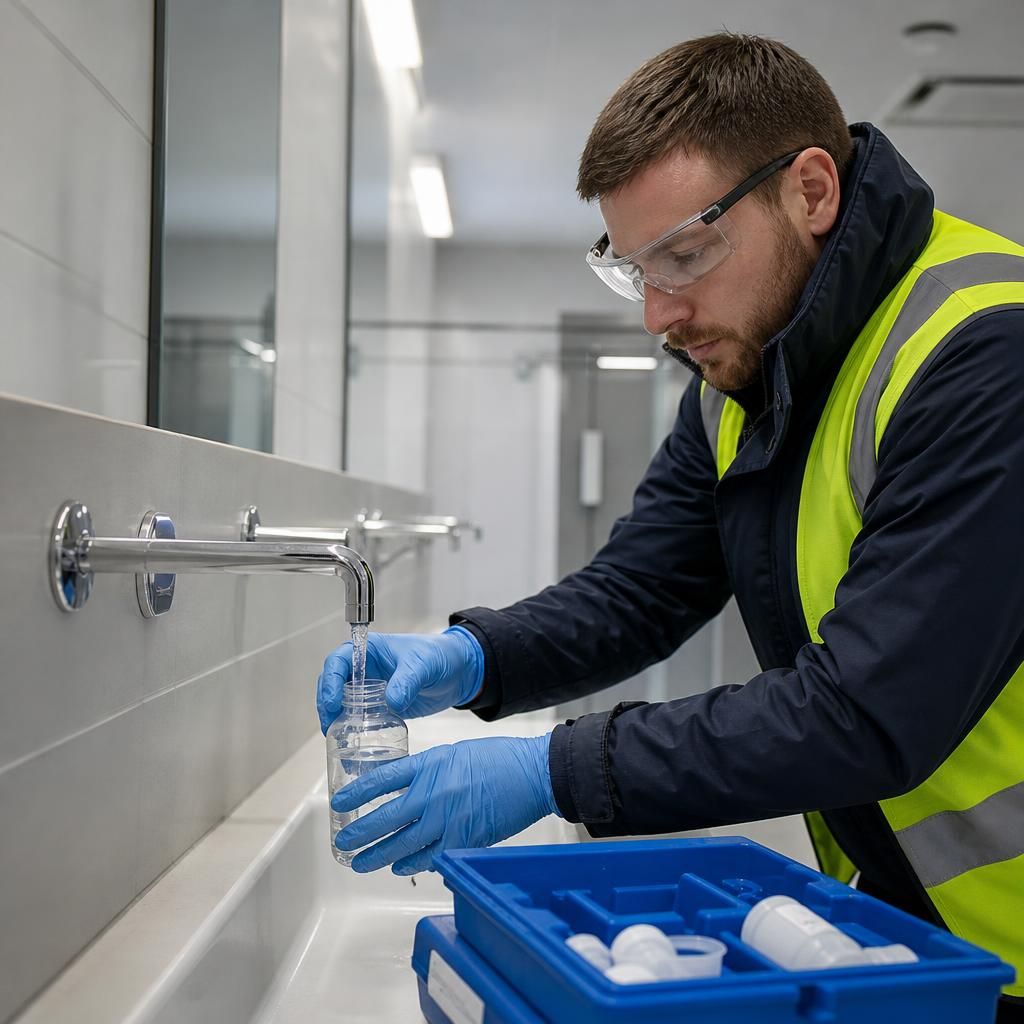
System design matters more than the building’s label. A mains-fed cold-water basin with no storage, spray or shared distribution is not equivalent to a calorifier-fed hot-water system supplying showers across several floors. Both may be described simply as “commercial water systems”, but their potential for Legionella growth and exposure is different.
For this reason, UKAS legionella water testing should be specified against the actual configuration: how water is stored, heated, distributed and released. Comparing a proposed sampling plan with the schematic, asset register and risk assessment helps confirm that the selected samples represent the parts of the system where risk could arise.
Discuss your UKAS legionella water testing requirements
Discuss your water system with Blue Fish Water Management Ltd to identify whether UKAS legionella water testing is appropriate and define a sampling approach suited to its design and risk profile.