
When is repeat legionella water testing appropriate?
Repeat legionella water testing is appropriate when a risk assessment or monitoring programme identifies a need, following a positive or concerning result, or after changes to a water system, its use or control measures. Retesting should be based on the system’s risk profile and any corrective action required, rather than carried out on an arbitrary schedule.
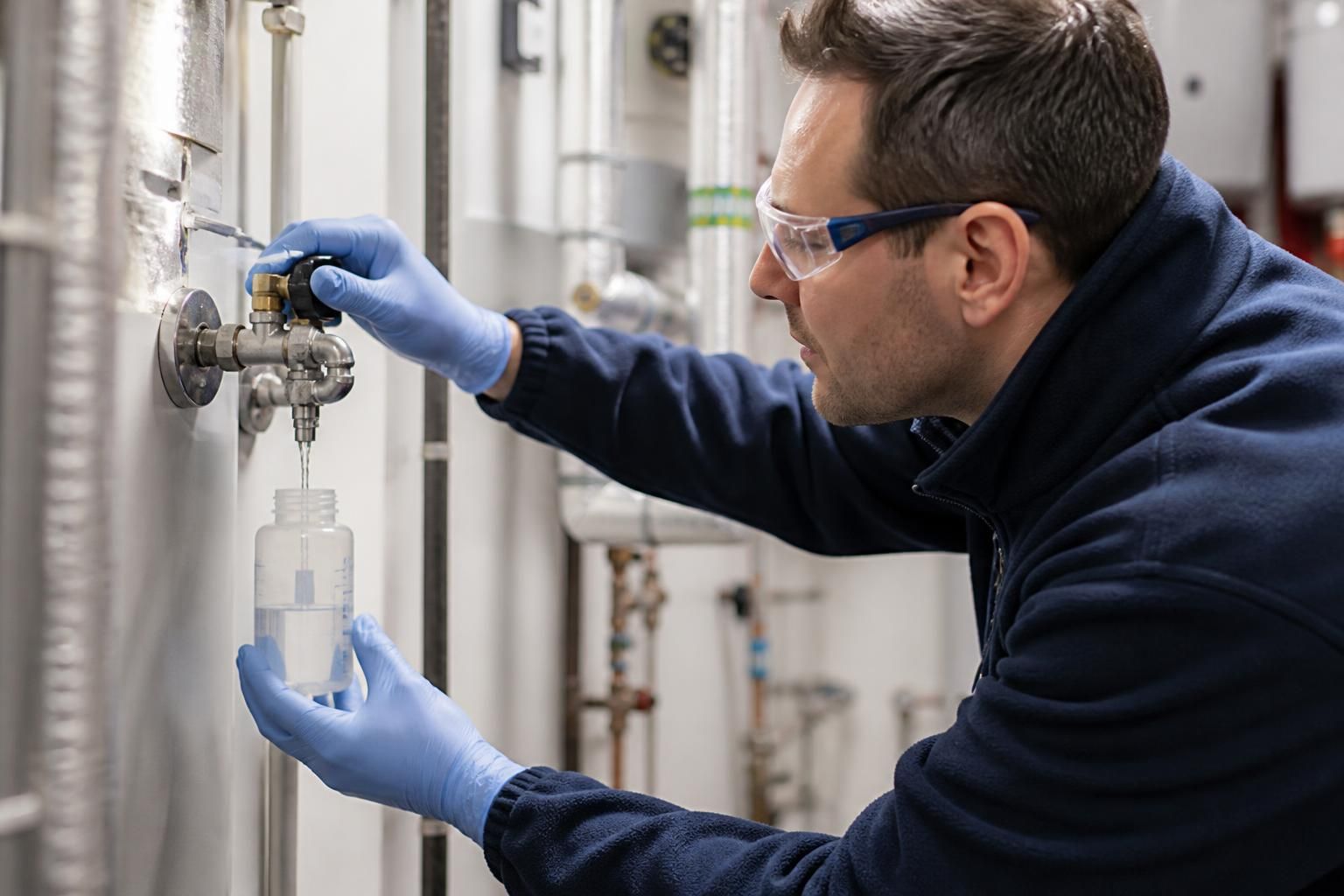
Repeat legionella water testing is appropriate when the current evidence is no longer sufficient to demonstrate control. The decision should follow the findings of the risk assessment, previous results, monitoring records and any changes affecting the water system, rather than a universal retesting interval.
A further sample may be needed after a legionella result that is elevated, unexpected or inconsistent with the system’s normal pattern. The result should first be assessed alongside temperatures, system design, usage, sampling conditions and the vulnerability of exposed people. A single result does not always explain the cause, so repeat sampling can help establish whether contamination is isolated, persistent or distributed through the system.
Where corrective work has been carried out, testing may be used to verify that the action has addressed the underlying problem. This can include cleaning and disinfection, removing dead legs, improving temperature control, restoring circulation, replacing contaminated components or reducing areas of stagnation. Sampling should be timed to provide meaningful evidence after the intervention and should not be treated as a substitute for checking that the remedial work itself has been completed properly.
Repeat testing is also appropriate when the system or its use changes in a way that could alter legionella risk. Examples include:
- alterations to hot or cold water pipework, storage vessels, calorifiers, outlets or circulation arrangements;
- changes to occupancy, building use or the population exposed to the water system;
- periods of low use, partial closure or prolonged stagnation;
- changes to water temperatures, treatment arrangements or control settings; and
- the introduction of equipment or outlets that create additional aerosol risk.
Some systems also justify repeat sampling because their risk can vary over time. A risk assessment may identify a need for additional evidence during seasonal changes, after unusual operating conditions or at locations where control is difficult to maintain. This is particularly relevant where there are vulnerable occupants, complex distribution networks, multiple storage or secondary circulation arrangements, or a history of unsatisfactory results.
Routine repeat testing should be distinguished from investigation sampling. Routine sampling forms part of an established monitoring programme and is used to confirm that controls remain effective. Investigation sampling is arranged in response to a specific concern, such as a positive finding, a failed control check, a complaint about water quality, or evidence of a change in system performance. The number and location of samples should reflect the reason for testing and the system’s risk profile.
For results to be comparable, repeat samples should be taken from relevant, representative points using a consistent and documented method. The sampling plan should record the outlet, whether the sample was taken before or after flushing where relevant, the date, system conditions and any recent remedial work. Sampling only the easiest outlets may fail to show what is happening elsewhere in the system, while changing locations without explanation can make trends difficult to interpret.
Results should be reviewed with the wider control evidence rather than considered in isolation. A low result does not remove the need for effective temperature management, cleanliness, inspection and monitoring. Conversely, an adverse result should prompt a proportionate review of the risk assessment and control measures, with further testing used where it can answer a defined question or confirm the effectiveness of action taken.
There is no single retesting schedule that suits every premises. The responsible person, supported by competent advice where necessary, should document why repeat testing is required, what it is intended to establish, which locations will be sampled and what action will follow each possible outcome. UKAS-accredited laboratory testing can provide reliable analytical results, but the sampling strategy and interpretation remain essential parts of the water safety process.
Blue Fish Water Management can help businesses interpret repeat legionella testing within the context of their risk assessment, monitoring records and system controls, so that further sampling is targeted and supported by appropriate corrective action.
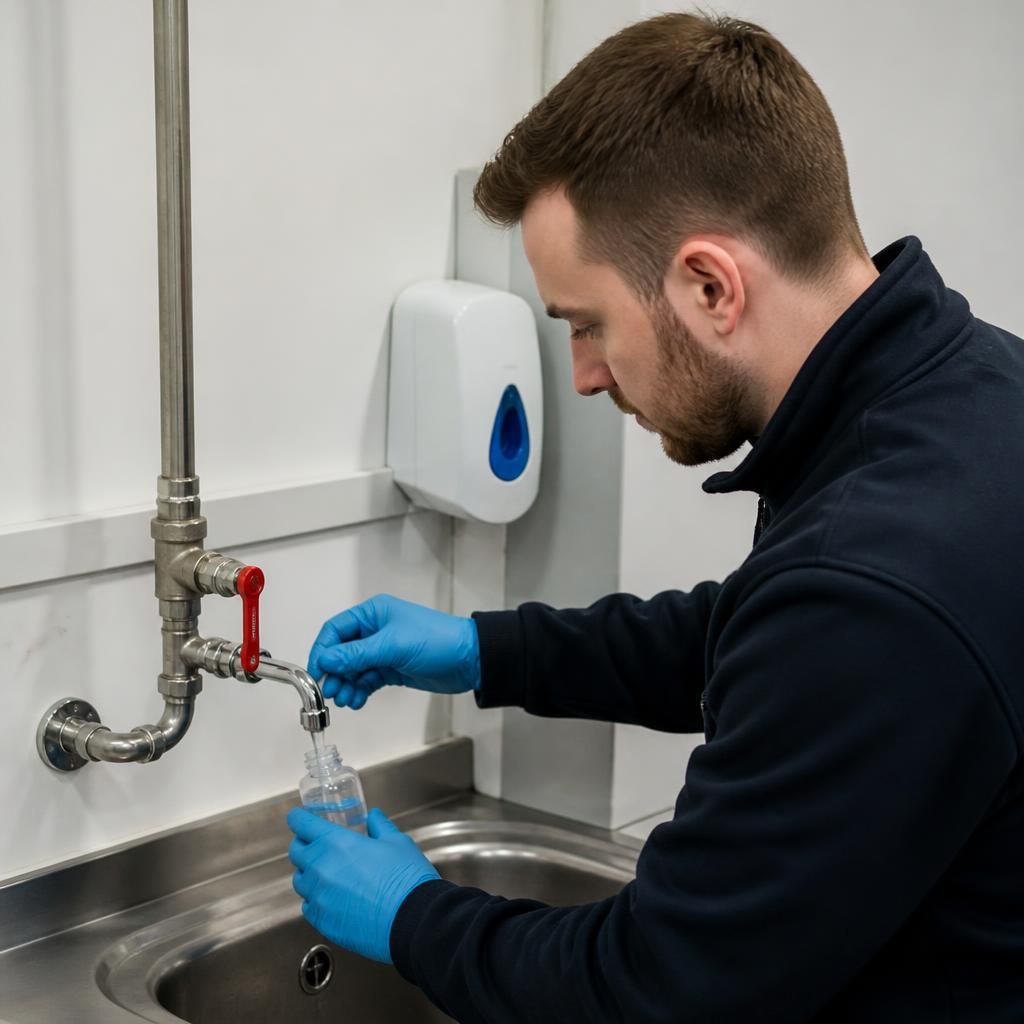
Repeat legionella water testing may be appropriate when the original sample cannot be relied upon because of a sampling or handling problem. Examples include an incorrectly identified outlet, an unrepresentative sampling point, contamination during collection, insufficient sample information or a delay that affects the laboratory’s ability to process the sample properly.
This type of retest is intended to establish whether the result is analytically dependable; it does not replace a review of the water system itself. The reason for repeating the sample should be recorded, and the laboratory or competent water safety adviser should be consulted where the validity of the original result is uncertain.
Discuss Your Repeat Legionella Testing Requirements
If you need to determine whether further legionella sampling is appropriate, discuss your system and testing requirements with Blue Fish Water Management. Their team can help you identify a suitable next step based on the available evidence.