
What happens during a UKAS legionella water testing process?
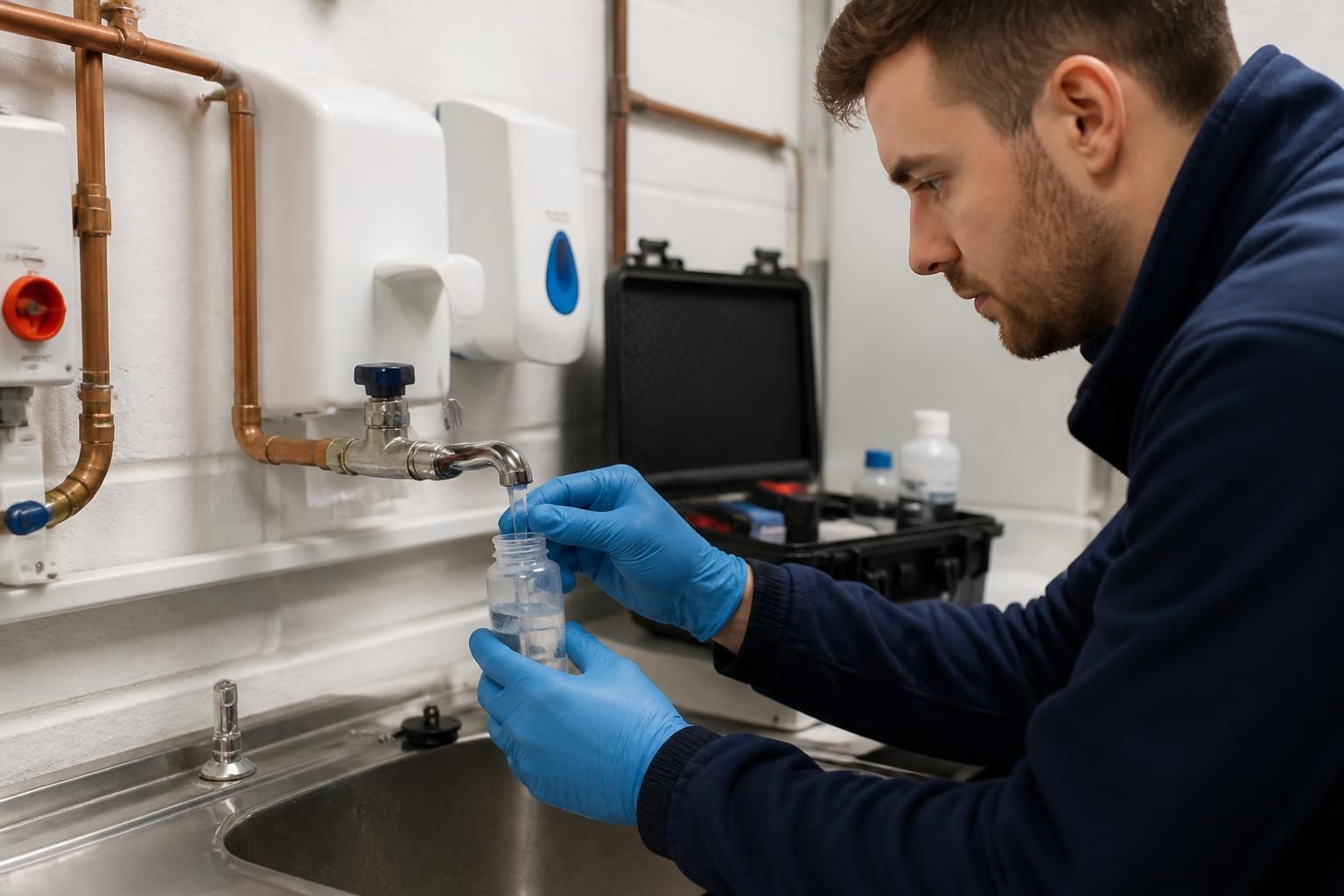
A UKAS legionella water testing process is a controlled sequence of planning, representative sampling, laboratory examination, reporting and follow-up. Each stage affects the reliability and usefulness of the result, so testing should be based on the water system’s design, use, risk profile and existing control records.
1. Pre-testing review
Before samples are taken, the tester should establish what the system contains and how it operates. Relevant information may include the water system schematic, storage and distribution arrangements, temperature records, previous results, cleaning or disinfection history, maintenance activity and any known changes in occupancy or use. This review helps identify appropriate sampling points and prevents isolated samples from being treated as a complete picture of system condition.
The sampling plan should also consider areas where water may stagnate, outlets that are used infrequently, stored hot or cold water, showers, vulnerable users and parts of the system where temperature control may be inconsistent. The purpose of the test should be clear: for example, routine monitoring, investigation of an unsatisfactory result, verification following remedial work or assessment of a suspected source of contamination.
2. Selecting representative sample points
Samples are normally taken from points that provide useful information about the system rather than simply from the most convenient outlets. Depending on the system and the reason for testing, this may include incoming cold water, storage tanks, hot-water return, calorifier-related points, sentinel outlets, showers and outlets furthest from the point of distribution.
Point-of-use samples and samples taken after a period of flushing answer different questions. A first-draw sample can indicate the condition of water within an outlet or nearby pipework, while a post-flush sample may provide information about water supplied through the wider distribution system. The chosen approach should be recorded because the sampling method affects how the result is interpreted.
3. Taking the samples
The tester identifies each point, follows the relevant sampling procedure and uses suitable sterile containers. Care is taken to avoid contaminating the container, its lid, the outlet or the sample itself. Where appropriate, fittings such as spray taps or shower hoses may need to be considered because they can affect the sample or provide locations where biofilm accumulates.
Samples are labelled with information such as the site, outlet, date and time. The sampler also records useful conditions at the point of collection, which may include water temperature, whether the outlet was flushed, the condition of the fitting and any unusual observations. These details give the laboratory and the person reviewing the report important context.
Sampling for Legionella commonly requires attention to preservation and transport conditions. The samples must be protected from avoidable contamination and delivered to the laboratory in accordance with the relevant method and agreed handling requirements. Time between collection and examination is also recorded or controlled as required by the procedure, since poor handling can compromise the value of the result.
4. Laboratory examination
At the laboratory, the samples are logged and checked against the accompanying submission information. The laboratory then applies a documented method to examine the water for Legionella. A UKAS-accredited laboratory has been assessed against the requirements of its accreditation scope and competence arrangements for the activities it performs. This is important because UKAS accreditation applies to specified tests and procedures, not automatically to every activity described as water testing.
The laboratory process may involve concentrating the sample, culturing it under controlled conditions and confirming findings using the applicable technical method. The report may distinguish between different Legionella findings or provide a result expressed in colony-forming units per litre. The exact format depends on the method and the laboratory’s reporting practice. A result should therefore be read with its units, test method, sample point and any stated limitations.
5. Reviewing the report
The completed report should be checked against the sampling plan and site records. Important details include the sample identification, collection date, analysis date, sample location, method, result, reporting limit and any comments or qualifications. Missing or inconsistent information can make it harder to relate a result to the correct outlet or to compare it with earlier testing.
A laboratory result is evidence about the sampled water at a particular time and location. It is not, by itself, a full assessment of the entire water system. A negative result does not remove the need for ongoing control, and a detected result should be considered alongside temperature performance, stagnation, system condition, cleaning records, management arrangements and the susceptibility of exposed individuals.
6. Deciding what happens next
If the result is satisfactory and consistent with the wider control information, it can be entered into the site’s water safety records and used to support the monitoring programme. If the result is unsatisfactory, the response should be proportionate to the finding and the site risk. It may involve checking the sampling circumstances, reviewing temperatures and usage, inspecting outlets and storage, increasing monitoring, carrying out cleaning or disinfection, or completing other remedial work.
Where control measures are changed, the reason for the change should be documented and responsibility for each action assigned. Follow-up sampling may be appropriate after remedial work or where results remain inconsistent. Repeat testing should not be used as a substitute for correcting an identified control failure; its value is greatest when it answers a defined question about whether the system has returned to effective control.
Records that should be retained
- the purpose and scope of the testing;
- the sampling plan and identified sample points;
- sample dates, times, locations and collection conditions;
- laboratory reports, methods and relevant accreditation-scope information;
- temperature, flushing, maintenance and water treatment records relevant to interpretation;
- investigations, remedial actions, responsible persons and follow-up results.
Keeping these records together allows results to be compared over time and supports a defensible review of water safety controls. Where the findings are unclear, technically significant or inconsistent with site conditions, they should be reviewed by a competent water safety professional rather than interpreted from the laboratory result alone.
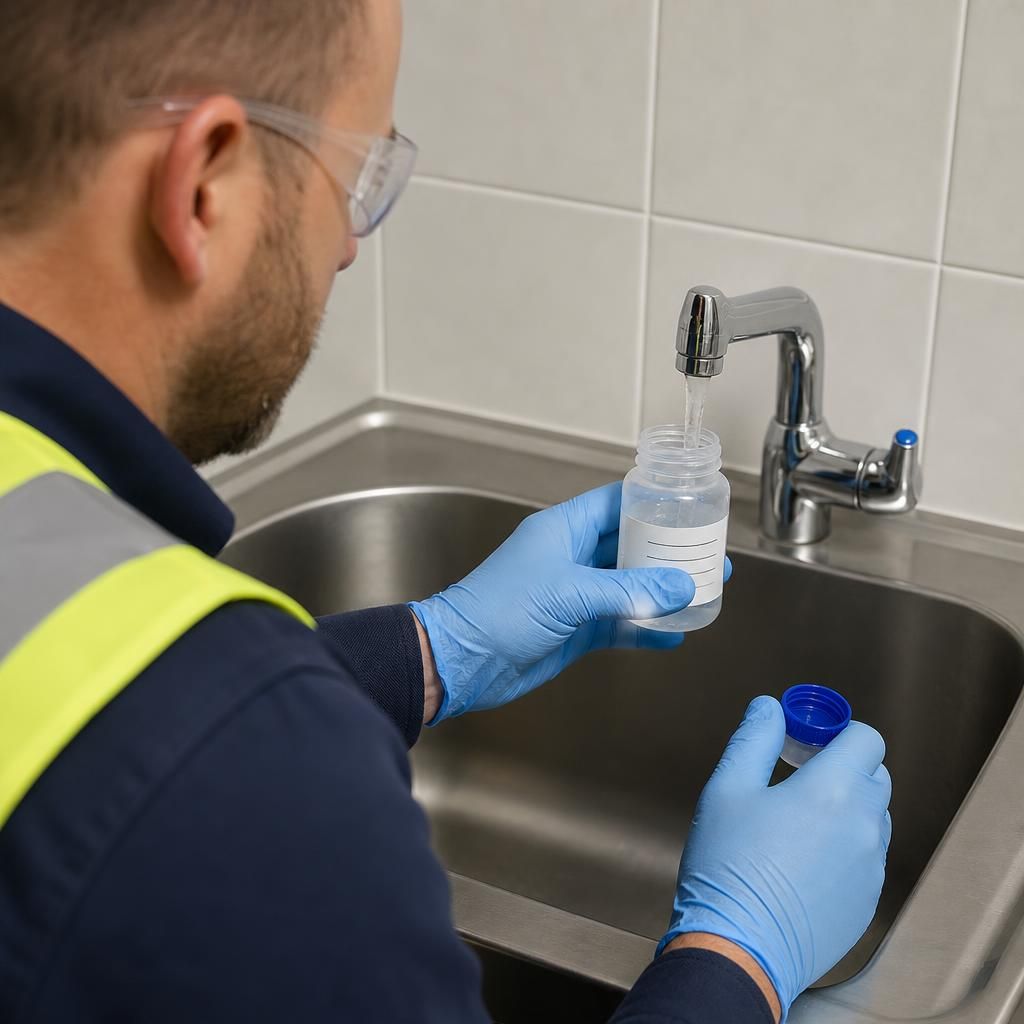
Sample traceability is an important part of the UKAS legionella water testing process. Each sample should remain identifiable from the selected outlet through to laboratory receipt and reporting. The accompanying information may include the sample reference, collection details, requested examination and any relevant handling observations, allowing the final result to be matched confidently to the correct location.
This traceability also helps identify problems that are separate from the water result itself, such as an incomplete submission, damaged container or discrepancy between the sample label and laboratory record. Resolving such issues before the report is used for compliance decisions helps prevent an incorrect result being assigned to the wrong part of the system.
Discuss your UKAS legionella water testing requirements
Discuss your UKAS legionella water testing requirements with Blue Fish Water Management Ltd to clarify the appropriate testing scope for your water system and compliance needs.