
How are water testing results used in hygiene management?
Water testing results are used to assess whether a water system remains within defined hygiene and control parameters, helping identify microbial or chemical changes that may increase risk. They inform corrective actions, verify whether remedial measures have worked and provide documented evidence for ongoing water safety management and compliance.
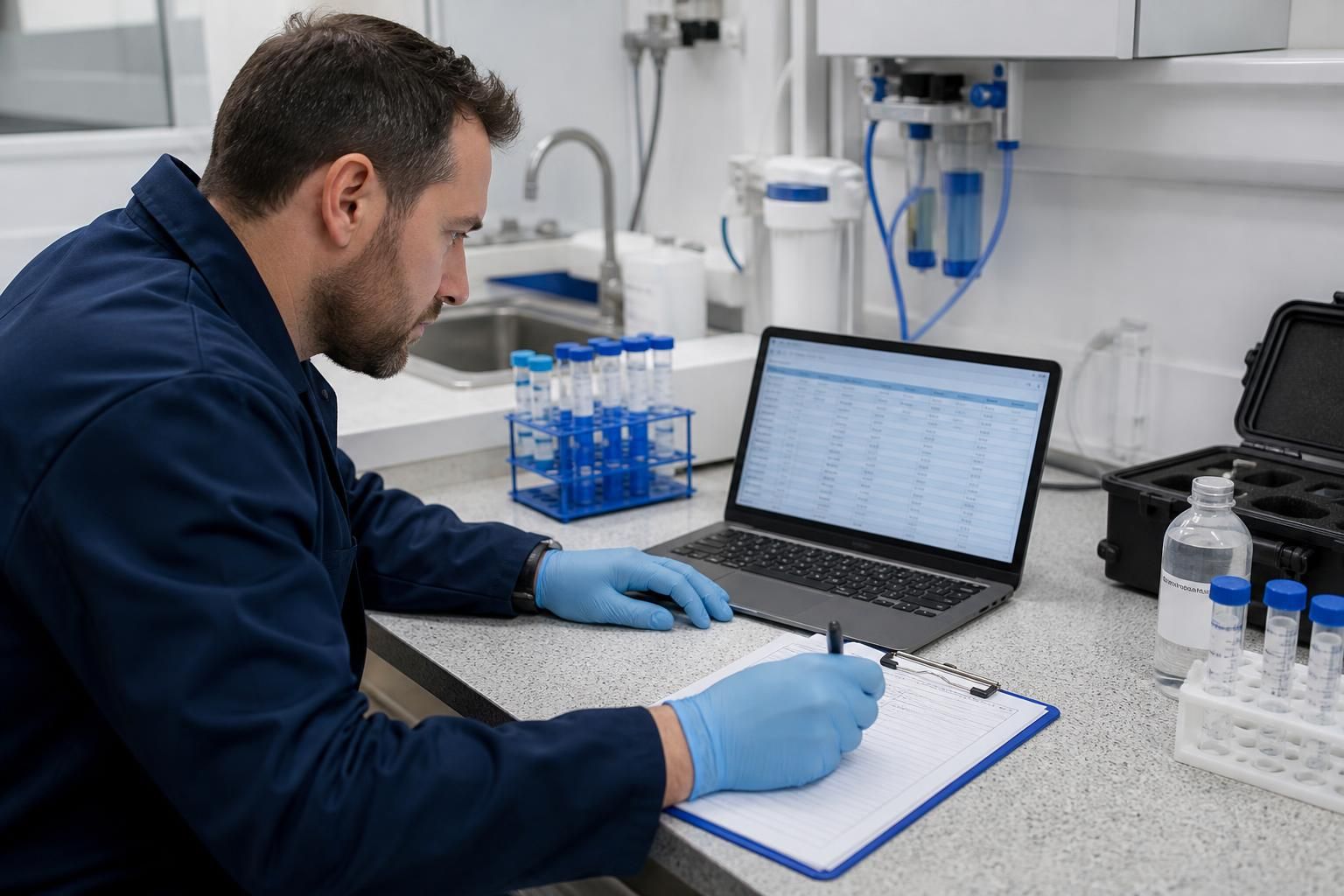
Water testing results become useful to hygiene management when they are interpreted alongside the system design, operating conditions, sampling location and previous findings. The result is not treated as an isolated pass-or-fail statement; it is used to decide whether controls remain appropriate, whether further investigation is needed and what priority should be given to any intervention.
Results are typically used to:
- identify evidence of microbial contamination or conditions that could support bacterial growth;
- track changes in water quality over time;
- compare different parts of a distribution system;
- check whether operational controls are being applied consistently;
- support decisions about investigation, maintenance and follow-up sampling; and
- maintain a clear record of how water safety decisions were reached.
Interpreting the result in context
A laboratory result needs to be considered with the sample point, date and time, water temperature, system type, recent maintenance and sampling method. A result from a storage vessel may have a different significance from one taken at a little-used outlet or at the return of a hot water circulation system. The result may also be affected by flushing, recent disinfection, changes in occupancy or alterations to the plumbing.
This context helps determine whether a finding is likely to represent a localised issue or a wider system condition. It also prevents organisations from drawing an unsafe conclusion from a single sample. A result that does not show the target organism at one outlet does not demonstrate that every part of the system has the same condition.
Using trends rather than isolated results
Repeated testing allows duty holders and water hygiene teams to look for patterns. A series of similar results may indicate stable control, whereas a gradual change, recurring detection or differences between outlets may point to a developing problem. Trend review can identify areas such as dead legs, low-use outlets, poor circulation, inadequate turnover or storage conditions that warrant closer examination.
Trend information is particularly valuable when results are reviewed with temperature records, flushing schedules, inspection findings and maintenance logs. For example, a change in microbiological results alongside falling return temperatures may suggest that the hot water system requires investigation. The test does not identify the cause on its own, but it can direct attention towards the most relevant part of the system.
Supporting proportionate decisions
The significance of a result depends on the organisation's risk assessment, the type of building, the people exposed and the purpose of the system. Results may therefore lead to different management decisions in a healthcare environment, residential property, manufacturing site or office building. A competent assessment considers the level and nature of the finding, the vulnerability of users and whether other control information supports or contradicts the laboratory result.
Possible responses include reviewing control settings, increasing inspection or sampling, checking outlets and storage arrangements, cleaning or disinfecting affected components, removing redundant pipework or obtaining additional samples. The appropriate response should be based on the evidence and the documented water safety procedure rather than on a laboratory result considered without context.
Using chemical and physical findings
Water hygiene management is not limited to microbiological testing. Results for parameters such as temperature, pH, hardness, total dissolved solids or organic loading can help explain system behaviour and identify conditions that affect treatment, scaling, corrosion or cleaning requirements. In process and specialist water systems, these findings may be used to determine whether filtration, reverse osmosis, ultraviolet treatment or other controls are operating as intended.
Physical observations also matter. Discolouration, deposits, unusual odour, damaged fittings or inconsistent temperatures can add important evidence when a result is reviewed. Combining these observations with laboratory data produces a more reliable picture than relying on a single type of measurement.
Closing the management loop
After a result has been reviewed, the decision and its rationale should be recorded with the relevant action owner, timescale and follow-up requirement. Subsequent results can then be compared with the original finding and with the action taken. This creates an auditable sequence from sampling through interpretation, investigation and review.
Records should normally link the report to the sample point and system, preserve the laboratory reference information and show any changes made to the control regime. Where results remain unclear or inconsistent, further sampling may be more appropriate than assuming that the system is either safe or unsafe based on one report.
Used in this way, water testing is an information source within a wider water safety management system. Its value lies in helping responsible persons understand system performance, focus resources on relevant risks and demonstrate that water hygiene decisions are based on recorded evidence and ongoing review.
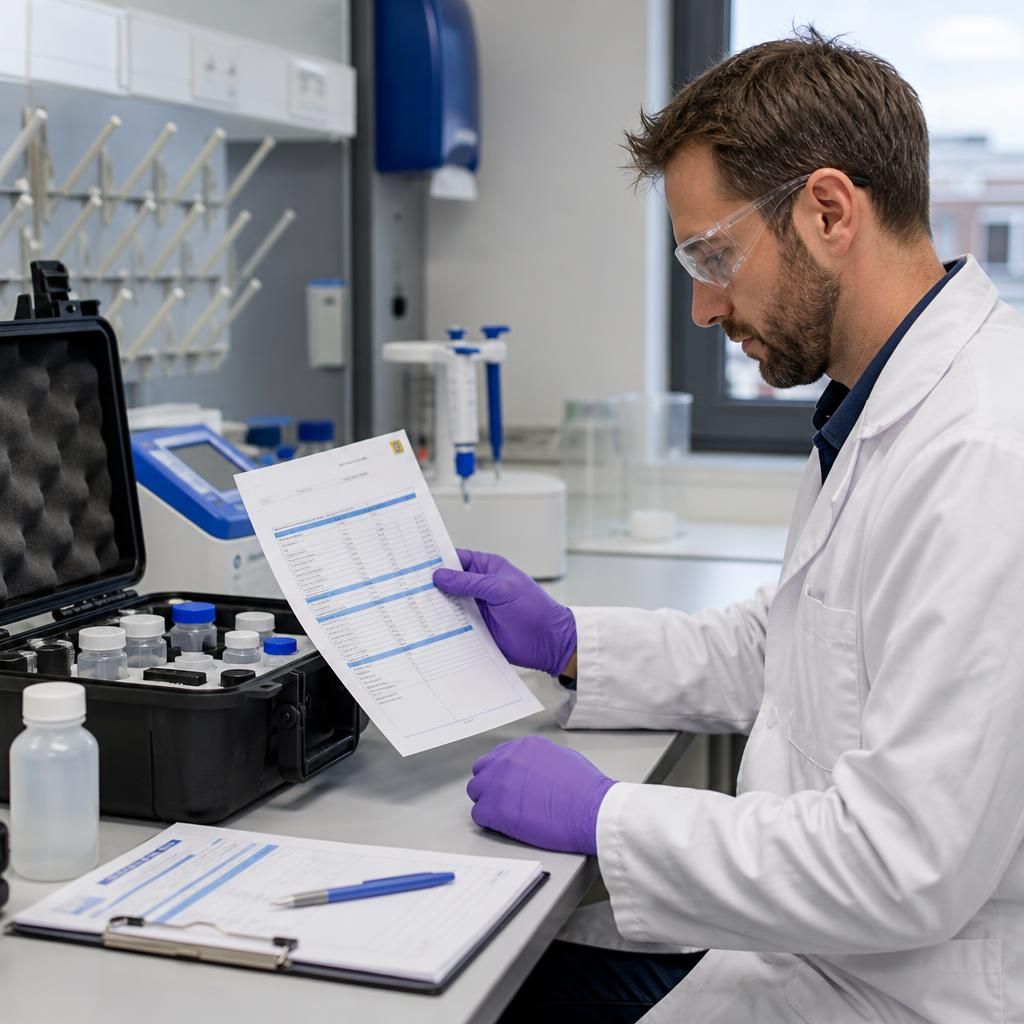
The usefulness of a water testing result depends partly on whether the sample was chosen to answer a defined management question. A planned sampling schedule should reflect the water system’s layout, storage vessels, circulation routes, low-use outlets and areas where control may be less reliable. This makes the result relevant to the part of the system being assessed rather than merely providing an isolated measurement.
Consistent sampling methods also improve comparison between reports. Recording the sample point, system condition and reason for sampling helps distinguish routine surveillance from targeted investigation. In this way, results can show whether a specific control concern has been examined properly and whether further evidence is needed before a hygiene decision is made.
Discuss Your Water Testing Results
If you need help interpreting water testing results or deciding what they mean for your hygiene management plan, discuss the findings with Blue Fish Water Management Ltd. Our team can help you identify appropriate next steps based on the available evidence.