
What hot water testing approach best fits your system’s compliance requirements?
The best hot water testing approach depends on the system’s design, temperature control, usage, condition and legionella risk profile. Use routine temperature checks and planned sampling where controls are established, with targeted or specialist investigation when results, system changes or identified risks require closer assessment.
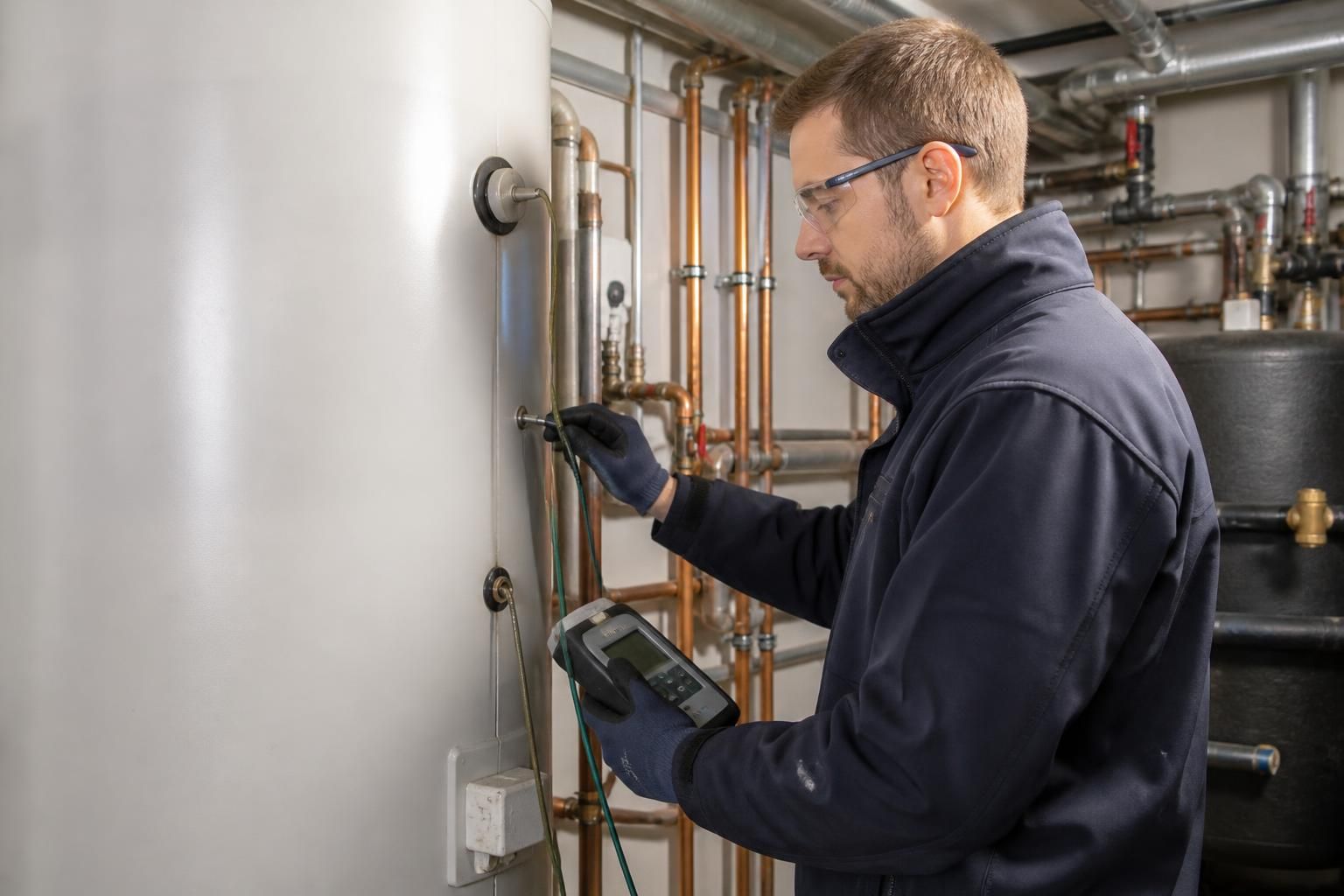
The most suitable hot water testing approach is a proportionate combination of temperature verification, water sampling and technical investigation, selected according to the system’s configuration, control measures, use and risk assessment. A simple, well-controlled installation may need structured routine checks, while variable temperatures, poor circulation, low use or unexplained results justify more targeted work.
Begin with the purpose of the testing. Testing may be required to demonstrate that control measures are operating, investigate a suspected weakness, verify a change to the system or provide evidence following remedial work. These objectives require different levels of detail. A routine compliance programme should establish what is checked, where, how often, by whom and how results are recorded. An investigation should go further by examining the conditions that may have produced an unsatisfactory result.
Match the method to the system design. Stored hot water systems require consideration of the cylinder, primary heating arrangements, distribution pipework, return circulation and outlets. Temperature checks should not be limited to the cylinder alone if water may cool elsewhere in the system. Sampling locations should represent areas where water is stored, circulated or used, including points that may experience stagnation.
Instantaneous systems have a different testing profile because water is heated as it passes through the unit rather than being held in a storage vessel. The assessment may therefore focus on the incoming supply, heater performance, outlet temperatures, low-use branches and any associated storage or blending arrangements. Where a system combines instantaneous heaters with storage or secondary circuits, the testing plan should address each relevant section rather than treating the installation as one uniform arrangement.
Use routine temperature checks where control is established. Temperature monitoring is generally the first line of verification for hot water control. The method should reflect the points that matter to system performance, such as hot water storage, circulating returns and representative outlets. Readings should be taken consistently and compared with the organisation’s control criteria. A pattern of borderline or inconsistent results is more significant than an isolated reading and may indicate a need to examine circulation, demand, valves, controls or operational practice.
Use planned microbiological sampling for evidence that temperature checks cannot provide. Sampling can help assess whether conditions within the system require further action, but it should be designed around the risk assessment and interpreted alongside system information. Sample selection, collection, transport, laboratory analysis and result interpretation all affect the value of the outcome. Testing through a suitably competent, UKAS-accredited laboratory can provide appropriate analytical assurance where formal evidence is needed.
A laboratory result should not be considered in isolation. Its significance depends on factors such as the sampling point, water temperature, system use, previous results, maintenance history and the presence of susceptible individuals or other risk factors. A negative result does not remove the need for effective control, and an unexpected result should prompt a review of the system and sampling circumstances rather than an automatic assumption about the cause.
Choose targeted investigation when routine results do not explain the risk. Specialist investigation is appropriate where results vary between outlets, temperatures fail to respond as expected, contamination is recurrent, parts of the system are rarely used, or alterations have changed the original design. It may involve reviewing schematics, tracing pipework, checking circulation, assessing storage and outlet arrangements, examining control valves and identifying dead legs or redundant sections. The objective is to connect the test result with a specific system condition that can be managed.
Consider the condition and operating history of the installation. Age, scale, corrosion, previous remedial work, intermittent occupancy and changes in water demand can all affect the most useful testing approach. A system with incomplete records may need an initial condition review before a reliable sampling plan is established. Following cleaning, replacement, recommissioning or other remedial work, verification should confirm that the relevant control measures have been restored rather than relying solely on a single test result.
A practical selection process is to:
- Review the risk assessment, system schematic and operating arrangements.
- Identify storage vessels, heaters, circulation loops, outlets and low-use sections.
- Confirm which control measures need verification and define acceptable results.
- Use representative temperature checks as part of routine monitoring.
- Add planned water sampling where microbiological evidence is relevant.
- Escalate to targeted investigation when results are inconsistent, adverse or unexplained.
- Record findings, actions and follow-up checks in the water safety management system.
This approach avoids both under-testing and unnecessary testing. It provides routine evidence where the system is controlled, while allowing the testing programme to become more detailed when system behaviour, test results or changes in use indicate that closer assessment is required.
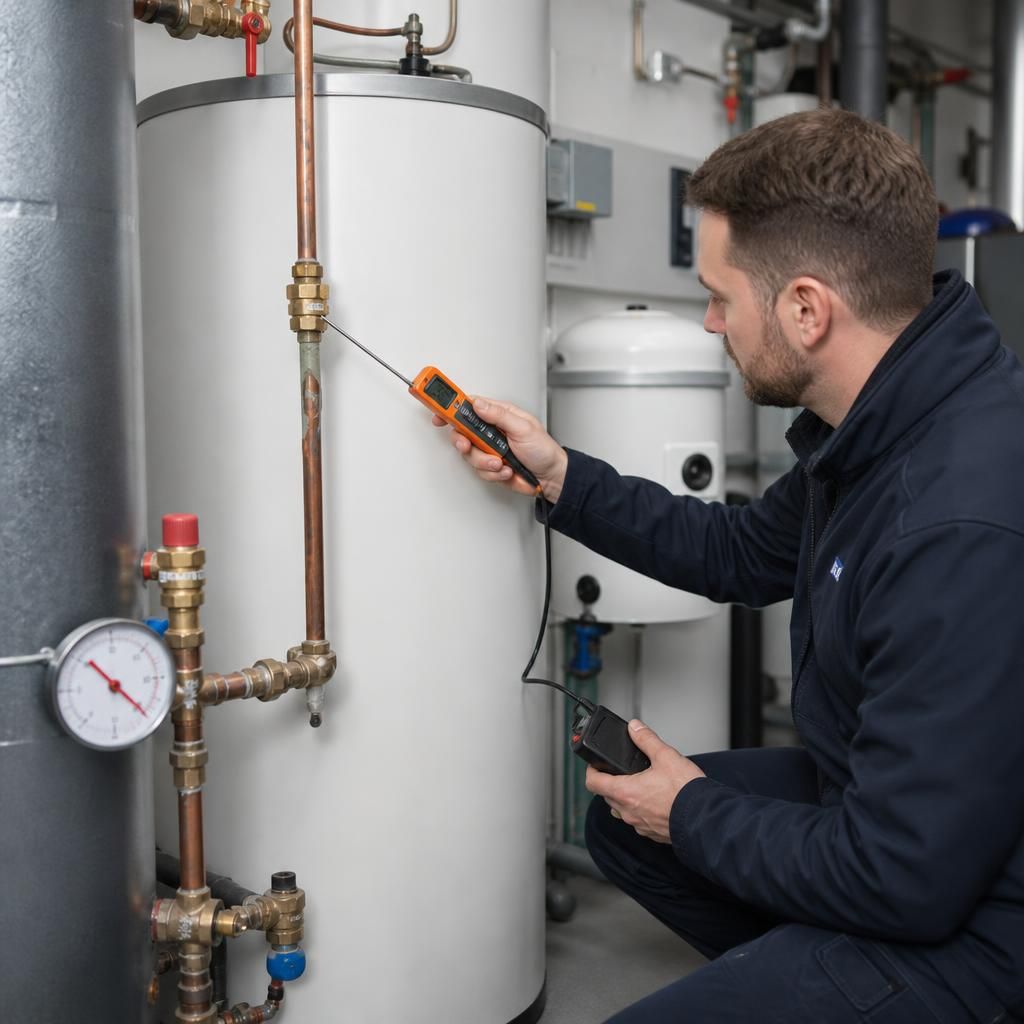
The right hot water testing approach should produce evidence that can be understood and acted on, not simply a set of isolated readings or laboratory results. For compliance purposes, each result should be linked to the relevant system location, testing method, date, operating conditions and any action taken.
A useful testing record should show:
- which cylinder, heater, outlet or return was checked;
- the conditions under which the check or sample was taken;
- whether the result met the organisation’s defined control criteria;
- what investigation or corrective action followed an unsatisfactory result; and
- how the system was rechecked after action was completed.
This creates a clear audit trail and helps distinguish a temporary variation from a recurring weakness. It also allows responsible personnel to compare results over time and decide whether the existing testing frequency and scope remain appropriate.
Discuss the right hot water testing approach for your system
Discuss your existing risk assessment, testing records and system arrangements with Blue Fish Water Management to identify the most proportionate hot water testing approach for your compliance requirements.