
What distinguishes routine checks from specialist hot water system investigation?
Routine checks confirm that hot water temperatures, outlets and control measures remain within the system’s established requirements. Specialist investigation is needed when results are abnormal, conditions are changing, or the cause of a water safety risk requires detailed examination of the system and its operation.
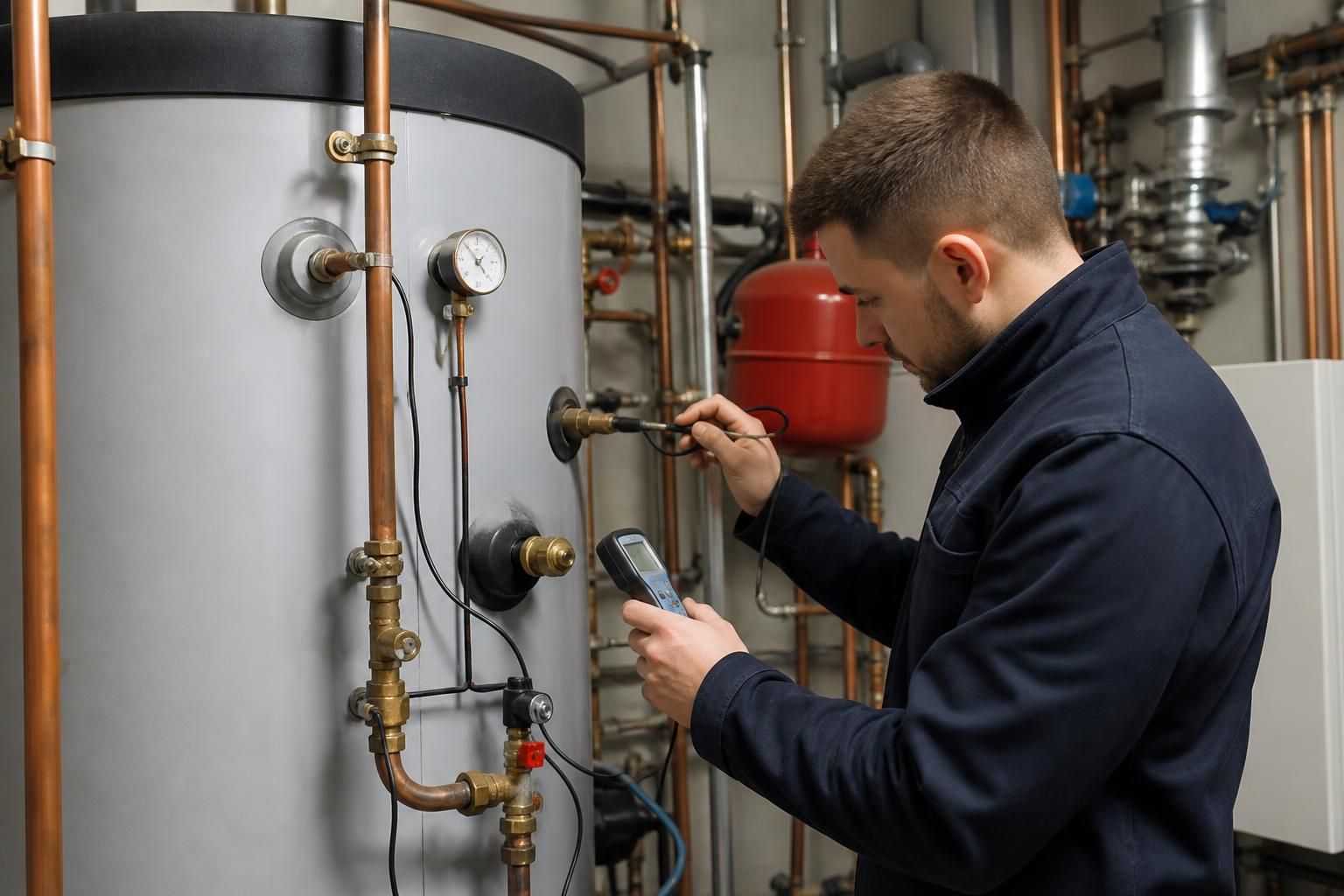
Routine checks are planned verification activities; specialist hot water system investigation is a diagnostic process used to establish why a system is not behaving as expected. The difference is therefore not simply the level of detail recorded. Routine checks ask whether key conditions remain within the control strategy, while specialist investigation examines the design, operation, condition and use of the system when those conditions cannot be explained or controlled through normal monitoring.
Routine checks usually follow a defined schedule and method. Depending on the installation, they may include measuring temperatures at the hot water cylinder or heater, flow and return points, representative outlets and other relevant parts of the distribution system. The person carrying out the check may also confirm that outlets are being used, control devices are functioning, storage and circulation arrangements appear consistent with the system records, and readings have been entered accurately. These activities provide evidence that the existing management arrangements are being followed and help identify changes requiring attention.
Routine work is most useful when the system has a clear baseline. A baseline may include the intended storage temperature, distribution temperatures, outlet condition, normal usage pattern and the location of control points. Comparing current observations with that information can reveal a gradual change before it develops into a wider water safety concern. The records should identify the location tested, the date, the result, the equipment or method used where relevant, and any corrective action raised.
Specialist investigation begins when a result, pattern or site condition needs an explanation. Examples include repeated temperature readings that do not align with the system’s control strategy, substantial differences between nearby outlets, a return temperature that does not recover as expected, unexplained fluctuations, or a recurring issue after corrective work. Investigation may also be appropriate after alterations to pipework, changes in occupancy or water demand, commissioning problems, a period of disuse, or concerns about contamination, stagnation or inadequate circulation.
The investigation is broader than taking another reading. It can involve:
- reviewing schematic drawings, asset information, previous monitoring records, risk assessments and maintenance reports;
- tracing the hot water flow and return arrangement, including branches, secondary circuits, storage vessels, heaters, valves, pumps and outlets;
- checking whether the installed arrangement corresponds with the documented design and current use;
- examining thermostatic mixing valves, non-return valves, pumps, sensors, controls and other components that may affect temperature or flow;
- looking for redundant pipework, low-use outlets, dead legs, trapped sections, scaling, corrosion, leaks or other conditions that can encourage stagnation or reduce control;
- assessing whether access, insulation, plant-room conditions or operational practices are affecting the observed results; and
- taking targeted water samples or arranging laboratory analysis where the available evidence indicates that testing is needed.
Specialist investigation seeks the underlying cause rather than treating an isolated symptom. For example, a low outlet temperature could arise from a faulty mixing valve, insufficient circulation, inaccurate instrumentation, excessive demand, poor insulation, an incorrectly positioned sensor or a problem at the heat source. Repeating the same outlet measurement may confirm the symptom but will not necessarily distinguish between these causes. A system-level review can identify which component, operating condition or design feature requires attention.
The two approaches also produce different types of evidence. A routine check normally results in a monitoring record, an exception or a straightforward maintenance referral. A specialist investigation should produce a documented account of the observations, the evidence considered, the probable cause or causes, any limitations, and proportionate recommendations. Where the evidence is inconclusive, the report should say what remains uncertain and identify further checks, sampling, access or remedial work needed to resolve it.
Water sampling is not automatically a substitute for investigation. A laboratory result can indicate whether a sample contains the organisms or indicators being tested for, but it does not by itself explain why the system has developed unsuitable conditions. Sampling points, sample timing, system operation and interpretation all affect the usefulness of the result. Specialist advice may therefore combine targeted sampling with temperature profiling, asset inspection, record review and assessment of how the system is actually used.
Routine checks should continue while an investigation is planned and after remedial measures are completed. They provide the comparison needed to determine whether the intervention has changed the relevant conditions. However, remedial action should be based on the evidence available: adjusting a control, replacing a faulty component, removing redundant pipework, improving circulation, correcting insulation or changing operational arrangements may each be appropriate in different circumstances. The correct response cannot be selected reliably from a single abnormal reading.
For organisations managing hot water systems, the practical distinction is this: use routine checks to verify known controls and detect deviation; use specialist investigation when the deviation is persistent, complex, unexplained or potentially significant to water safety. Choosing the appropriate level of work helps maintain useful records without treating a more complicated system fault as a simple monitoring issue.
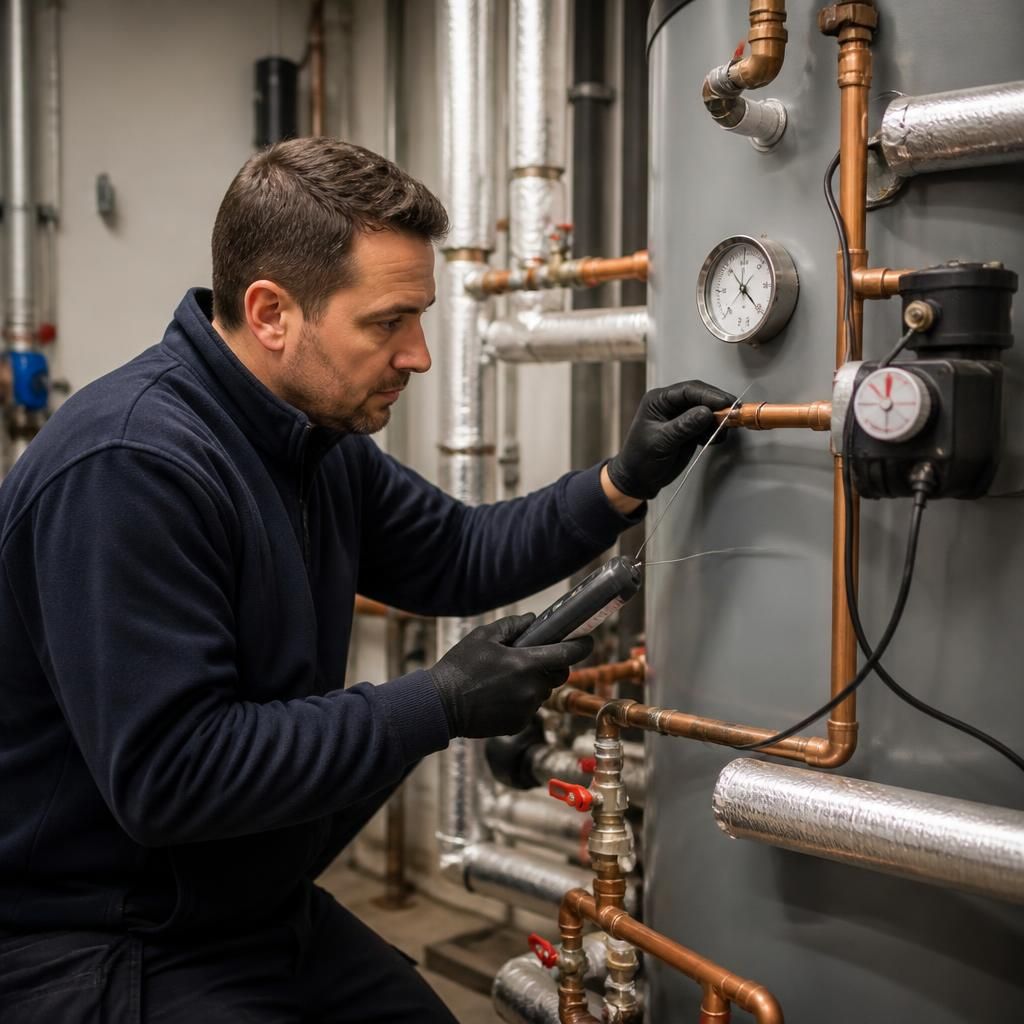
Specialist hot water system investigation is a scoped diagnostic exercise, not automatically a full survey or replacement project. Its extent should match the question that routine monitoring cannot answer: for example, whether a circulation fault, control problem or installation change is responsible for an unresolved temperature pattern.
Before work begins, the investigation should define:
- the specific trigger and the decision that the findings need to support;
- which plant, pipework, outlets, records and operating conditions fall within scope;
- what access, measurements, observations or samples are required;
- any limitations, safety controls or areas that cannot be examined; and
- the criteria for recommending monitoring, maintenance, further testing or remedial work.
This structure prevents an investigation from becoming an unfocused collection of readings. It also makes the final findings easier to assess, because the organisation can distinguish between evidence that answers the original question and observations that require separate attention.
Discuss Your Hot Water System Investigation Requirements
Discuss your hot water system investigation requirements with Blue Fish Water Management Ltd, providing relevant monitoring records and the specific concern under review. This helps establish an appropriate next step without commissioning work beyond what the evidence requires.