
How does system condition affect the choice of hot water testing approach?
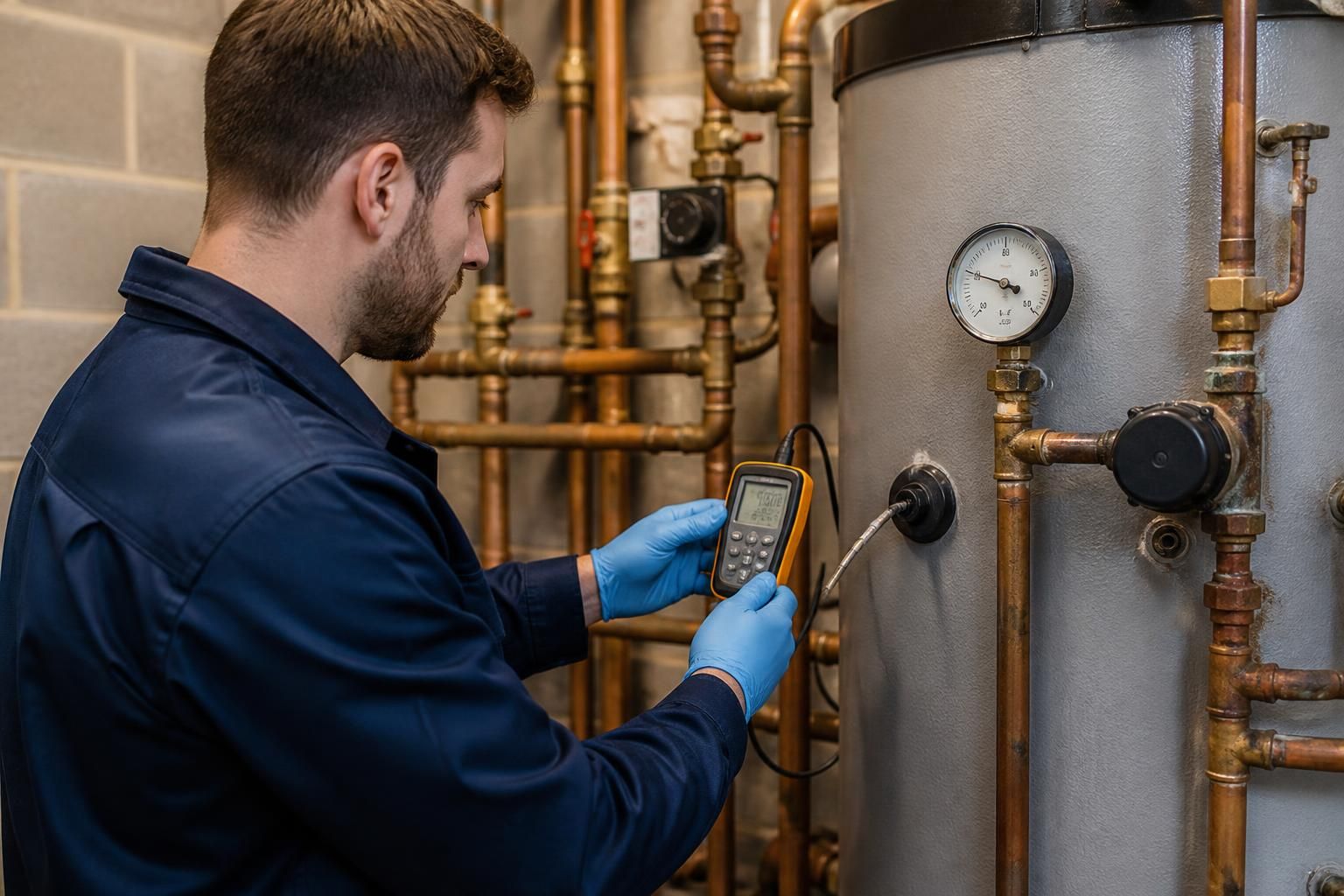
The condition of a hot water system determines whether testing can remain a routine verification exercise or needs a more targeted investigation. A system with reliable records, stable operation and accessible components may be assessed through scheduled temperature and operational checks. Where the system’s condition, history or performance is uncertain, testing should be supported by a review of its design, control measures, maintenance records and use.
Start with the system’s operating history
Condition is not judged by age alone. A relatively modern cylinder or heater may require closer investigation if commissioning information is incomplete, controls have been altered or maintenance has been inconsistent. Conversely, an older installation may continue to perform predictably where it has been properly maintained and its control regime is demonstrated through reliable records.
The first step is therefore to establish how the system has been operating over time. Relevant information includes previous temperature records, maintenance and repair history, changes in occupancy or water demand, reported faults, periods when parts of the building were unused, and any earlier risk assessment findings. Gaps or inconsistencies in this information do not prove that the water is unsafe, but they reduce confidence in relying on routine checks alone.
When routine checks may be appropriate
Routine testing is generally more suitable where the hot water system has clearly defined control points, functioning equipment and a consistent pattern of use. The approach may include checking stored and distributed water temperatures, confirming that controls operate as intended, inspecting accessible components and reviewing records for trends rather than treating each reading in isolation.
Results should be considered alongside the system layout and the way outlets are used. A satisfactory reading at one point does not necessarily demonstrate that every part of the system is adequately controlled. The selected points should reflect the cylinder or heater, distribution arrangement, return path where present, and outlets that represent different areas or usage patterns.
When the condition calls for broader investigation
A more detailed approach is justified where there is evidence that the system may not be operating as designed or where its condition cannot be established confidently. Examples include repeated fluctuations in results, unexplained changes in performance, a history of repairs, altered pipework, unreliable control equipment or components that cannot be inspected properly.
In these circumstances, testing may need to combine a physical inspection with a review of the risk assessment and additional water samples. The purpose is not simply to collect more samples. It is to identify whether the selected points are representative, whether an unexamined part of the system could affect the findings, and whether remedial work should come before further routine monitoring.
How physical defects influence the approach
Visible deterioration or defects can change both the priority and the type of testing required. Damaged insulation, leaking fittings, defective valves, poor drainage arrangements or signs that equipment is not being maintained may indicate that test results need to be interpreted with caution. A sample can describe the water at a particular point and time, but it cannot by itself confirm that the underlying system is functioning correctly.
Where a defect is identified, the responsible organisation should record its location and significance, arrange suitable remedial action and determine whether follow-up testing is needed. Post-remedial testing can help establish whether the intervention has addressed the relevant concern, but it should form part of a documented control process rather than replace inspection and ongoing monitoring.
How sampling should reflect system condition
Sampling locations should be selected for a reason. A condition-led plan may include points associated with the stored water, the distribution system and outlets that are representative of different parts of the building. Additional points may be appropriate where the layout is complex, usage varies substantially or previous findings suggest that one area behaves differently from another.
Samples should be handled and analysed through a competent process, with the laboratory method, sample identification and interpretation recorded clearly. UKAS-accredited water testing can provide an appropriate analytical route where microbiological examination is required, but laboratory analysis is only one part of the investigation. The result must be considered with temperature records, system condition, operational history and the findings of the risk assessment.
Choosing the proportionate level of testing
- Documented and stable condition: use planned operational checks, trend review and periodic verification of the existing control measures.
- Uncertain history or incomplete records: increase the emphasis on inspection, record review and representative testing before deciding that routine monitoring is sufficient.
- Known defects or inconsistent performance: investigate the cause, address the defect and consider targeted sampling or follow-up testing.
- Significant changes to the installation or its use: reassess the system rather than transferring an old testing plan unchanged to the new circumstances.
The selected approach should remain proportionate to the actual risk and capable of being repeated consistently. Testing that produces isolated results without explaining how points were chosen or how findings will be acted upon offers limited assurance. A sound plan links the condition of the cylinder or heater and its associated pipework to defined checks, clear records, competent interpretation and appropriate review when circumstances change.

System condition also affects when samples are taken. If a cylinder, heater or associated pipework has recently been cleaned, repaired, flushed or otherwise disturbed, the result may reflect that intervention rather than normal operation. The testing record should therefore identify relevant work and explain whether sampling represents routine use, post-maintenance conditions or a specific investigation.
This distinction helps prevent misleading comparisons. A sample taken during abnormal use or immediately after remedial activity should not be treated as directly equivalent to a result from an established operating regime. Recording the system state, recent work and operating conditions alongside the laboratory result gives the person reviewing the findings a more reliable basis for deciding what further action, if any, is appropriate.
Discuss the right hot water testing approach for your system
Discuss your hot water system’s condition, operating history and intended testing objectives with Blue Fish Water Management Ltd to determine a proportionate approach. A structured review can help identify the information and site evidence needed before testing is arranged.