
How do testing needs differ between stored and instantaneous hot water systems?
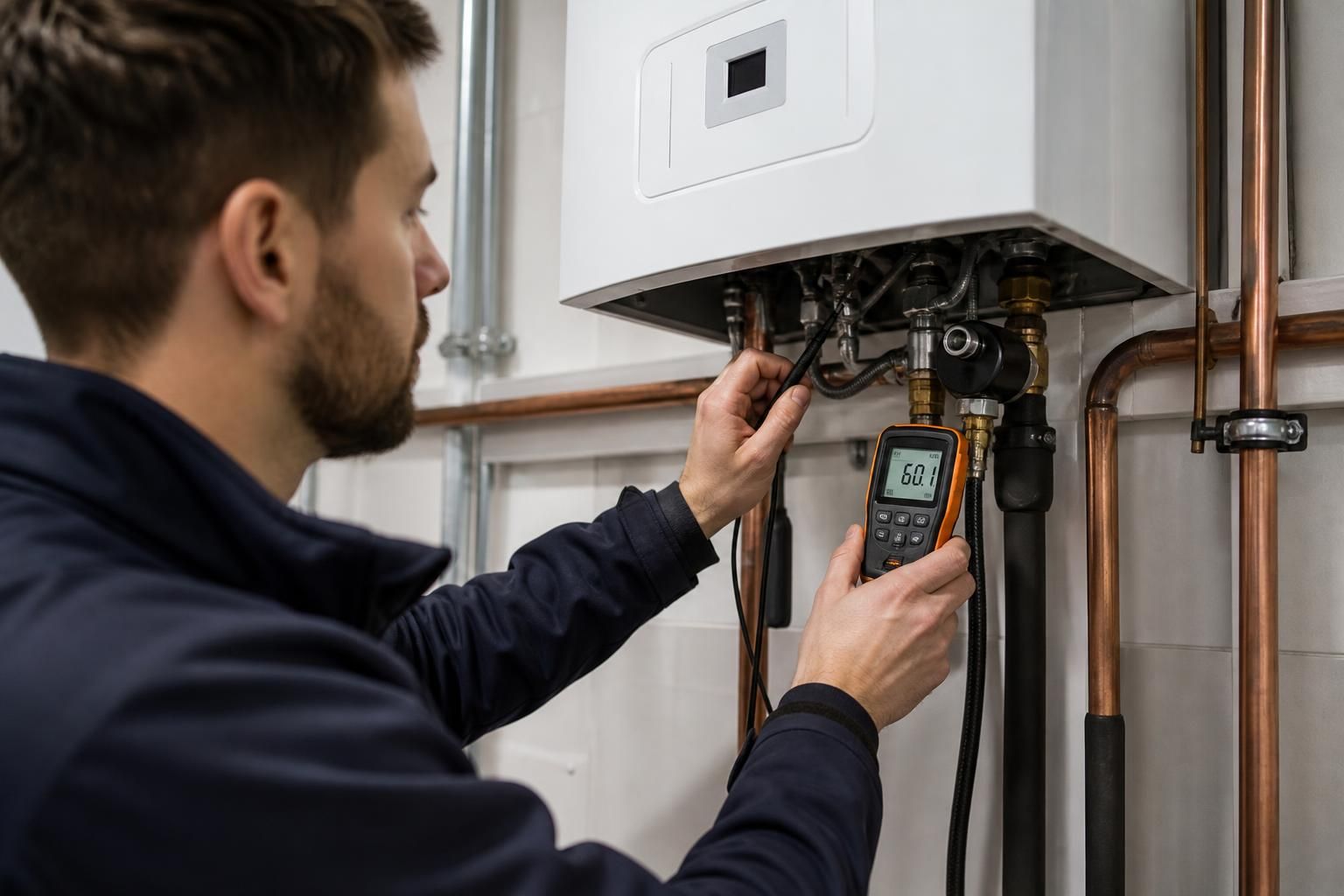
Stored and instantaneous hot water systems require different testing priorities because the main legionella risks arise in different parts of the installation. A stored system must be assessed for conditions within and around its vessel, while an instantaneous system is assessed mainly through heater performance, flow conditions, outlets and distribution arrangements. In both cases, the testing programme should be based on the system risk assessment rather than on equipment type alone.
Stored hot water systems need evidence that the stored water is being maintained under controlled conditions and that heat is reaching the distribution system effectively. Testing may therefore include:
- temperature readings at the vessel, primary flow and return, where applicable;
- checks that the stored water is heated consistently rather than developing cooler zones;
- measurements at representative outlets, including sentinel outlets and points that are hydraulically remote from the heat source;
- assessment of secondary circulation, including whether the return temperature indicates adequate movement through the system;
- inspection for scale, corrosion, sludge and other conditions that can reduce heat transfer or create areas of poor circulation;
- review of the vessel’s condition, insulation, drain arrangements and access for inspection or cleaning; and
- sampling where the risk assessment, abnormal temperature results, system history or other evidence justifies microbiological investigation.
The location of a temperature reading matters in a stored system. A satisfactory reading at the cylinder outlet does not necessarily demonstrate that every branch, return or rarely used outlet is operating safely. A thorough programme compares readings from the heat source with those from representative parts of the distribution network and records the time, location and operating conditions for each result.
Storage volume and usage patterns also affect the interpretation of results. A large vessel supplying variable demand may need closer consideration of stratification, turnover and periods of low use. If parts of the vessel or connected pipework remain cooler than intended, further investigation may be more useful than simply taking additional outlet readings. The assessment should establish whether the cause is control failure, inadequate circulation, heat loss, scaling, poor balancing or a change in how the building is occupied.
Instantaneous systems do not provide a stored volume for sampling or temperature profiling, so the test programme is directed towards the heater and the system connected to it. Relevant checks can include:
- the temperature achieved at the heater outlet under realistic flow and demand conditions;
- the time taken for the system to reach its intended operating temperature;
- whether high flow or simultaneous demand causes the outlet temperature to fall materially;
- the condition and operation of sensors, controls, strainers and heat-transfer components;
- temperature performance at outlets supplied through longer or more complex branches;
- the presence of sections that retain water when the heater is not operating; and
- the arrangement and maintenance of thermostatic mixing valves, where fitted.
Instantaneous heating reduces the risk associated with stored water, but it does not remove every legionella control issue. Water can still stagnate in dead legs, seldom-used branches, hoses, shower fittings and subsidiary vessels. A heater may also produce an acceptable temperature at one operating condition but fail to maintain it when flow changes or when several outlets are used together. For that reason, testing should reflect the way the system is used rather than relying solely on a no-load or single-outlet test.
Sampling requirements differ in emphasis as well. In a stored system, samples may help investigate suspected contamination within the vessel or distribution network, particularly where temperature control has been unreliable or there is a history of problems. In an instantaneous system, a sample is more likely to be considered in relation to a specific outlet, branch, stagnation point or operational concern. Microbiological results should be interpreted alongside temperature records, system design, usage and maintenance history; a laboratory result on its own does not explain the source of a problem.
Both system types require the tester to consider hot and cold water interactions. Unused outlets, crossover through faulty fittings, incorrectly installed pipework and inadequately maintained blending arrangements can affect the risk even when the primary heating equipment is functioning correctly. The inspection should therefore follow the system from incoming supply and heat source through to outlets, rather than treating the cylinder or heater as an isolated item.
The records produced should make the testing approach auditable. They should identify the equipment and outlets tested, the conditions under which readings were taken, the results obtained, any sampling completed, and actions required. Trend analysis is particularly useful: a gradual change in outlet or return temperatures may indicate deterioration before a complete control failure becomes apparent.
For either arrangement, a suitable programme normally combines operational checks, periodic temperature verification, inspection of relevant components and targeted microbiological testing where indicated by risk. The distinction is that stored systems demand closer attention to vessel conditions, storage behaviour and circulation, whereas instantaneous systems demand closer attention to heat-up performance, variable demand and water that can remain in downstream pipework. A competent assessor can use those differences to define testing locations and frequencies that match the actual design, use and condition of the installation.
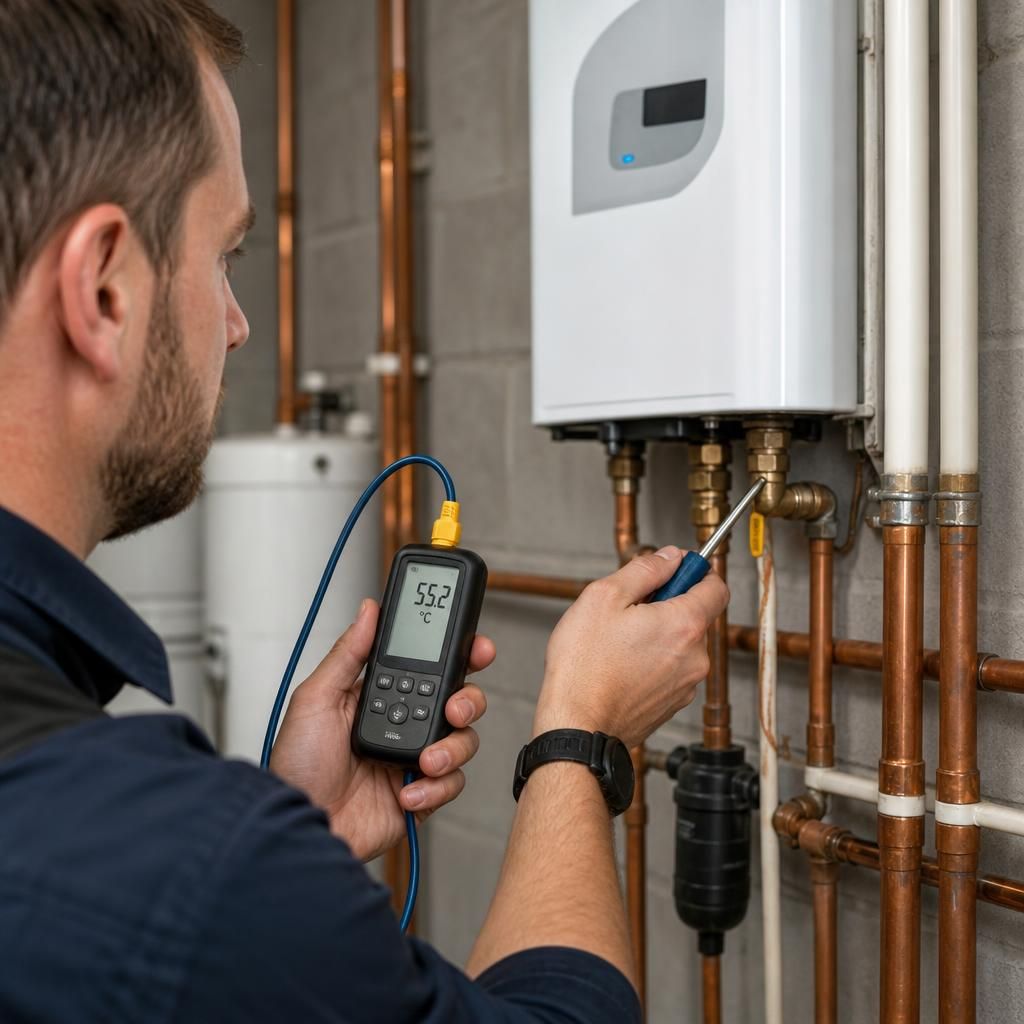
Testing requirements should be reviewed whenever a hot water system is altered, recommissioned or used differently. In a stored system, replacing the cylinder, changing the primary heating arrangement or modifying circulation can affect how the vessel and connected network operate. In an instantaneous system, changing the heater, flow controls or outlet arrangement can alter performance under demand.
Retesting after corrective work, prolonged shutdown or a significant change in building use provides evidence that the revised installation is operating as intended. Comparing these results with earlier records can also help identify whether an issue has been resolved or whether further investigation is needed.
Discuss your stored or instantaneous hot water testing needs
Discuss your stored or instantaneous hot water testing needs with Blue Fish Water Management Ltd to identify an assessment approach suited to your system’s design, use and compliance requirements.