
Which hot water system points should be sampled for legionella testing?
Hot water system sampling should normally include sentinel outlets, representative distal outlets, showers, little-used outlets and other points identified as higher risk by the water system risk assessment. Where relevant, samples may also be taken from the hot water storage vessel or calorifier and the secondary circulation return to assess conditions within the system, not just at outlets.
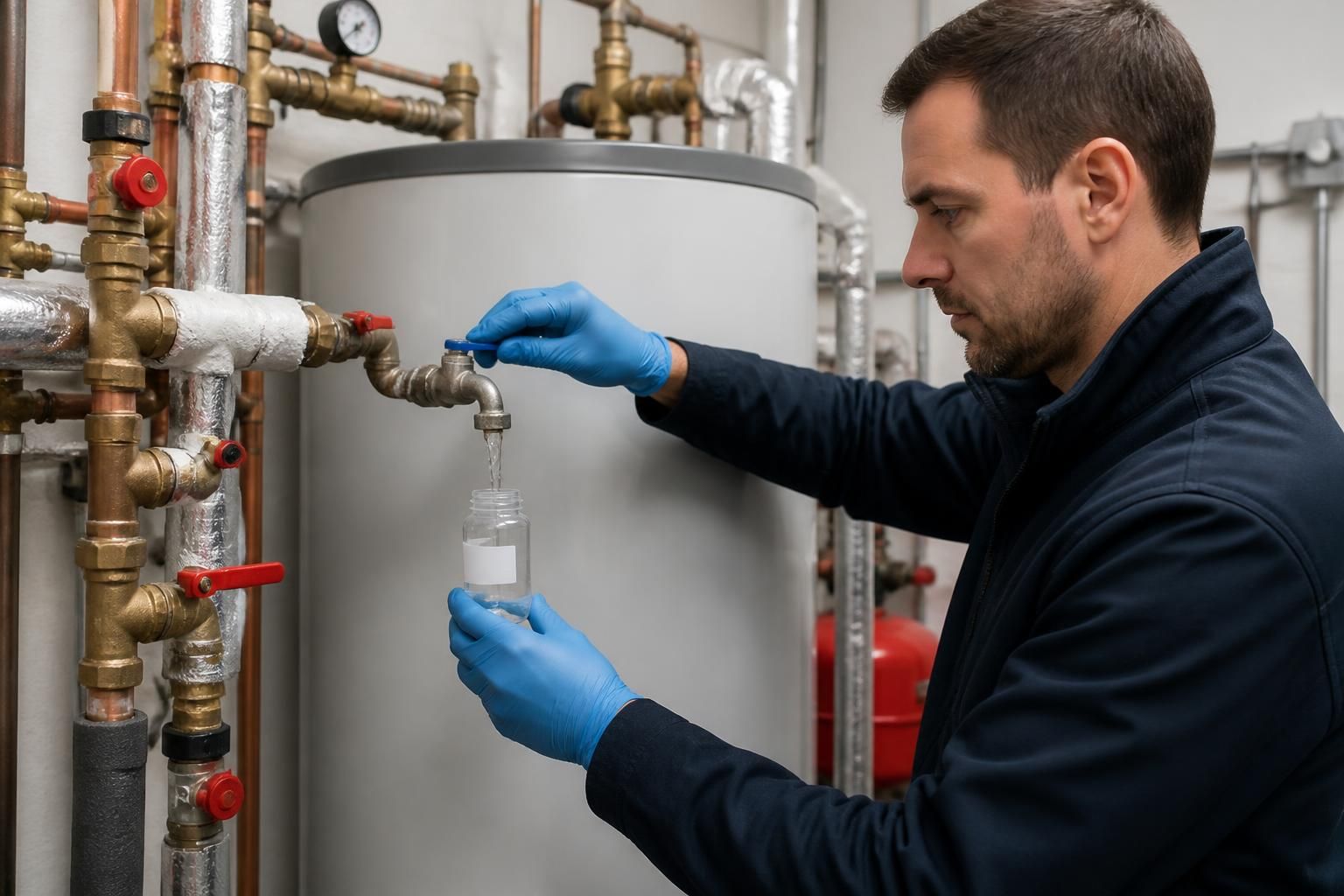
The sampling plan should reflect how the hot water system is designed, operated and used. Samples should not be selected solely because an outlet is convenient to reach. A competent assessor will identify the parts of the system that could support Legionella growth or expose users to contaminated water, then choose points that provide meaningful evidence of water quality across those areas.
For a larger or more complex premises, sampling may need to cover separate buildings, floors, risers, accommodation wings, healthcare areas, plantrooms or other hydraulically distinct zones. A single result cannot reliably represent every part of a system where pipework lengths, usage patterns, temperatures or circulation performance differ. The sampling schedule should therefore be linked to the current schematic and written risk assessment.
- Points representing separate distribution areas: Select outlets that show the condition of water supplied through different branches, risers or return circuits. This helps identify localised problems that may not be apparent from a sample taken elsewhere.
- Hydraulically remote outlets: The furthest points from the hot water source can be useful because they may experience greater heat loss or weaker circulation. They should be considered alongside, rather than automatically substituted for, other representative locations.
- Outlets with temperature-control devices: Thermostatic mixing valves and similar arrangements can alter the temperature at the point of use. Where they are part of the system risk, sampling should take account of both the blended outlet and, where appropriate, the upstream hot water conditions. The sampling approach must avoid confusing a low outlet temperature caused by blending with a failure of the stored or circulating hot water supply.
- Areas serving vulnerable people: Premises such as healthcare, care, residential or supported-living settings may require more carefully targeted sampling because the consequences of exposure can be greater. The risk assessment should determine whether particular rooms, user groups or specialist outlets need inclusion.
- Infrequently used branches and outlets: These may need specific attention where water can remain stagnant between uses. Sampling should be planned in a way that reflects normal operation and the purpose of the investigation, rather than producing a result that only describes an unusual flushing condition.
Samples from the plantroom can add important context. A sample from the hot water storage vessel or calorifier may help assess conditions in the stored water, while a sample from the secondary circulation return can indicate whether water is returning through the system at an adequate temperature and whether parts of the circuit may be poorly circulated. These samples are not interchangeable with outlet samples: plantroom results and point-of-use results answer different questions.
Where a hot water system contains storage vessels, multiple calorifiers or several circulation pumps, each relevant vessel or circuit should be considered separately. A shared result may conceal a problem affecting only one item of plant. The same principle applies to systems that have been extended, partly disconnected or altered from their original design.
Sampling points should also be reviewed after changes to the system. Relevant changes can include alterations to pipework, replacement of valves or calorifiers, changes in building occupancy, extended periods of restricted use, or remedial work following an unsatisfactory result. A point that was representative previously may no longer reflect the system after hydraulic conditions have changed.
The physical sampling method matters as much as the choice of location. The person taking the sample should use a documented method, clean suitable equipment, prevent contamination and record the outlet, date, time, system condition and any relevant operational observations. The record should state whether the outlet was used or flushed before sampling, because this affects how the result should be interpreted. Temperature measurements taken at the same time can provide useful context, but they do not replace microbiological testing.
Sampling should be undertaken by a suitably competent person, with analysis carried out by a laboratory using an appropriate validated method. Results should be linked to clearly identified sampling points so that any follow-up action can target the affected branch, outlet or plant item. If an initial result is unexpected, repeat or additional samples may be needed to establish whether contamination is isolated or more widely distributed; the decision should be based on the risk assessment, system operation and laboratory advice.
In practice, the correct schedule is the one that gives a defensible picture of the whole relevant hot water system, not simply the largest number of samples. It should cover representative distribution areas, investigate conditions at the source and return where relevant, and give additional attention to locations where stagnation, inadequate circulation, temperature control or user vulnerability increases risk.
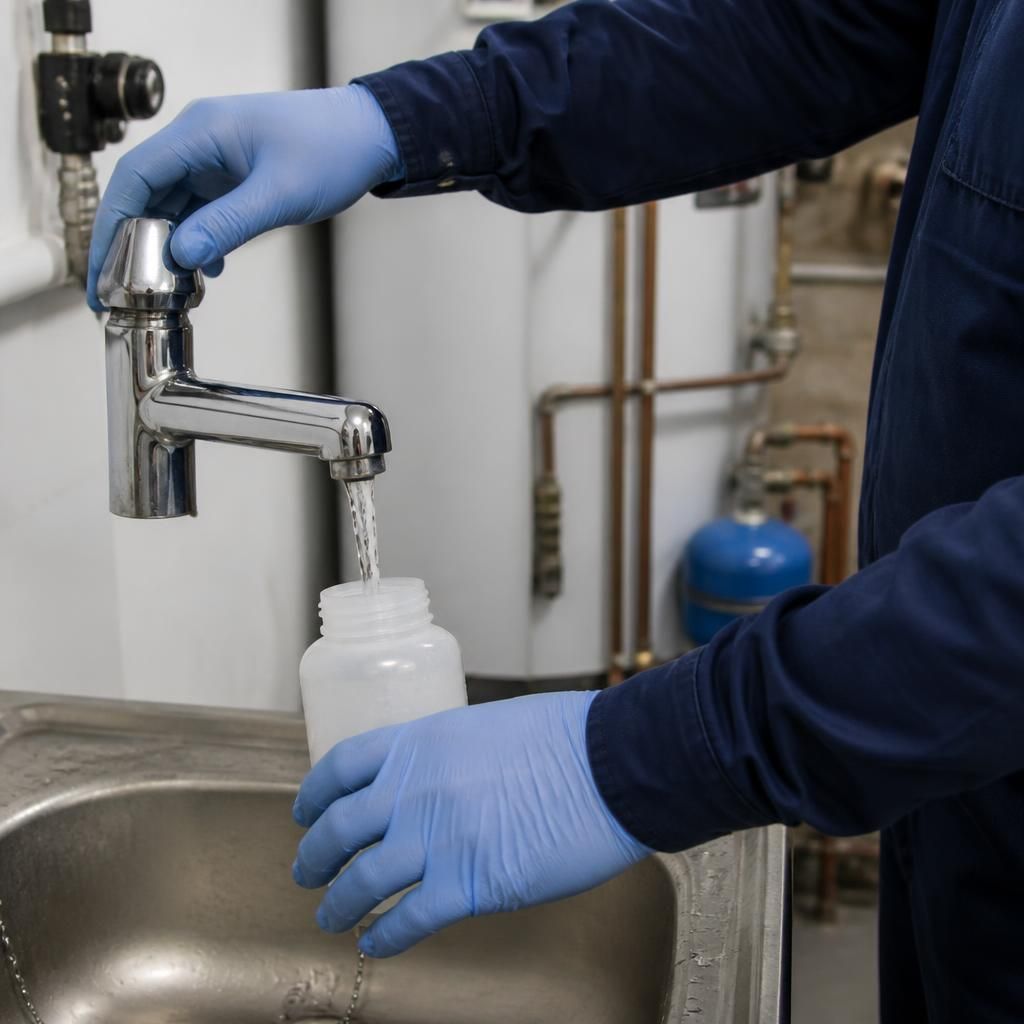
Each selected sampling point should have a unique reference in the water system records. The register should identify the outlet’s location, the branch or area it represents, its type and any relevant control features, such as a shower or thermostatic mixing valve. A marked schematic can show how the point relates to the storage vessel, circulation circuit and other outlets.
Using the same clearly identified points during planned sampling makes results easier to compare and helps distinguish a localised issue from a wider system problem. If an outlet becomes unavailable or is replaced, the change should be recorded and the risk assessment reviewed before another point is treated as an equivalent substitute.
Need help reviewing your hot water sampling points?
If you need to confirm that your sampling schedule reflects the current hot water system and risk assessment, speak to Blue Fish Water Management Ltd about a professional review of your sampling points and records.