
What triggers legionella testing for a hot water system?
Legionella testing for a hot water system is triggered when a risk assessment or ongoing monitoring identifies a significant risk, uncertainty about control, or a change that could affect water safety. It may also be appropriate after system alterations, suspected Legionnaires’ disease, evidence of control failure, or remedial work where testing is needed to verify the system’s condition.
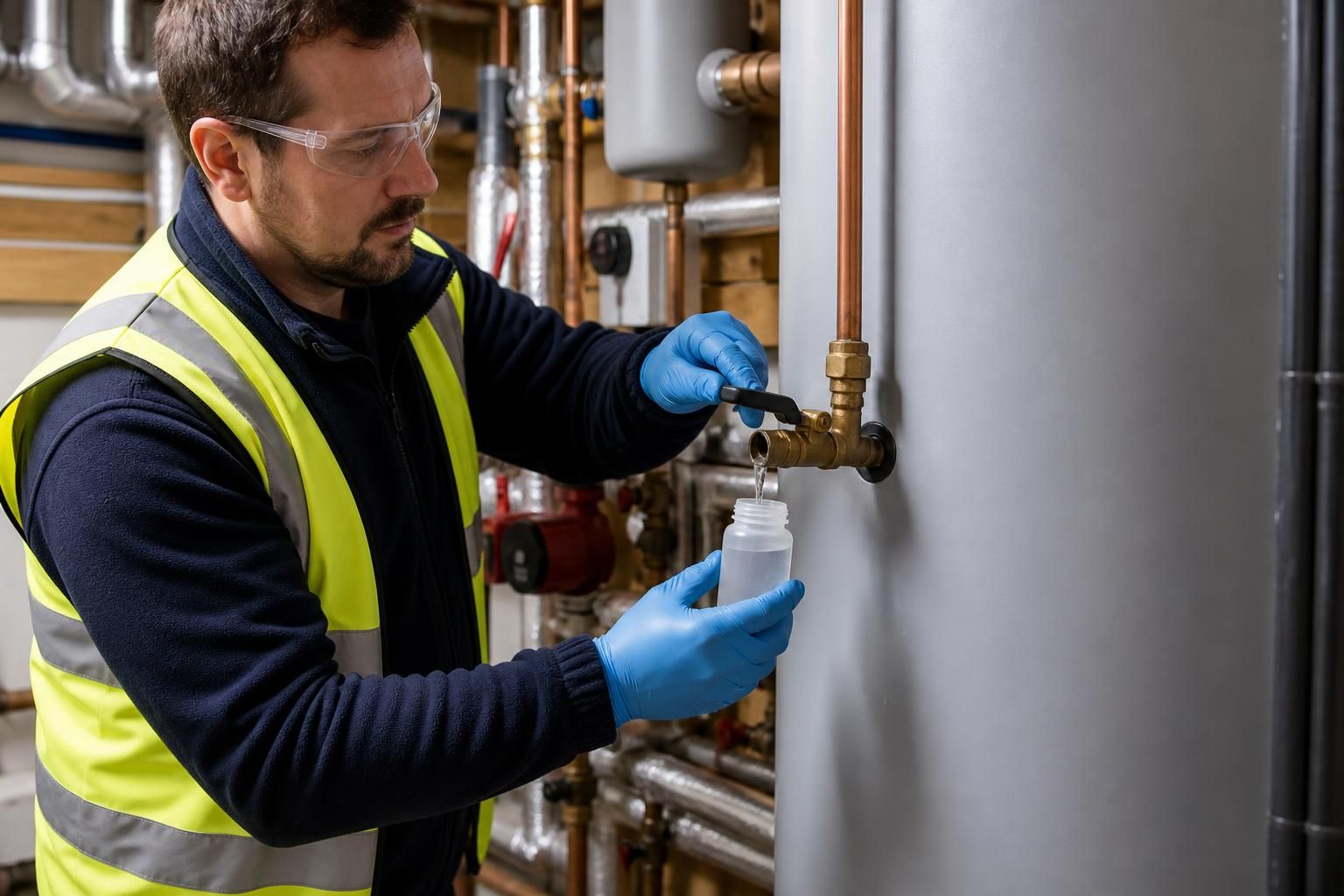
Legionella testing for a hot water system is appropriate when there is a defined reason to obtain microbiological evidence about the system’s condition. In the UK, there is no universal rule requiring every hot water system to be sampled at a fixed interval. The need for testing should arise from the written legionella risk assessment, the system’s control records, the characteristics of the premises and any event that makes the existing evidence unreliable.
A risk assessment may identify testing as necessary where the system has conditions that could support Legionella growth. Relevant factors include stored hot water, long or complicated distribution pipework, infrequently used outlets, areas of stagnation, poor temperature control, inadequate circulation, dead legs, low occupancy or premises used by people who may be more susceptible to illness. The assessment should explain why samples are needed, which outlets or storage vessels should be tested and how the results will influence further action.
Testing can also be triggered when routine checks suggest that the system is not being controlled as intended. Examples include:
- hot water temperatures that do not consistently reach the levels specified by the risk assessment;
- evidence of poor circulation or a temperature imbalance between parts of the system;
- repeated temperature failures at sentinel or representative outlets;
- unusual changes in water appearance, odour or condition;
- failure of a treatment process or other control measure;
- incomplete, missing or unreliable monitoring records; and
- maintenance findings indicating contamination, scale, corrosion or biofilm.
A single temperature result does not, by itself, establish whether Legionella is present. However, a pattern of unsatisfactory readings can justify targeted sampling, particularly where the cause cannot be identified promptly. Sampling should support the investigation rather than replace basic control measures such as suitable temperature management, regular use of outlets, cleaning and maintenance.
Changes to the building or its use can create a new testing trigger. This may include installing or removing a calorifier, cylinder, booster set, return loop or branch pipe; extending the distribution system; changing outlet types; altering the operating temperature; or bringing previously unused areas back into service. A change in occupancy, prolonged vacancy, refurbishment or a change from commercial to residential or care use may also alter the risk profile. The risk assessment should be reviewed before or as part of the change, with testing commissioned where it is needed to establish a baseline or confirm that the altered system is under control.
Testing may be required after a period of low use or closure. Water that has remained still in storage vessels, pipework or outlets can provide conditions in which bacteria multiply. Before normal operation resumes, the responsible person should follow the site’s written procedure for flushing, cleaning, disinfection and verification. Samples may be appropriate after these measures where the risk assessment identifies a need to demonstrate that the system is suitable for use.
A reported case or suspected outbreak of Legionnaires’ disease is a separate and urgent reason to obtain competent advice. Sampling strategy in this situation should be coordinated with the relevant public health and regulatory authorities. Samples may be taken from the hot water system and other possible sources, using methods that preserve their evidential value. Routine maintenance should not be altered or discontinued without appropriate direction, because investigation and control may need to proceed together.
Further sampling is commonly considered when an earlier result is positive or otherwise indicates a concern. The result should be assessed alongside sampling locations, water temperature, the laboratory method, the level detected and the condition of the system. Follow-up may involve additional samples from connected outlets, storage vessels, return pipework and areas with a history of poor control. A repeat sample should not be treated as a way to dismiss an unexplained result; the underlying cause should be investigated and addressed.
Testing can also be used to verify remedial work. For example, samples may be taken after cleaning and disinfection, replacement of contaminated components, removal of redundant pipework, correction of circulation defects or changes to the control regime. Verification should be planned in advance, because a sample taken too soon or from an unsuitable location may not provide meaningful evidence that the intervention has worked. The post-work findings should be recorded with the remedial actions and reviewed against the risk assessment.
Contractual, client or sector-specific requirements can provide an additional trigger. A facilities management agreement, landlord requirement, insurer, regulator or internal assurance programme may require evidence from an accredited laboratory even where the general risk assessment does not prescribe frequent routine sampling. Such requirements should be reconciled with the site-specific assessment rather than followed mechanically. Sampling more often does not compensate for weak control of temperatures, flow, cleanliness or maintenance.
Before commissioning a test, the dutyholder should establish the purpose of the sampling. Useful questions include:
- What concern is the test intended to investigate?
- Which parts of the hot water system could explain that concern?
- Are the selected outlets representative of the system and its higher-risk areas?
- What control measures will be taken while the results are pending?
- What action will follow different possible findings?
- Who will review the laboratory report and update the risk assessment?
Samples should be collected by a competent person using an appropriate method and submitted to a suitably competent laboratory. The report should be considered with the sampling plan and site records, not in isolation. If the reason for testing is unclear, or if results conflict with operating records, a competent legionella professional can help determine whether further investigation, remedial work or a revised monitoring programme is justified.
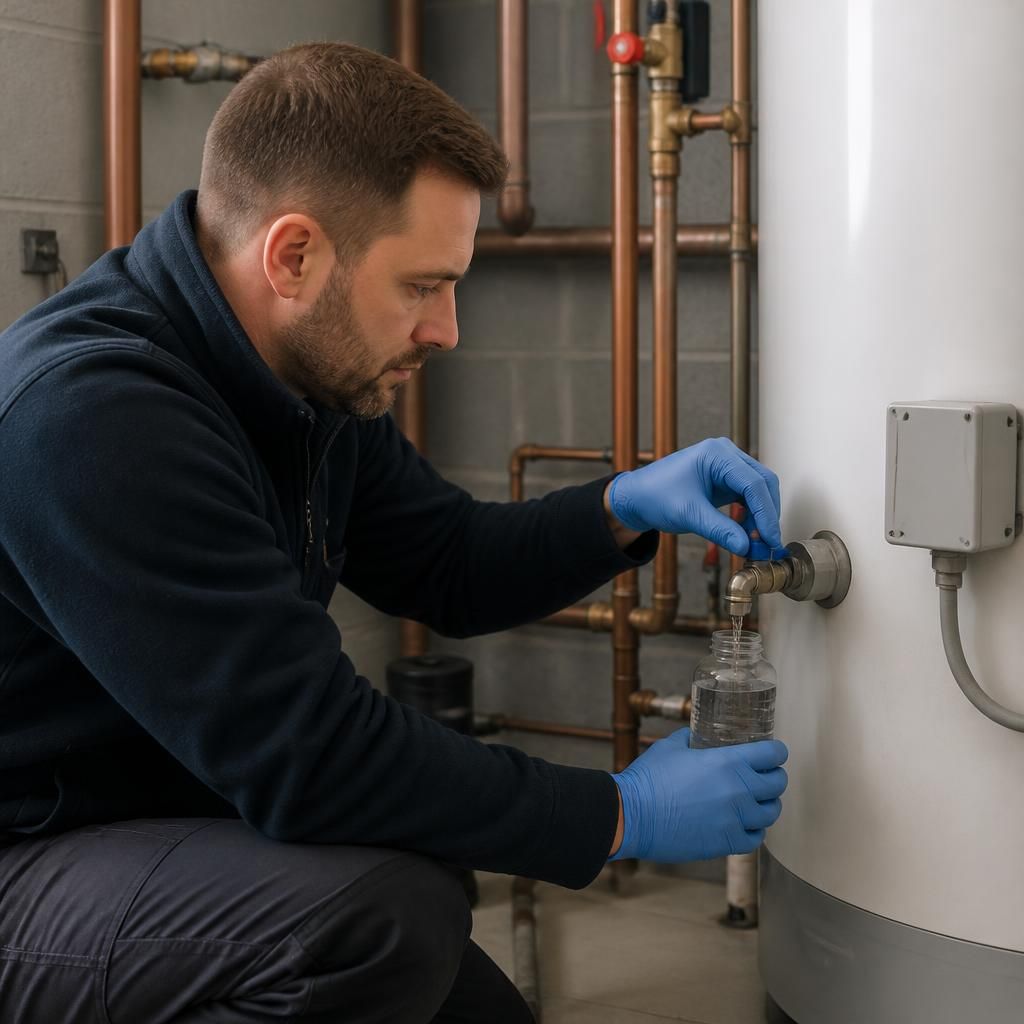
A defensible reason for legionella testing should link a specific observation or change to a clear sampling objective. For example, the objective may be to establish a baseline after an alteration, investigate an unexplained control concern or verify that a defined remedial measure has addressed the identified problem. Recording this link helps prevent samples being collected without a clear purpose.
The sampling record should identify the trigger, the parts of the hot water system affected, the locations selected and the person responsible for reviewing the findings. It should also state what interim precautions or follow-up actions apply while the result is being assessed. This creates an auditable trail between the original concern, the test and the decisions that follow.
Discuss your hot water system legionella testing requirements
Discuss your hot water system legionella testing requirements with Blue Fish Water Management Ltd. Their team can help you determine whether your proposed sampling approach is appropriate for the system and its risk profile.