
How should organisations act after hot water system legionella testing?
After hot water system legionella testing, organisations should review the results against the control limits, assess any indication of risk and implement proportionate corrective action. Record the findings and actions taken, update the water safety plan where necessary, and arrange follow-up testing or monitoring to confirm that controls remain effective.

After hot water system legionella testing, the organisation should use the laboratory report to verify the reliability and significance of the findings, then apply controls that are proportionate to the result and the people exposed. The outcome should be incorporated into the organisation’s wider water safety management system, with responsibilities, timescales and evidence of completion clearly recorded.
Start by checking the report. A competent person should confirm which outlets or system components were sampled, the sample dates, the test method, the laboratory details and whether the results relate to the intended hot water system. Results should be considered alongside temperature records, previous samples, inspection findings and any recent changes such as refurbishment, low occupancy, alterations to pipework or periods of limited use. A single result should not be viewed in isolation where the sampling pattern or system history indicates a wider issue.
The report should also be checked for comments about sample condition, identification, limitations or deviations from the sampling plan. If a result appears inconsistent with the location, system history or other samples, the organisation should obtain clarification from the laboratory or competent water hygiene adviser before deciding on remedial action. This does not justify disregarding an unfavourable result; it ensures that the response is based on reliable information.
Interpret the result in context. Legionella findings need to be assessed with the system’s design and use in mind. Important considerations include:
- whether the result came from a frequently used outlet, a low-use outlet, a storage vessel, a return or another representative point;
- whether temperatures throughout the system are achieving the control requirements set out in the organisation’s water safety arrangements;
- whether there is evidence of stagnation, poor circulation, dead legs, scale, corrosion, sediment or biofilm;
- the number and location of positive or elevated findings, including whether they are isolated or distributed across the system;
- the likelihood and frequency of exposure to aerosols or contaminated water; and
- the susceptibility of people using or occupying the premises.
Interpretation should follow the relevant UK guidance and the organisation’s documented control limits. HSE guidance, including the principles in the Approved Code of Practice L8 and HSG274, may be relevant to many non-healthcare premises. Healthcare organisations should also consider the requirements and technical guidance applicable to their setting, such as the relevant healthcare water safety arrangements. A competent person should determine whether the result indicates an isolated sampling issue, a local outlet problem or a systemic failure requiring broader intervention.
Decide whether immediate precautions are needed. Where results indicate a credible risk, the duty holder should consider temporary measures to reduce exposure while the cause is investigated. Depending on the circumstances, this may include taking an affected outlet out of use, restricting access, providing suitable alternative facilities, increasing supervision of flushing arrangements or applying a temporary control at the point of use. The decision should take account of the result, the outlet’s purpose, the vulnerability of users and the ability to maintain safe conditions during the investigation.
Organisations should avoid relying on routine flushing alone when testing indicates that the system may be contaminated or poorly controlled. Flushing can be part of a documented management regime, but it may not resolve defects such as inadequate temperatures, poor circulation, contamination within a vessel or persistent biofilm.
Find and correct the underlying cause. Remedial work should be targeted at the reason the control failed, rather than treating the sample result as an isolated laboratory event. Investigation may include checking:
- hot water storage and distribution temperatures at appropriate points;
- temperature control equipment, thermostatic mixing valves and return circulation;
- storage vessels, calorifiers, tanks and associated components for sediment, scale, corrosion or defects;
- pipework for dead legs, redundant branches, poor circulation or inappropriate connections;
- outlets that are rarely used, incorrectly included in flushing schedules or difficult to clean; and
- recent maintenance, shutdowns, construction work or changes in occupancy that may have affected the system.
Depending on the findings, corrective work may involve cleaning and disinfection, removing redundant pipework, repairing or replacing defective components, balancing circulation, improving temperature control, revising outlet use or changing the flushing regime. Any disinfection or remedial work should be planned and carried out by people with suitable competence, with precautions in place to protect building users, maintenance staff and contractors.
Review the risk assessment and written control scheme. Testing may reveal that the existing assessment does not accurately describe the system or its use. The organisation should update relevant schematic drawings, asset registers, sampling plans, flushing schedules, temperature-monitoring arrangements and escalation procedures. Changes should identify who is responsible for each action and how completion will be verified. If the system has changed physically or operationally, the assessment should be revised even where the test result does not show legionella.
People who may be affected should receive information appropriate to their role. Facilities teams need clear instructions for isolation, flushing and monitoring; contractors need the relevant system information and safe working requirements; and building users may need practical advice where an outlet is restricted or temporary arrangements are introduced. In premises used by people who are particularly vulnerable to legionnaires’ disease, the risk assessment should reflect that vulnerability when setting priorities and precautions.
Arrange verification after remedial work. Follow-up sampling should be designed to test whether the identified control problem has been resolved. It should not simply repeat the original sample without considering the suspected source and the parts of the system that may have been affected. The competent person should define the locations, timing and any interim monitoring needed. Further results should be reviewed against the control strategy and previous findings, with additional investigation if contamination persists or appears in new locations.
All decisions should be supported by an auditable record. Keep the laboratory report, sampling plan, site observations, risk assessment, temperature and flushing records, communications, remedial certificates, contractor details and follow-up findings together with the rationale for the action taken. Records should show not only what was done, but why the organisation considered it suitable and how it confirmed that the risk was being controlled.
A positive legionella result does not by itself establish that anyone has contracted legionnaires’ disease. However, suspected or confirmed illness should be escalated through the appropriate occupational health, public health and regulatory channels, with the water system investigation coordinated with those enquiries. Where the findings indicate a possible failure of statutory controls, the organisation should obtain competent advice on its reporting and notification duties rather than waiting for the next routine test.
Blue Fish Water Management Ltd can support organisations with the technical review of hot water system test results, compliance audits, system monitoring and proportionate remedial planning. The appropriate service depends on the result, the system design, the premises and the existing water safety arrangements; testing is most useful when it forms part of a controlled cycle of assessment, action and verification.
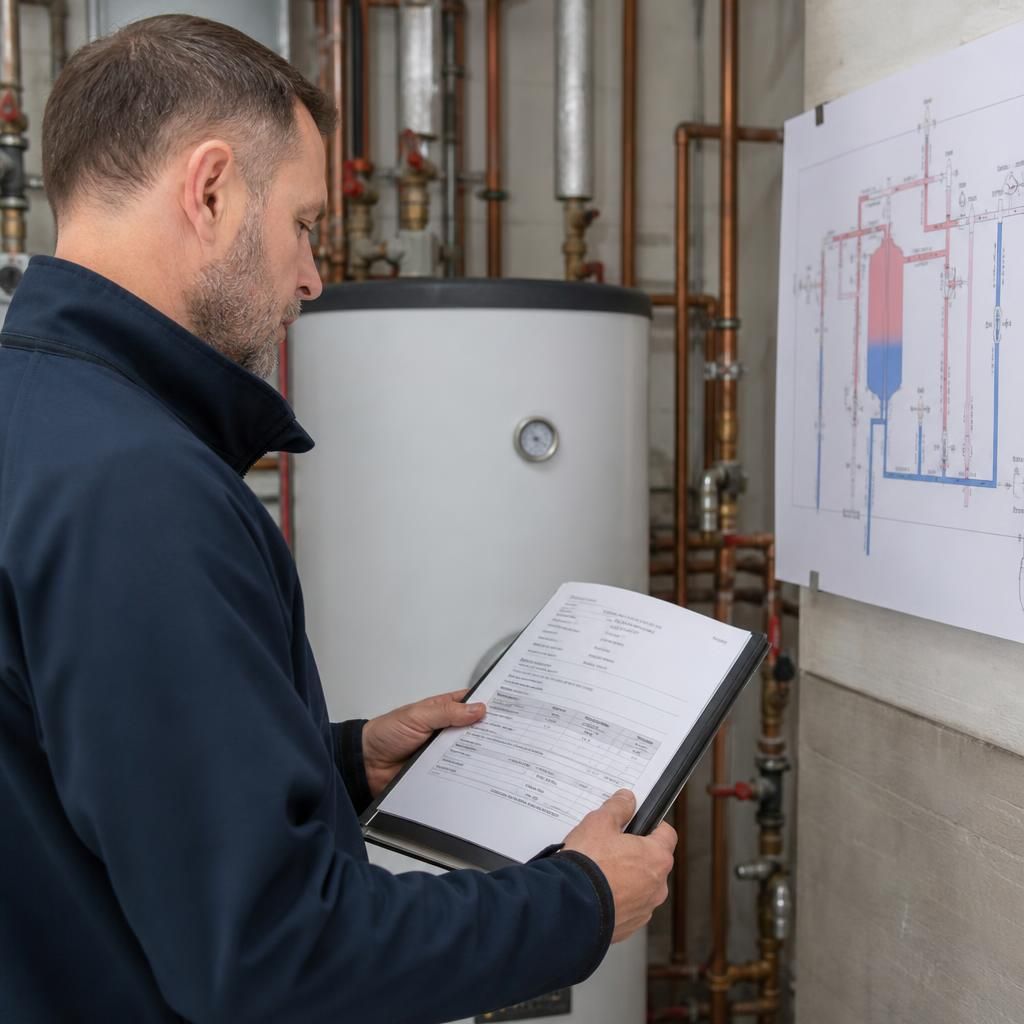
A negative legionella test result means that legionella was not detected in the samples examined; it does not prove that every part of the hot water system is free from risk. Sampling covers selected points at a particular time, so the result should be treated as evidence about those samples rather than permanent clearance for the whole system.
Organisations should therefore continue the established temperature control, maintenance, flushing and monitoring arrangements after an unfavourable finding is not present. A negative result should be reviewed alongside the sampling locations, system history and risk assessment. If the system has recently changed, contains infrequently used outlets or has known control weaknesses, the competent person may recommend further investigation or a revised sampling approach even though the current laboratory report is negative.
Discuss your hot water system legionella test results
Need help deciding what your hot water system legionella test results mean for your organisation? Discuss the laboratory report with Blue Fish Water Management Ltd to identify an appropriate next step.