
How often should hot water system legionella testing be repeated?
There is no single interval that applies to every hot water system: legionella testing should be repeated at a frequency based on the findings of the risk assessment, system characteristics and the vulnerability of exposed people. Testing may need to be more frequent where risks change, control measures are uncertain or previous results indicate concern.
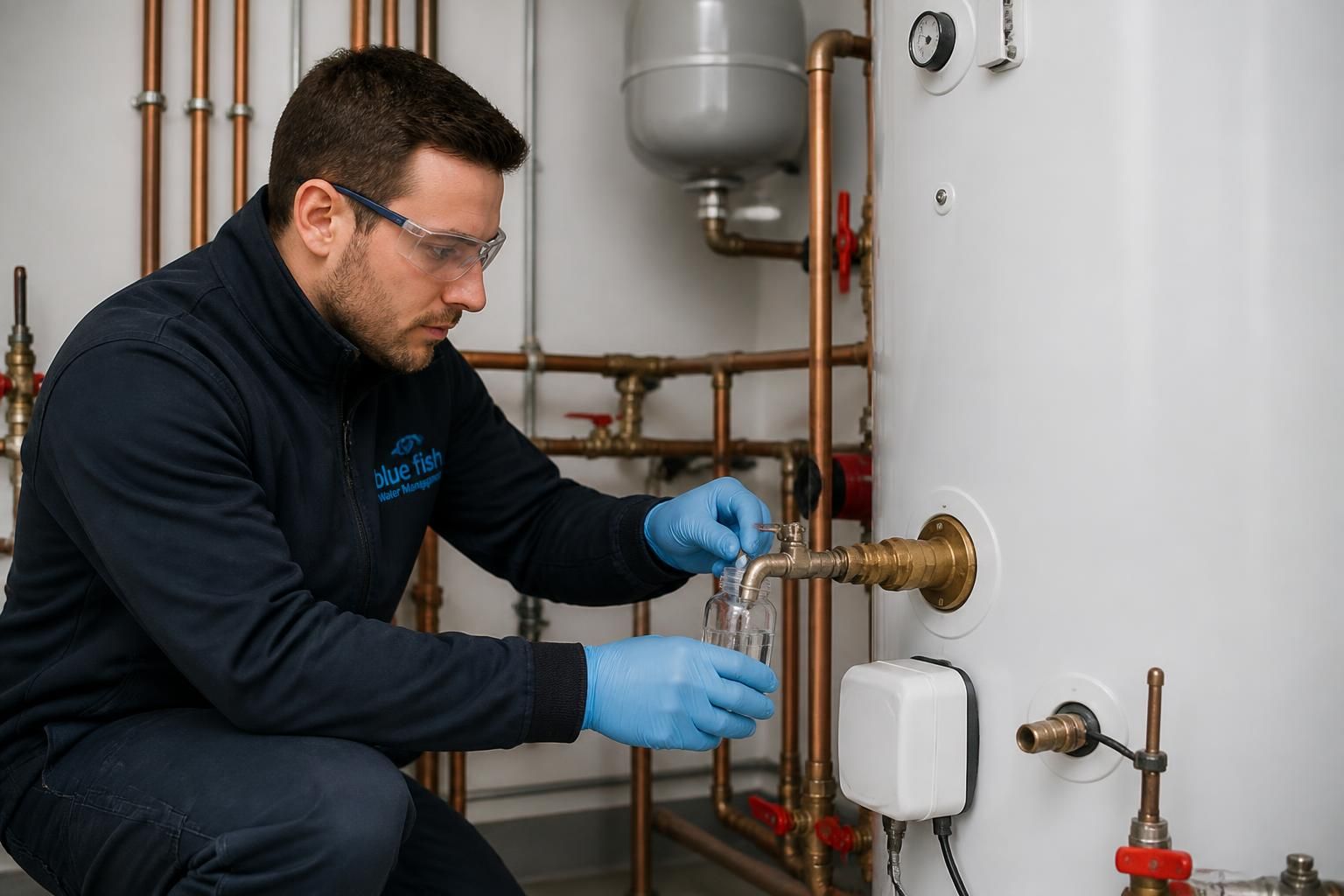
Hot water system legionella testing should be repeated according to the documented control scheme for the particular system, rather than at a fixed interval that applies to every premises. The schedule should be set by the responsible person and competent water hygiene advice, taking account of the risk assessment, temperature control, system design, occupancy, user vulnerability and previous test results.
Microbiological sampling is not a substitute for routine control checks. Hot water storage and distribution temperatures should be monitored at the locations and frequency specified by the risk assessment, with records retained and reviewed. Legionella sampling provides additional evidence about whether the system is being controlled effectively; it does not, by itself, demonstrate ongoing compliance between sampling dates.
A risk-based testing schedule will usually consider the following factors:
- People exposed: premises used by residents or patients who may be more susceptible to legionnaires’ disease generally require closer scrutiny than ordinary low-risk workplaces.
- System complexity: large or extensive distribution networks, storage vessels, secondary return systems, low-use outlets and areas with poor circulation can justify more structured or frequent sampling.
- Control performance: inconsistent hot water temperatures, inadequate circulation, interruptions to disinfection or incomplete monitoring records may require the testing regime to be reassessed.
- Previous findings: repeated detections, rising counts or results that are difficult to interpret should not be managed by simply waiting for the next routine sample.
- Changes to the premises: alterations to the plumbing, periods of closure, changes in occupancy or the introduction of new outlets can affect the appropriate interval.
For a stable, well-controlled system, the risk assessment may support periodic sampling at an interval chosen by the responsible person. That interval should be recorded clearly, including the outlets to be sampled, the parameters to be tested and the circumstances that would bring the next sampling date forward. A recurring calendar date is not sufficient if the underlying system or risk profile has changed.
Additional legionella testing should be considered after events that may have affected water safety. Examples include extended stagnation, a loss of temperature control, major plumbing work, an outbreak investigation, equipment failure, or remedial cleaning and disinfection. The purpose of post-remedial sampling is to confirm that the corrective action has been effective and to support a decision about returning to the routine monitoring programme. The sampling plan should be agreed with a competent adviser and interpreted alongside temperature and operational records.
Results that show contamination do not automatically establish a single repeat-testing interval. The response depends on the result, the sampling location, the condition of the system, the vulnerability of users and whether an identifiable control failure has been corrected. A competent assessment may lead to immediate investigation, further samples from related outlets, remedial work and a temporary increase in monitoring. Normal sampling should only resume when the evidence supports that decision.
The schedule should also be reviewed when the written risk assessment is reviewed and whenever there is a material change to the building or water system. A review should confirm that the sampling locations remain representative, that infrequently used outlets have not been overlooked, and that results are being compared with operating conditions rather than considered in isolation.
Organisations should retain laboratory reports, sampling maps, temperature records, remedial-action records and the rationale for the chosen frequency. This provides an audit trail showing how the interval was determined and whether it remains appropriate. Testing should be carried out by a suitably competent laboratory, with samples handled and reported using appropriate methods; where required by the risk assessment or procurement standard, organisations may specify UKAS-accredited testing.
In practice, the correct question is not simply whether testing is monthly, quarterly or annual. It is whether the interval is justified by the current risk assessment, supported by reliable system monitoring and revised promptly when conditions change. A specialist water hygiene provider can help organisations establish a defensible sampling schedule and review the results alongside the wider legionella control programme.

The frequency of repeat legionella testing is only useful when samples can be compared over time. A sampling programme should therefore identify a consistent set of representative outlets, so that changes in results can be assessed against the same parts of the hot water system.
Those core locations may be supplemented by other outlets where the system layout or risk assessment requires wider coverage. Sampling should reflect different parts of the distribution network, including areas where water use, circulation or temperature control may vary. Keeping an up-to-date sampling map and recording the outlet, system condition and relevant temperature readings helps distinguish a genuine change in water quality from a difference caused by sampling a different location.
Reviewing results as a series rather than as isolated laboratory reports can show whether control is stable or whether the testing interval needs reconsideration. The responsible person should retain this evidence with the water safety records and ensure any change to the sampling locations or frequency is documented and justified.
Review Your Hot Water System Legionella Testing Schedule
Arrange a review of your hot water system legionella testing schedule to confirm that it remains appropriate for current operating conditions and documented control arrangements. Blue Fish Water Management Ltd can provide practical guidance to help your organisation evaluate and update its sampling programme.