
What maintenance does a relined water tank require?
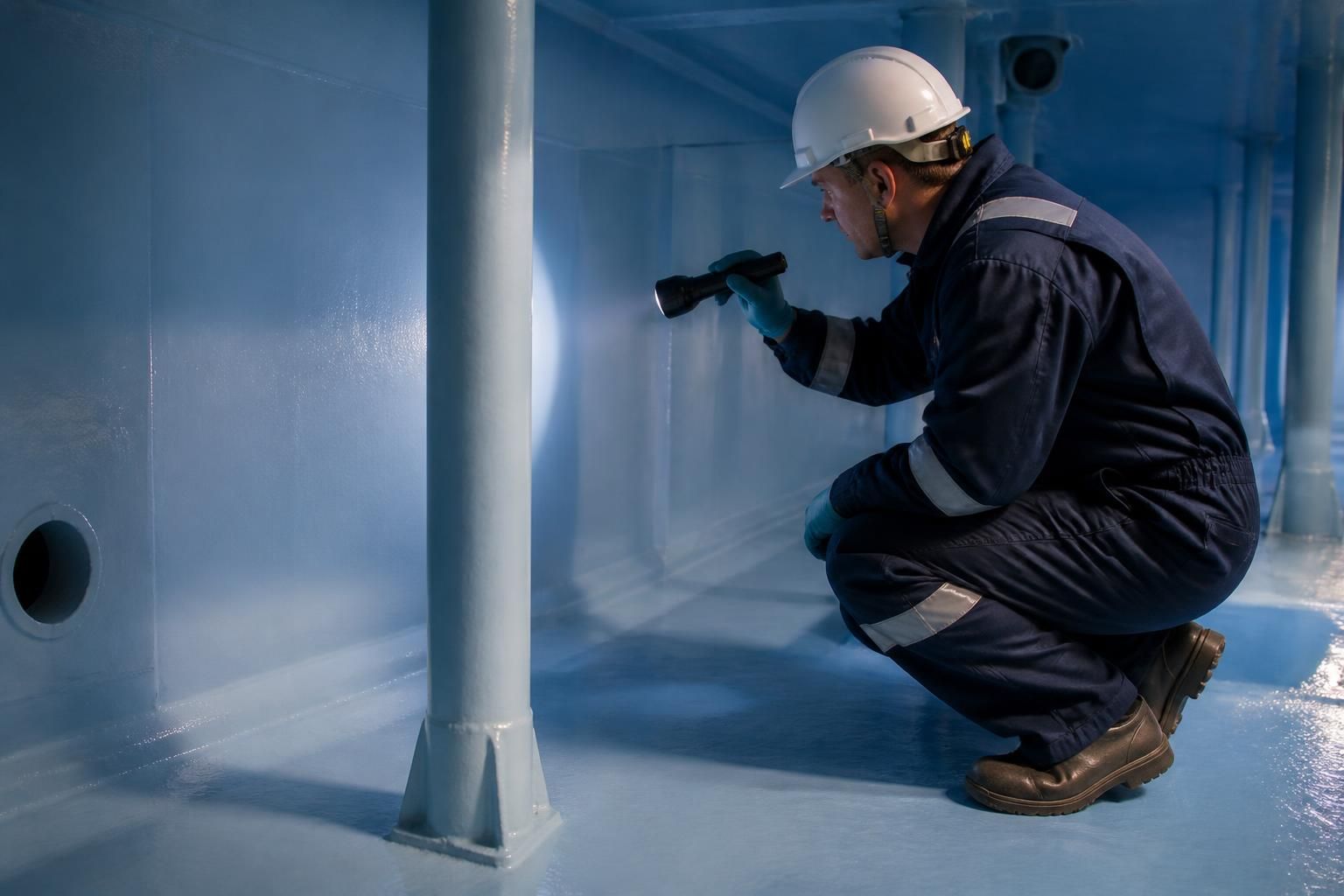
A relined water tank still requires a documented, risk-based maintenance plan. The lining should be treated as a protective component within the storage system, not as a substitute for maintaining the tank structure, access fittings, pipework and water hygiene controls.
Check the lining as part of planned inspections. Examine accessible surfaces for lifting, blistering, cracking, peeling, discolouration, pinholes and areas where the coating has become soft or detached. Particular attention should be given to corners, joints, seams, around nozzles and near inlet, outlet and overflow connections, as these areas can experience movement or concentrated wear. Any change should be compared with previous inspection records so that gradual deterioration is not overlooked.
The tank should also be assessed for conditions that could damage the relining. These may include standing debris, abrasion from maintenance equipment, excessive movement, impact from loose components, condensation, corrosion beneath the lining or leaks around fittings. The external tank, supports, access cover, vents, warning arrangements and overflow should be considered alongside the internal lining because a defect elsewhere can affect water quality or allow contamination into the vessel.
Cleaning must be suitable for the lining system. Use methods, tools and cleaning agents that are compatible with the installed material. Aggressive abrasion, unsuitable chemicals or excessive mechanical pressure can mark the surface or weaken its adhesion. Cleaning should remove sediment, scale, biofilm and other deposits without damaging the coating. After cleaning or any intervention inside the tank, the system may need to be disinfected and flushed in accordance with the applicable water hygiene procedure before it is returned to service.
Maintenance should also confirm that the tank remains suitable for its intended use. Review whether the stored water is turning over appropriately, whether dead legs or low-use outlets are present, and whether temperature or environmental conditions could encourage microbial growth. For systems subject to legionella control requirements, the relined tank should remain within the wider site water safety plan rather than being managed as an isolated asset.
Defects should be assessed before the tank is put back into normal use. Small surface marks may require a different response from exposed substrate, widespread disbonding, active leakage or contamination beneath the lining. Repairs should use a compatible system and follow the original preparation and application requirements. The repaired area may need to be allowed to cure fully, inspected for continuity and cleaned or disinfected before the tank is refilled. Where damage is extensive, relining may no longer be the appropriate remedy and a specialist assessment should determine whether more substantial remedial work is needed.
Maintenance records should identify the tank, inspection date, condition of the lining, findings around fittings and internal components, cleaning or disinfection completed, defects found, corrective action and the person or organisation responsible. Keep photographs, test results, repair information and product documentation with the asset history where available. These records help demonstrate that the tank is being managed consistently and provide a baseline for identifying changes at later inspections.
The maintenance interval should be based on the system risk assessment, tank construction, lining type, water use, previous defects and the consequences of failure. An inspection may need to be brought forward after repair work, a reported leak, unusual taste or appearance, loss of water quality, prolonged stagnation, or any event that could have affected the lining. Competent personnel should carry out work inside the tank, following suitable confined-space, hygiene and isolation controls where relevant.
In practice, effective maintenance combines condition checks, lining-compatible cleaning, water hygiene management, prompt technical assessment of defects and complete records. This preserves the value of the relining while continuing to manage the tank as part of the site's overall water safety arrangements.
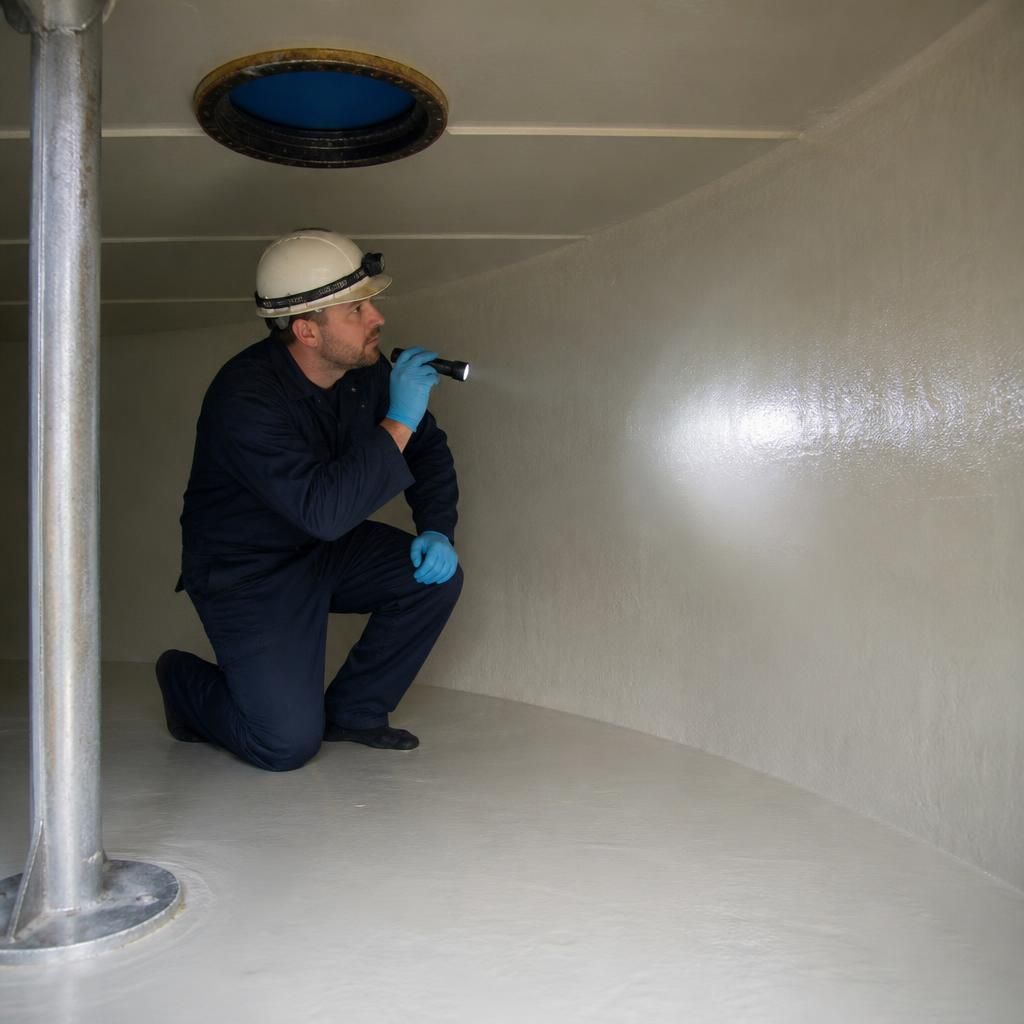
Preventing recontamination is an important part of maintaining a relined water tank after cleaning or inspection. A sound lining can be undermined if contaminants enter through a poorly sealed access cover, damaged vent screen, unprotected overflow or defective pipework penetration.
During routine maintenance, check that covers close securely, seals remain serviceable and vents allow air movement without providing an entry route for insects, dust or other debris. Keep the area around the tank clean and avoid leaving tools, packaging or loose materials where they could fall into the vessel. These supporting controls help preserve water quality and reduce the risk of avoidable damage to the relining between formal inspections.
Review your relined water tank maintenance needs
For advice on maintaining a relined water tank, speak to Blue Fish Water Management Ltd about your inspection, cleaning and water hygiene requirements. Their team can help you determine the appropriate maintenance approach for your system.