
What are the main benefits of water tank relining?
Water tank relining can restore a sound but deteriorated tank without full replacement, helping to improve watertightness and protect stored water from contact with damaged internal surfaces. It can also extend the tank’s usable life, reduce disruption and provide a practical route to maintaining water safety when replacement is not necessary.
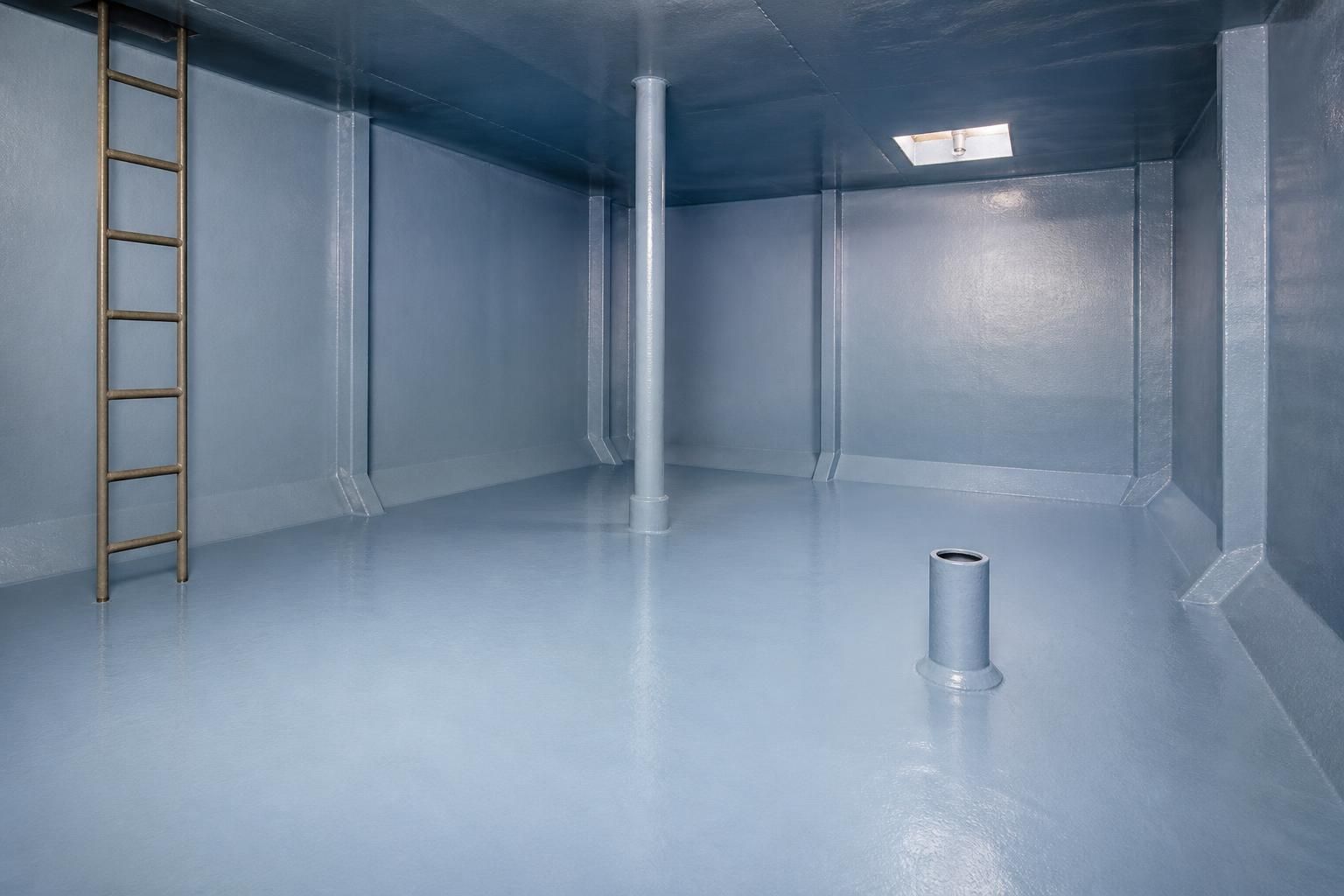
The main benefits of water tank relining are the improvement of the tank’s internal condition, a potentially lower-cost alternative to replacement, and better control of deterioration within a suitable existing tank. A specialist-applied lining forms a continuous barrier over the prepared internal surfaces, helping the tank remain fit for service while supporting ongoing water hygiene management.
Key benefits for businesses include:
- Improved internal hygiene conditions: A properly prepared and applied lining can cover degraded surfaces, corrosion products and minor imperfections that may otherwise trap sediment or make cleaning more difficult. A sound, compatible finish provides a more manageable internal surface for inspection and cleaning.
- Reduced risk of water contact with unsuitable materials: Where the existing tank has a deteriorating internal finish, relining can provide a new barrier between the stored water and the affected surface. The lining system must be appropriate for the tank’s use and, where relevant, suitable for contact with wholesome water.
- Potential capital cost advantages: If the tank shell and supporting structure remain suitable, relining may require less expenditure than removing and replacing the complete tank. The financial benefit depends on the tank’s condition, access, preparation requirements, lining specification and any associated remedial work, so it should be established through a site assessment rather than assumed.
- Retention of an existing installation: Relining can allow a business to continue using a tank that is fundamentally serviceable, rather than redesigning the storage arrangement. Existing pipework, supports and the surrounding plant may remain relevant, subject to inspection and compatibility checks. This can simplify the scope of work compared with a full replacement project.
- Support for planned compliance: A relining project can form part of a documented remedial programme arising from a water tank inspection or legionella risk assessment. The work provides evidence that identified defects have been addressed, although relining does not by itself establish compliance. Cleaning, disinfection, inspection, sampling, risk assessment and record-keeping may still be required.
- Better asset management: Relining gives a business another option when deciding how to manage ageing water storage equipment. Instead of treating every deteriorated tank as a replacement case, the responsible person can compare the condition of the shell, the severity of the defects, operational requirements and the likely future maintenance burden.
- Less material disposal: Retaining a suitable tank can reduce the amount of old equipment sent for disposal compared with removing the entire installation. This may be relevant to organisations managing environmental objectives, site waste and planned maintenance programmes.
The benefits depend on the condition of the tank beneath the lining. Relining is not a substitute for structural repair where the shell, supports or connections are seriously compromised. It may also be unsuitable where there is extensive movement, persistent external moisture, inaccessible areas or a lining cannot be properly prepared and inspected. A competent assessment should therefore consider the tank material, existing defects, stored water type, operating conditions and the proposed lining system.
Relining should also be viewed as one part of water safety management rather than as a water treatment process. It does not remove the need for appropriate tank cleaning, disinfection, temperature control, monitoring or UKAS-accredited testing where testing is required. Following the work, the relined tank should be included in the site’s inspection and maintenance arrangements, with the specification, preparation records, completion information and any testing or verification retained for future review.
For a commercial or industrial site, the most useful comparison is therefore not simply relining versus replacement. It is whether relining provides a technically sound, hygienically appropriate and proportionate way to manage the tank’s condition within the organisation’s wider water safety plan.
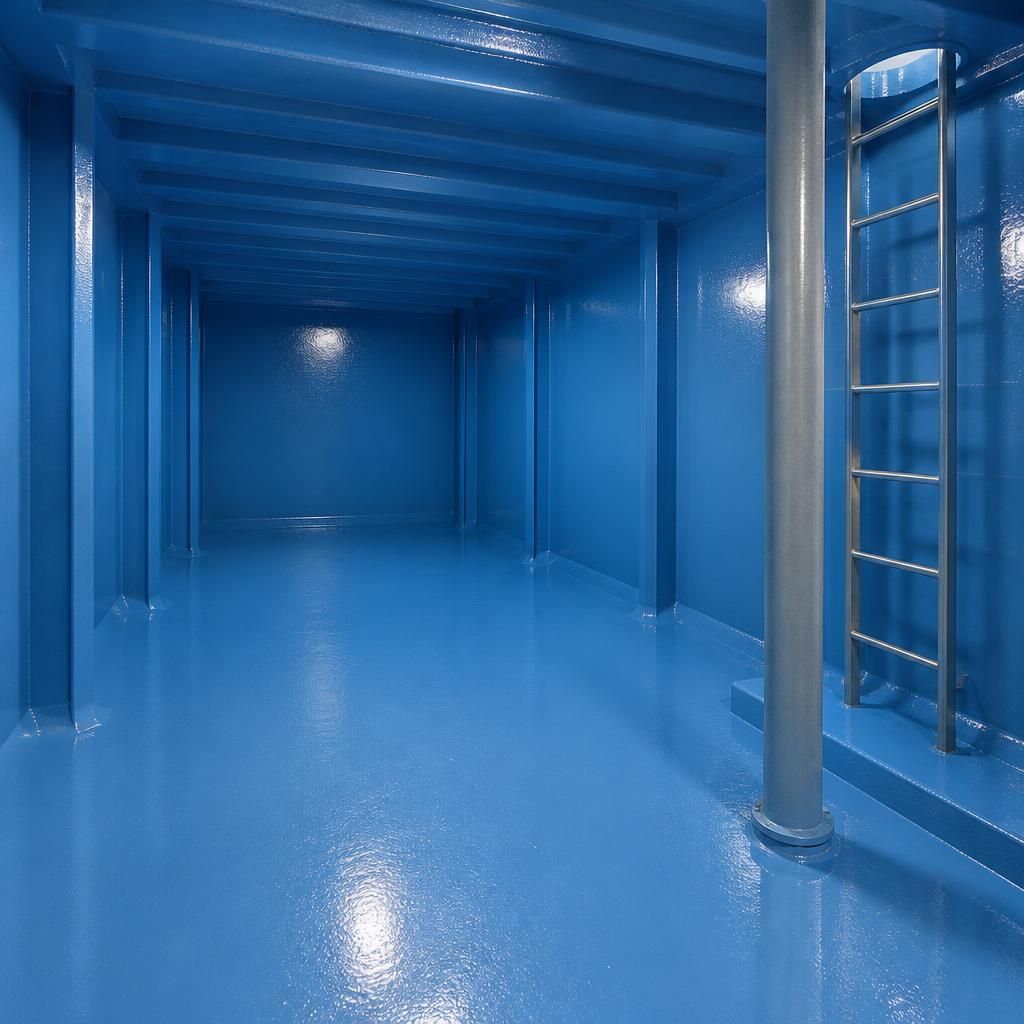
A further benefit of water tank relining is that it can make future condition assessments more consistent. Once defective internal surfaces have been properly prepared and covered, inspections can focus on the lining’s condition, including signs of wear, lifting, cracking or local damage, rather than assessing a deteriorated surface with multiple defects. This gives the responsible person a clearer basis for deciding when cleaning, local repair or further specialist intervention may be required.
The lining specification and installation records should be retained with the tank’s water safety documentation. They provide useful reference information for later inspections, particularly where the tank is managed as part of a wider legionella control programme. This benefit depends on competent preparation, correct application and an inspection regime suited to the tank and its stored water.
Get expert advice on water tank relining
Discuss your tank’s condition with Blue Fish Water Management Ltd to establish whether relining is technically suitable and what preparation, lining specification and verification may be required. Expert advice can help you compare relining with other proportionate remedial options.