
What affects the cost of water tank relining?
Water tank relining cost is mainly affected by the tank’s size, condition and construction, together with access, preparation requirements, lining materials and any remedial work needed before application. A site assessment is therefore needed to identify the work involved and produce an accurate price.

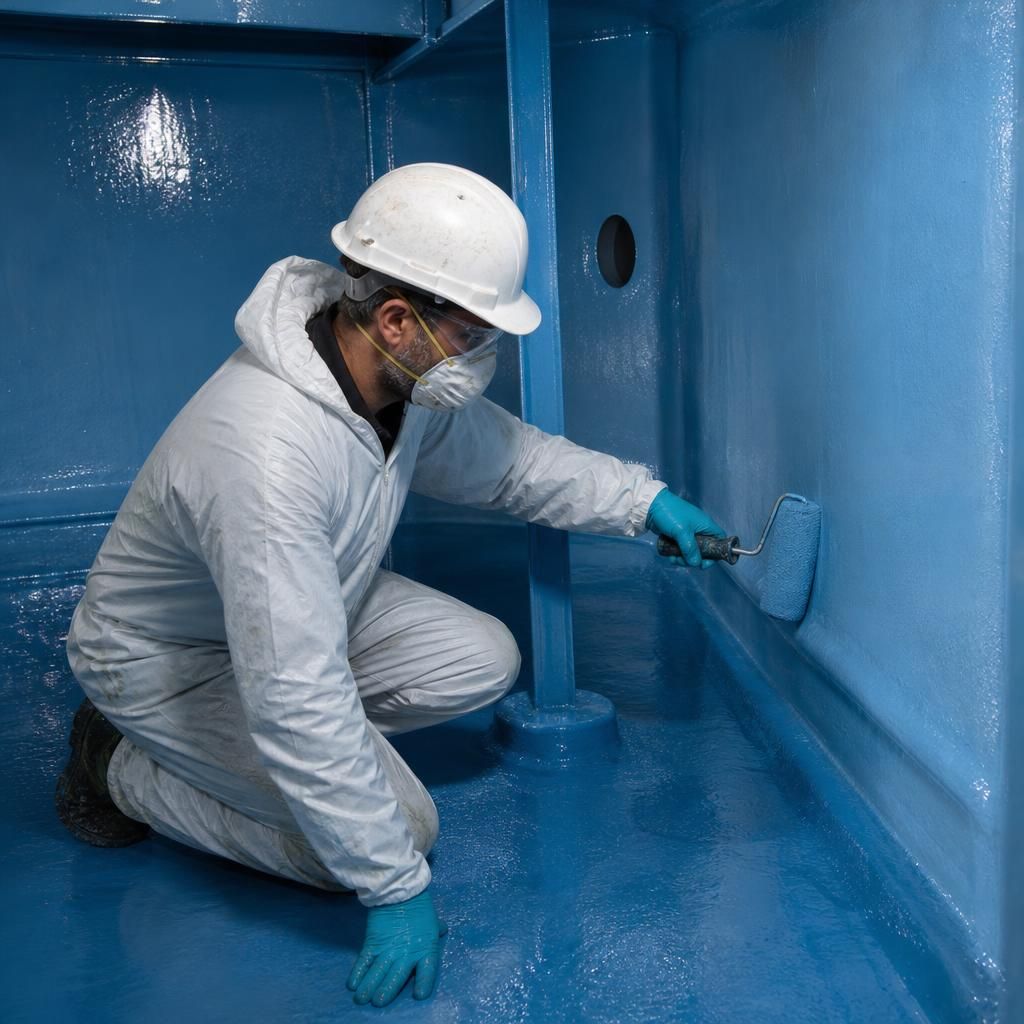
The cost of water tank relining is based on the complete work package required to return the tank to a suitable, serviceable condition. The lining itself is only one part of the price. Surveying, preparation, application, curing, verification and any work needed to manage the tank while it is out of service can all affect the final quotation.
The intended use of the tank is an important pricing consideration. A tank supplying drinking water may require a lining system with suitable approval for contact with potable water, whereas a tank serving another purpose may have different performance requirements. The specification must also account for the type of water, operating conditions and the level of resistance required against corrosion, abrasion or chemical exposure. A more demanding specification can involve additional preparation, application controls or verification.
The condition of the existing tank determines how much preparation is necessary before the lining can be applied. Cleaning, drying and removing loose material are basic parts of the process, but some tanks may need more extensive surface treatment, repairs to joints or attention to fittings. If the substrate is not adequately prepared, the lining may not bond correctly. For this reason, a quotation based only on the tank’s dimensions may not reflect the actual work required.
Costs can also vary according to how the tank fits into the wider water system. The work may require the tank to be isolated, drained or temporarily taken out of use. Where the tank is part of a critical supply, arrangements may be needed to maintain the system while the work is completed. The number of visits, time allowed for preparation and curing, and the sequence of work can all influence labour and project-management costs.
Access and site logistics affect the practical effort involved in carrying out the work. Restricted entrances, difficult internal access, limited space for equipment, ventilation requirements and the distance between the tank and working area may increase the time needed for preparation and application. Safe entry and work controls may also need to be included in the method statement. These considerations are assessed during the site survey rather than assumed from the tank’s capacity alone.
The quotation may include inspection and verification after relining. Depending on the use of the tank and the agreed specification, this can involve visual checks, inspection of the finished lining, water-quality testing or records confirming that the work has been completed as required. If the tank forms part of a managed water system, associated compliance documentation may also be needed. These items provide evidence of the work carried out but add to the overall scope.
Other factors that can change the price include:
- the number of tanks being treated during the same project;
- whether connected pipework, valves, supports or access covers require attention;
- the need to remove, contain and dispose of contaminated water, debris or failed coating;
- the condition discovered after cleaning exposes defects that were not visible during an initial inspection;
- the required finish, thickness or number of lining coats; and
- the reporting, certification and handover information required by the client.
A sound quotation should distinguish between confirmed work and provisional items. It should explain what preparation is included, identify any exclusions, state the proposed lining specification and set out whether testing, reinstatement and documentation form part of the price. This makes quotations easier to compare and reduces the risk that essential work is treated as an unexpected extra.
Blue Fish Water Management can assess the tank and surrounding system to establish the actual scope before pricing the work. A practical assessment considers the tank’s use, the condition found on inspection, the proposed lining system and the operational arrangements needed to complete the work safely and appropriately.
Request a Water Tank Relining Assessment
Request a water tank relining assessment from Blue Fish Water Management to review the tank’s condition, configuration and proposed scope of work. The assessment can then inform a clear quotation based on the specific requirements of the site.