
How does water tank relining compare with tank replacement?
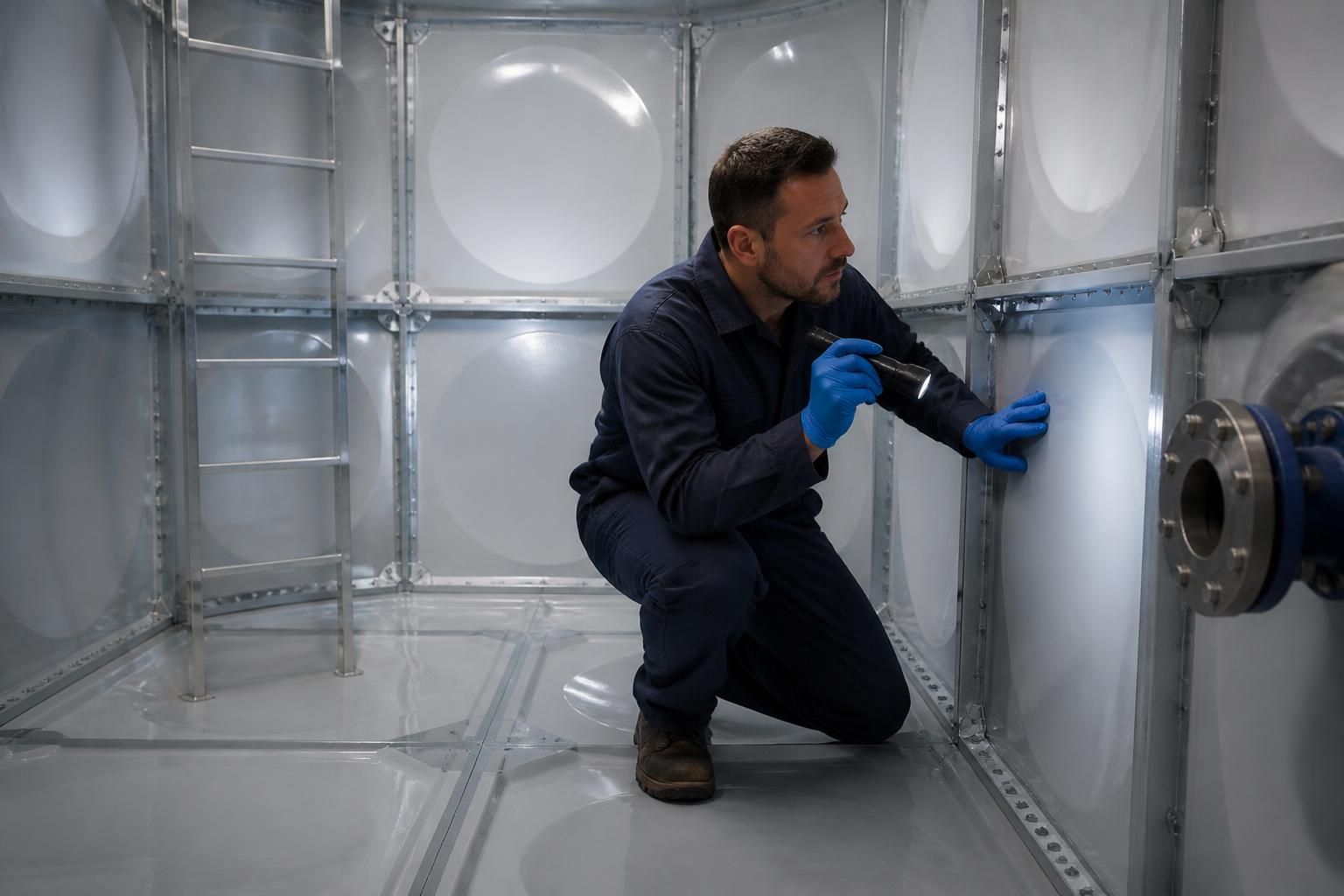
The choice between water tank relining and replacement is primarily a condition, compliance and lifecycle-cost decision. Relining is usually considered where the tank shell, supports and overall design remain suitable but the internal lining has failed. Replacement is more appropriate where the tank has serious structural defects, unsuitable capacity or design, widespread deterioration, or conditions that make continued use difficult to justify.
How the two options differ
Relining involves preparing the existing tank and applying a compatible, water-safe lining system to seal damaged internal surfaces. The work may address corrosion, porosity, minor surface defects and localised leakage, depending on the tank’s construction and the condition found during inspection. The existing tank, connections and supporting arrangements remain part of the installation, so each of these must be assessed rather than assuming that a new internal surface resolves every risk.
Replacement involves removing the existing tank and installing a new one. This creates an opportunity to review the tank’s capacity, access, insulation, pipework arrangement, overflow and drainage provisions, supports and suitability for its intended use. It may therefore solve both the immediate defect and design limitations that a relining project would leave in place.
When relining may be the more suitable option
- The tank shell and supporting structure are fundamentally sound.
- Damage is limited to the internal surface or lining rather than involving major deformation, cracking or instability.
- The tank remains appropriately sized for the building and its water demand.
- Existing connections and associated equipment are in suitable condition.
- Access constraints would make removal and installation of a replacement tank unusually disruptive.
- The proposed lining system is compatible with the tank material and the intended water use.
Relining can retain an existing installation where its basic arrangement is still appropriate. It may also avoid unnecessary removal of sound structural components. However, it should not be selected simply because it appears to be the less disruptive option. The substrate must be capable of receiving the lining, and defects behind or beneath the damaged surface may prevent a durable result.
When replacement is generally preferable
- The tank has significant structural damage, distortion, cracking or weakened supports.
- Corrosion or deterioration extends beyond the surface and affects the tank’s integrity.
- The tank is incorrectly sized, poorly configured or unsuitable for the building’s current use.
- Internal contamination, sediment retention or difficult-to-clean features cannot be adequately addressed through relining.
- Pipework, valves, access arrangements or ancillary components are obsolete or defective.
- The tank cannot be reliably inspected, cleaned, disinfected or maintained after remedial work.
- The existing installation cannot reasonably be brought into line with the required water hygiene controls.
Replacement is also worth considering where several separate defects are present. Relining one surface may address leakage while leaving poor access, inadequate support or unsuitable pipework unresolved. A new installation can provide a more coherent solution, although its design and installation still require proper verification.
Cost comparison
Relining often involves fewer physical changes because the tank and much of the surrounding installation remain in place. Its cost is influenced by the tank’s size, access, preparation requirements, surface condition, lining specification and any repairs needed before application. If extensive preparation or structural work is required, the difference between relining and replacement may become less significant.
Replacement costs include the new tank, removal and disposal of the existing unit, lifting or access arrangements, alterations to pipework and supports, installation, cleaning and commissioning. A replacement may therefore require more work initially, but it can be the more sensible lifecycle option where the existing tank has multiple defects or is approaching the end of its serviceable life.
A sound comparison should consider more than the initial quotation. Ask whether each option includes inspection, preparation, isolation and draining, cleaning, disinfection, testing, reinstatement and the documentation needed for the water hygiene record. The likely maintenance requirements and the consequences of retaining older components should also be included in the assessment.
Water quality and compliance considerations
Neither option automatically makes a water system compliant. The finished installation must be suitable for its use and capable of being managed under the site’s water hygiene arrangements. For a relining project, the coating or lining must be specified for contact with the relevant water type, applied to a properly prepared surface and allowed to cure in accordance with the system requirements. For replacement, the new tank and all connected components must be suitable, correctly installed and protected from contamination.
The assessment should consider stagnation, temperature control, access for inspection and cleaning, contamination routes, dead legs, overflow protection and the condition of connected pipework. Where the tank forms part of a domestic hot and cold water system, these factors are relevant to controlling legionella risk. Records should demonstrate what was inspected, what work was completed, which products or materials were used where relevant, and how the system was cleaned, disinfected and returned to service.
Disruption and practical constraints
Relining can sometimes reduce the extent of dismantling because the existing tank remains in position. The actual disruption still depends on whether the tank can be drained safely, whether surfaces can be accessed and prepared, and whether the water supply must be isolated while work takes place.
Replacement may involve removing a tank through restricted access, modifying pipework or arranging lifting equipment. It can nevertheless be the more practical route where the existing tank is difficult to clean or inspect. A site survey should establish access, isolation points, drainage, structural support, working space and the effect on building operations before either option is selected.
How to reach a defensible decision
- Inspect the tank internally and externally, including its shell, lining, supports, joints, connections and surrounding environment.
- Identify whether defects are cosmetic, surface-level, localised or structural.
- Review the tank’s capacity, design, access and suitability for its current duty.
- Check the condition of associated pipework, valves, insulation, overflows and drainage.
- Confirm the hygiene, material and documentation requirements for the intended water use.
- Compare the complete lifecycle implications of relining with those of removal and replacement.
- Record the reasoning behind the chosen option and specify any follow-up inspection, testing or monitoring.
In practical terms, relining is best viewed as a targeted remedial solution for a suitable existing tank, while replacement is the stronger option when the tank or its wider arrangement is no longer fit for purpose. An independent condition assessment that considers structure, water hygiene, maintainability and future use provides a more reliable basis for the decision than price alone.
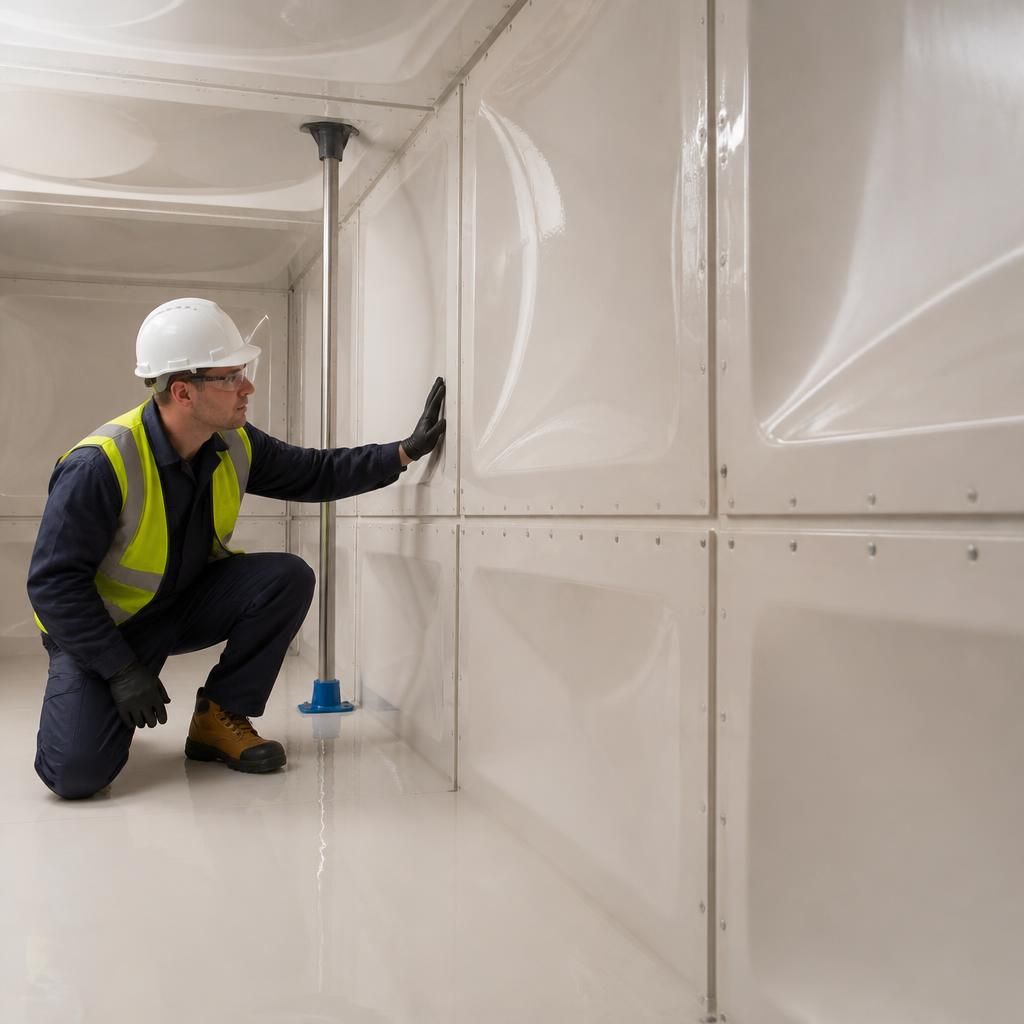
The decisive difference is what each option leaves behind. Relining renews the tank’s internal barrier but retains the original shell, joints, supports and geometry. Replacement removes that inherited condition and introduces a new tank, although the surrounding pipework, support arrangement and system design still need to be checked separately.
For that reason, a relining proposal should state clearly whether it includes repairs to the substrate, treatment of joints, access improvements and verification of the finished surface. If the work relies on the lining to compensate for a weakened shell or unresolved movement, it is not addressing the underlying defect. A replacement specification should likewise identify any retained components, so the decision reflects the condition of the complete installation rather than the tank body alone.
Assess your water tank relining options
Request a professional assessment of the tank and its associated installation before choosing between relining and replacement. Blue Fish Water Management Ltd can help you compare the condition, compliance requirements and likely lifecycle implications of each option.