
How does water tank relining affect water quality?
Water tank relining can improve water quality by creating a continuous, impermeable barrier that helps prevent contamination from corrosion, cracks, porous surfaces and debris entering the stored water. Its effectiveness depends on thorough preparation, suitable lining materials and correct installation, followed by appropriate inspection and water quality monitoring.
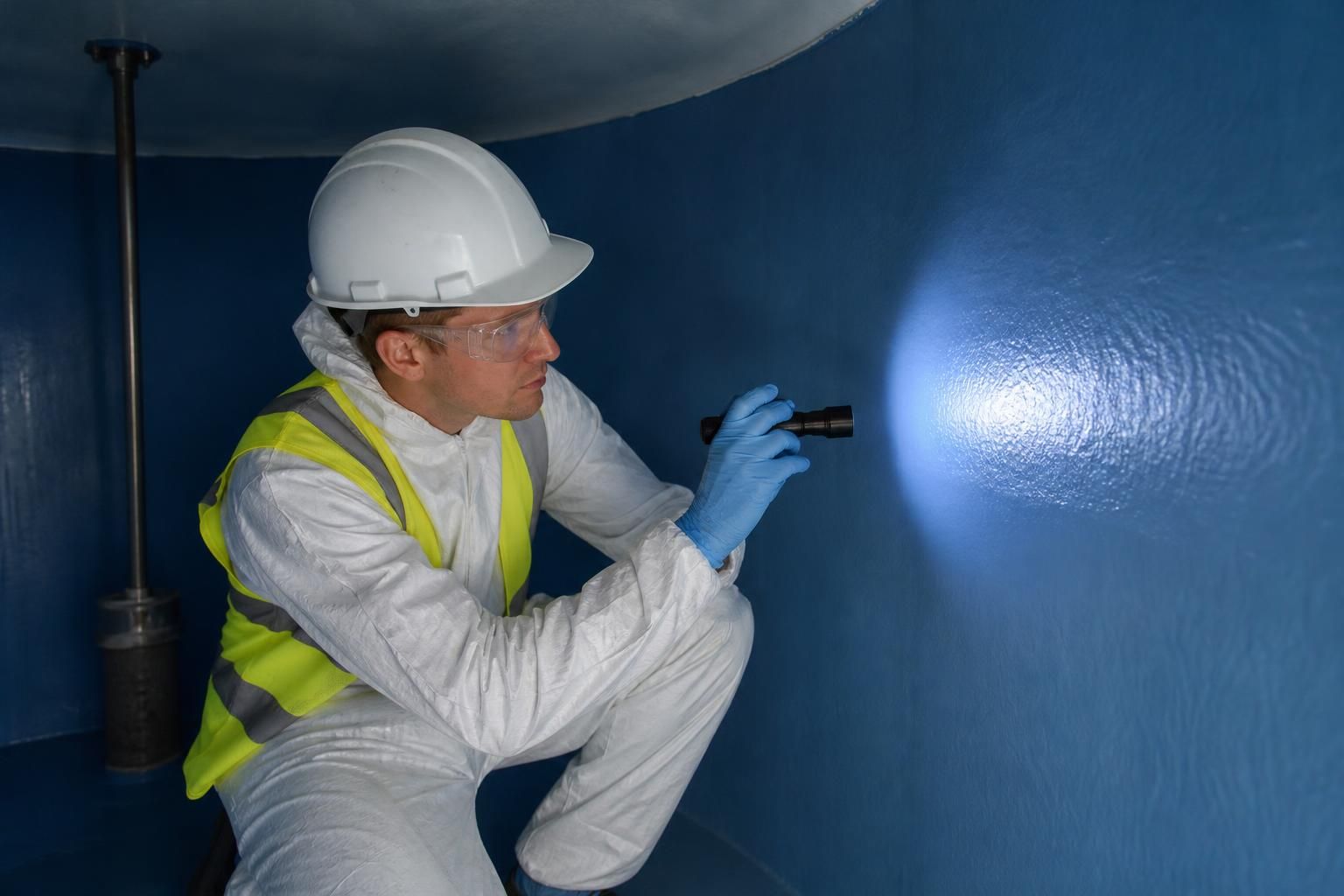
Water tank relining affects water quality by changing the condition of the tank’s internal surfaces and the way the stored water interacts with them. A correctly specified and installed lining can make the tank easier to clean, reduce the release of material from deteriorating surfaces and support more consistent control of the water system. It does not, by itself, make water safe: the result also depends on the tank’s design, incoming water, temperature control, turnover, cleanliness and ongoing management.
The main water-quality effects can include:
- Reduced contact with deteriorating substrate: where the original tank surface is damaged or degrading, a suitable lining can separate the stored water from that substrate and limit the release of particles or corrosion products.
- Improved cleanability: a sound, continuous finish may leave fewer irregular areas for sediment and organic matter to accumulate. This can make planned cleaning and inspection more effective.
- More stable internal conditions: repairing defects as part of the relining process can reduce areas where stagnant pockets, deposits or concealed deterioration develop.
- Protection of aesthetic quality: reducing contact with rusting or degraded surfaces may help prevent discolouration, metallic tastes and visible sediment. These changes should be confirmed through inspection and appropriate sampling rather than assumed.
The lining material is critical. It must be suitable for the tank construction, the stored water and the intended use of the system. For tanks supplying water for domestic or potable purposes, the product and application system need to meet the relevant requirements for contact with drinking water. A material that is suitable for one environment may not be appropriate for another, particularly where there are differences in water chemistry, temperature, immersion conditions or disinfection arrangements.
Preparation has a direct bearing on the eventual water quality. Before application, the tank normally needs to be emptied, cleaned and inspected, with loose material, deposits, corrosion and defective areas addressed. If contamination or unstable material remains beneath the lining, the new surface may fail prematurely or create defects that are difficult to identify. Application conditions, curing and re-entry procedures also matter because uncured or poorly bonded materials can affect taste, odour or chemical quality.
After relining, the tank should not simply be returned to service without suitable checks. The completed surface should be visually inspected for pinholes, blisters, missed areas, cracking, poor edges or other defects. Depending on the system and its use, additional checks may include testing for continuity, confirming cure, flushing the tank and taking water samples. Testing can help establish whether the water meets the required quality criteria before normal use resumes.
Relining also has to be considered alongside microbiological control. A new lining cannot prevent Legionella or other bacteria from multiplying where water is stored at unsuitable temperatures, remains stagnant, receives inadequate circulation or is exposed to ongoing contamination. Tank covers, warning arrangements, inlet and outlet configuration, overflow protection, access points and cleaning schedules all continue to influence water quality. The relining work should therefore form part of the wider water safety plan rather than being treated as a standalone control measure.
For an existing tank, pre-work and post-work sampling may provide a useful comparison, particularly where there have been concerns about turbidity, colour, taste, odour or microbiological results. Results need to be interpreted in relation to the system’s use and risk assessment. A single satisfactory sample does not replace routine monitoring, and an unsatisfactory result does not necessarily prove that the lining itself is the cause; the investigation should consider the full system.
In practical terms, relining is most likely to support water quality when the work includes:
- an assessment of the tank, its construction and the stored water’s intended use;
- selection of a compatible lining system with appropriate documentation;
- thorough preparation and removal of unstable or contaminated material;
- controlled application, curing and inspection;
- proper cleaning, flushing and reinstatement procedures; and
- post-work verification followed by continued inspection, sampling and tank maintenance.
Accordingly, relining can improve the water-quality condition of a deteriorating tank and make future hygiene management more reliable, but its effect is dependent on specification, workmanship and system management. A water hygiene assessment should establish whether relining addresses the actual risk, or whether cleaning, component replacement, operational changes or complete tank replacement are also required.
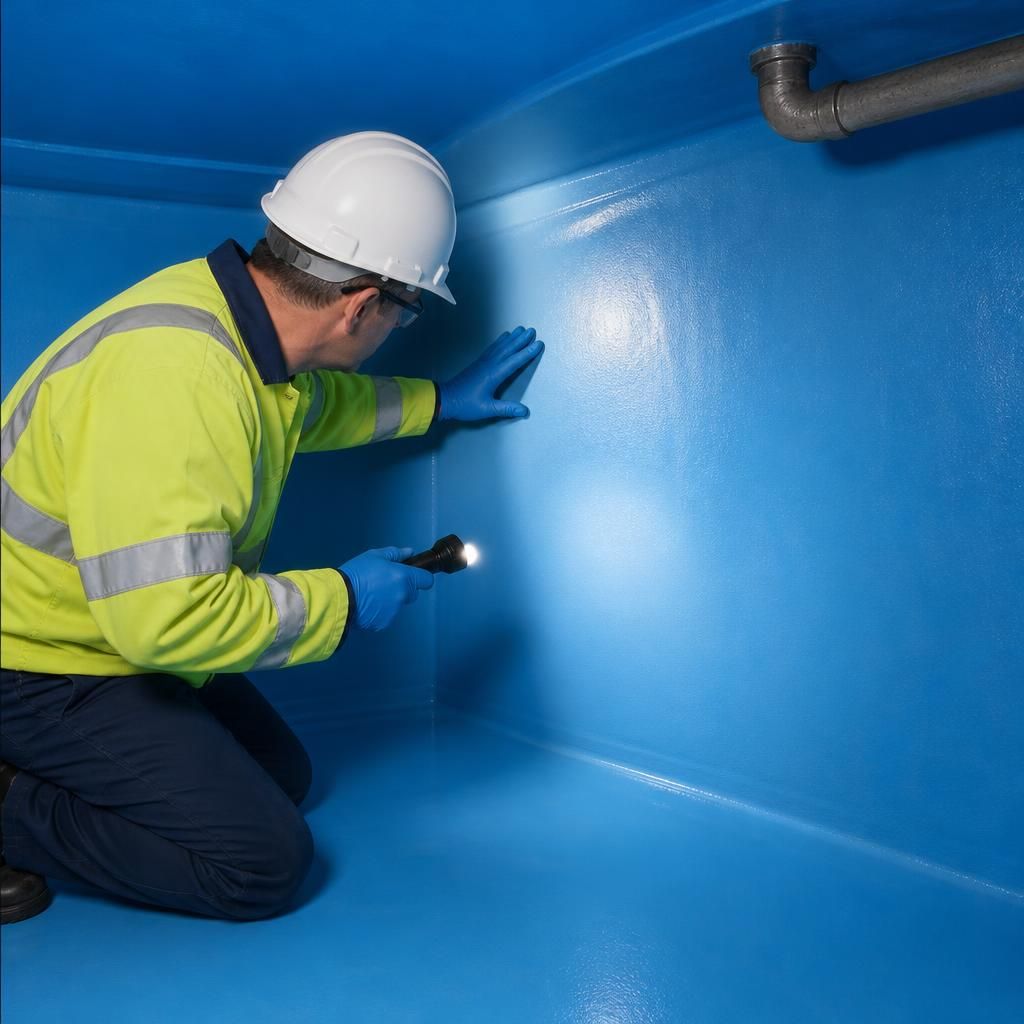
A relined tank can limit the transfer of contaminants from the tank structure into the stored water, but it does not remove contaminants that are already present. If incoming water contains elevated metals, sediment or other substances, or if contamination enters through the inlet, cover or connected pipework, relining alone will not correct the problem. The water-quality improvement is therefore limited to the risks associated with the tank’s internal condition.
This distinction is important when interpreting test results. A change in water quality after relining should be considered alongside the source water, connected equipment and operating conditions. Where contaminants are entering from elsewhere, additional controls such as source investigation, filtration, component repair or changes to system operation may be needed rather than relying on the lining as the sole treatment.
Discuss your water tank relining and water quality requirements
Discuss your water tank relining and water quality requirements with Blue Fish Water Management Ltd to identify the most appropriate next steps for your system. Their team can help assess whether relining is suitable and advise on any additional water hygiene measures needed.