
Who should arrange water tank leak repair in commercial premises?
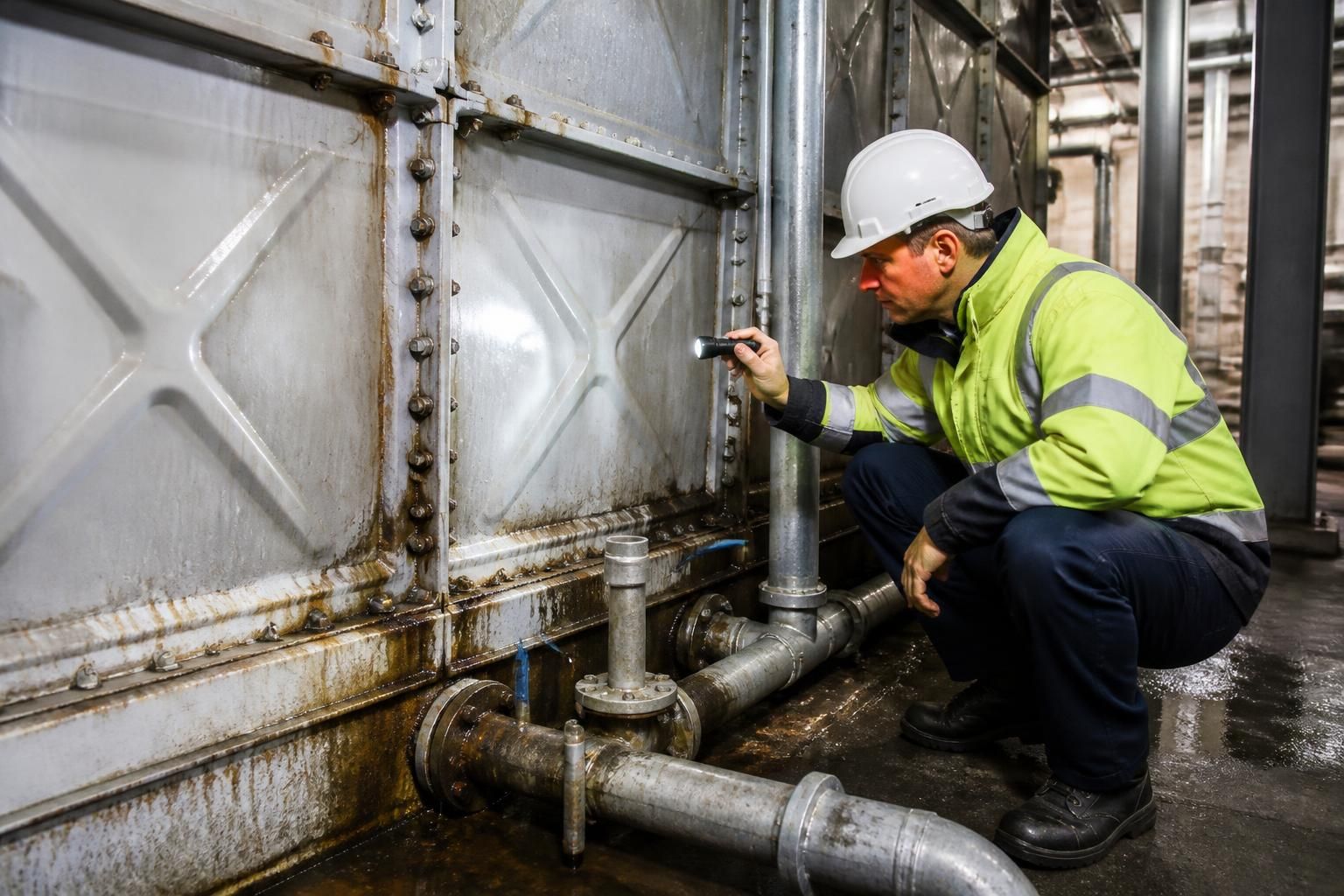
The person or organisation with control of the premises and its water systems should arrange commercial water tank leak repair. This is usually the building owner, landlord, managing agent, facilities manager or occupier, depending on who controls the tank, commissions maintenance and can authorise remedial work. The duty should be assigned clearly rather than left to staff to determine when a leak becomes serious.
Responsibility depends on control of the system. A landlord may retain responsibility for tanks and associated services in shared buildings, while a tenant may be responsible for equipment serving its own area. In a managed property, the managing agent may coordinate the work, but the owner or occupier should confirm who holds the relevant duty. Lease terms, service agreements and facilities-management contracts can allocate practical tasks, although they do not remove the need for appropriate health and safety management.
For legionella control, the responsible person should consider the leak as part of the wider water-system risk. A leaking tank can allow contamination, introduce debris, reduce the effectiveness of protective components or alter water temperature and flow. It may also indicate corrosion, failed fittings, structural deterioration or inadequate maintenance. The person arranging the repair should therefore consider whether the risk assessment, monitoring arrangements or control measures need to be reviewed.
The responsible person should take these steps:
- Record when and where the leak was identified, including any visible damage, pooling water, unusual noise, loss of pressure or change in water quality.
- Assess whether the leak is affecting potable water, hot or cold water storage, outlets, electrical equipment, occupied areas or other building services.
- Restrict access to unsafe areas and use only suitable temporary measures that do not compromise water hygiene. Isolation or draining should be carried out by someone competent to work on the system.
- Notify the relevant owner, occupier, managing agent or facilities team where responsibility is shared, and agree who will authorise the repair.
- Appoint a competent contractor to inspect the tank and connected components, identify the cause and specify the necessary repair or replacement.
- Keep records of the inspection, work completed, parts replaced, cleaning or disinfection and any post-repair checks.
A contractor should not be selected solely because they can stop visible water loss. The repair may involve stored water, internal tank surfaces, valves, pipework, insulation, access arrangements and hygiene controls. The appointed organisation should be able to demonstrate relevant experience, suitable working methods, risk assessments and an understanding of legionella prevention. Where testing or remedial work is required, the responsible person should establish what evidence will be supplied after completion.
In larger organisations, the person who notices the leak may not be the person who arranges the repair. A caretaker, cleaner or tenant should report it through the agreed facilities process, while the responsible person or delegated manager confirms the response. The reporting route should identify who can authorise isolation, engage a contractor and decide whether affected areas or water outlets can remain in use.
Water tank leaks in rented or multi-occupied premises require coordination. The occupier should notify the landlord or managing agent and protect people from any immediate hazard, while the party controlling the relevant installation arranges access and remedial work. If the leak affects several occupants or a shared supply, the building manager should coordinate communication, system controls and records so that one tenant's repair does not create a hygiene or operational issue elsewhere.
After the repair, responsibility does not end when the visible leak stops. The responsible person should confirm that the underlying fault has been addressed, the tank and surrounding area are suitable for continued use, and any required cleaning, disinfection, sampling or monitoring has been completed. Inspection and maintenance schedules may also need updating, particularly where the cause was corrosion, failed seals, poor support, frost damage or another recurring defect.
Where ownership or control is unclear, the parties should document the allocation before commissioning work. A written record should name the responsible person, identify the tank and connected system, state who can authorise expenditure and explain how defects and test results will be reported. This reduces the risk of delay and supports evidence that water-system responsibilities are being actively managed.

Arranging the repair and confirming that the system is safe to return to service are related but separate decisions. A facilities or procurement manager may commission the work, while the person responsible for water-system management should review the contractor’s findings and approve any change to the operating controls. This separation helps prevent a repair being treated as complete simply because water is no longer visible outside the tank.
The instruction should define the required scope before work starts. It should identify the tank, its function, the areas or outlets it serves, the suspected defect and any restrictions on access or use. It should also require the contractor to report defects discovered during the inspection, rather than authorising only a narrow repair to the first failed component. This gives the organisation a clearer basis for deciding whether further work, investigation or system review is necessary.
Discuss Your Commercial Water Tank Leak Repair Requirements
If your organisation needs to arrange commercial water tank leak repair, contact Blue Fish Water Management Ltd to discuss the situation and the appropriate next steps. Our team can help clarify the water hygiene considerations before work is commissioned.