
When does a leaking water tank need replacement?
A leaking water tank usually needs replacement when damage is extensive, the tank material has deteriorated, leaks recur after suitable repair, or it cannot be restored to a reliable, hygienic and watertight condition. If the defect is localised and the tank remains structurally sound, a properly assessed repair may be sufficient.
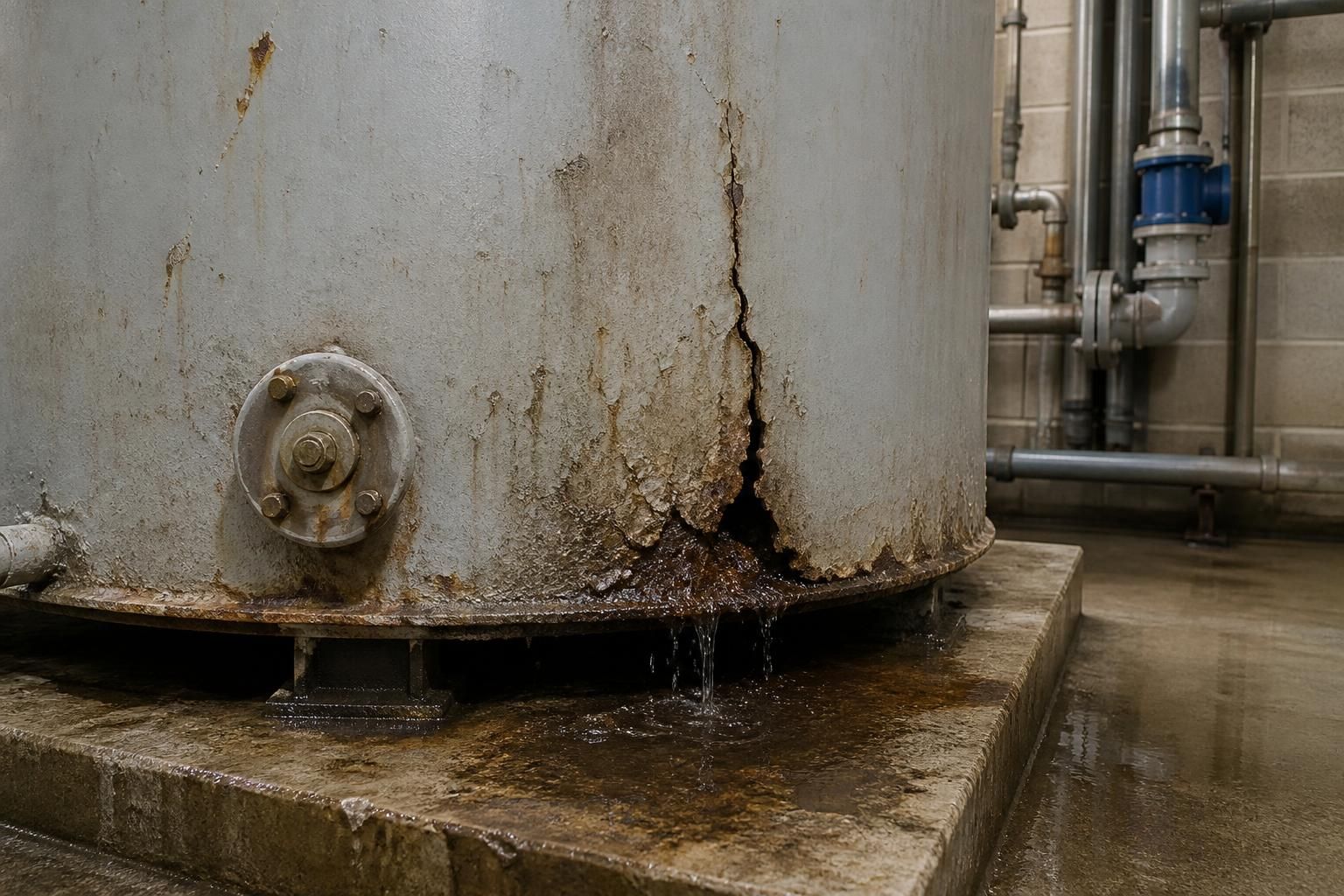
Replacement is normally needed when a leaking water tank can no longer be relied upon to remain structurally sound, hygienic and maintainable throughout its expected service life. The decision should follow an inspection of the tank, its fittings and the surrounding system rather than the presence of water alone. A small, accessible defect may be repairable, but replacement becomes the more appropriate control where the underlying condition of the tank makes another failure likely or prevents the system from being managed safely.
Replacement is more likely to be required in the following circumstances:
- Widespread deterioration: corrosion, cracking, distortion, brittleness, delamination or material breakdown across more than a localised area can indicate that the tank body has reached the end of its serviceable life. Repairing one visible defect may not address weakened areas elsewhere.
- Damage at structural points: defects around supports, seams, joints, access covers, outlets or inlet connections can be more serious than a simple puncture because these areas may be subject to movement, loading or repeated stress.
- Repeated leakage: further leaks after a suitable repair can suggest continuing movement, corrosion, poor support, incompatible repair materials or general material failure. Repeated patching is not a reliable substitute for restoring the tank as a whole.
- Contamination or hygiene concerns: internal corrosion, damaged coatings, persistent deposits, inaccessible areas or degraded surfaces may prevent effective cleaning and inspection. If the internal condition cannot be brought back under proper control, replacement may be necessary to protect water quality.
- Loss of watertightness that cannot be verified: a repair should be capable of being checked. If the tank's construction or condition makes it impossible to confirm that it will remain watertight under normal operating conditions, renewal is usually the more defensible option.
- Unsuitable or obsolete design: a tank may no longer provide adequate access, drainage, insulation, protection from contamination or compatibility with the connected pipework and controls. In these cases, replacing the tank can resolve the wider management issue rather than simply treating the leak.
The extent and location of the leak matter. A defect on an accessible, sound surface can often be assessed differently from leakage at a seam, flange, outlet or concealed base. Leakage from a connection may result from a failed gasket or movement in the pipework rather than failure of the tank itself. Conversely, staining or dampness around a fitting can conceal a larger crack or deterioration behind the connection. The source should therefore be confirmed before deciding that the tank body needs renewal.
A repair is only suitable when it restores the required condition. This means more than stopping visible water loss. The proposed work should be compatible with the tank material and intended use, leave no avoidable hygiene risk, preserve access for inspection and cleaning, and allow the finished work to be checked. Where a repair would be temporary, difficult to inspect or dependent on repeatedly applying patches, replacement generally provides a more reliable long-term control.
Operational and compliance considerations can also affect the decision. For a commercial or industrial system, the consequences of failure may include water damage, service interruption, contamination risk and difficulty demonstrating that the asset is being properly managed. A tank that is technically repairable may still be unsuitable to retain if the repair would leave important parts inaccessible or make future inspection and cleaning impractical. The risk assessment should consider the tank's role in the system, the users who may be affected and the consequences of another failure.
Before replacement is specified, the condition assessment should normally establish the leak's source, the extent of material damage, the condition of connections and supports, and whether the tank can be isolated safely. It should also consider associated components such as valves, overflow arrangements, lids, insulation and connected pipework. Replacing the vessel without addressing a failed support, excessive vibration or movement in the pipework may simply transfer the same problem to the new tank.
Where replacement is chosen, planning should cover more than tank selection. The replacement must be suitable for the stored water and operating conditions, correctly sized for the system, accessible for inspection and cleaning, and installed so that it is protected from avoidable contamination and physical damage. Isolation, draining, removal, installation, disinfection where applicable, recommissioning and documentation should all be considered. Any temporary arrangement used while the work is carried out must also be assessed and controlled.
Following installation, the tank and its connections should be checked for leakage, stability, correct operation and adequate access. The condition of the water system should be reviewed in line with the relevant risk controls, with inspection findings and remedial decisions recorded. A clear record should explain why repair was rejected or accepted, what evidence supported replacement, what work was completed and how the renewed tank will be incorporated into ongoing monitoring.
In practice, the key question is not whether a leak can be stopped temporarily, but whether the tank can be returned to a condition that is dependable, hygienic, inspectable and appropriate for the system. If that cannot be demonstrated after assessment and repair, replacement is the safer and more sustainable course.
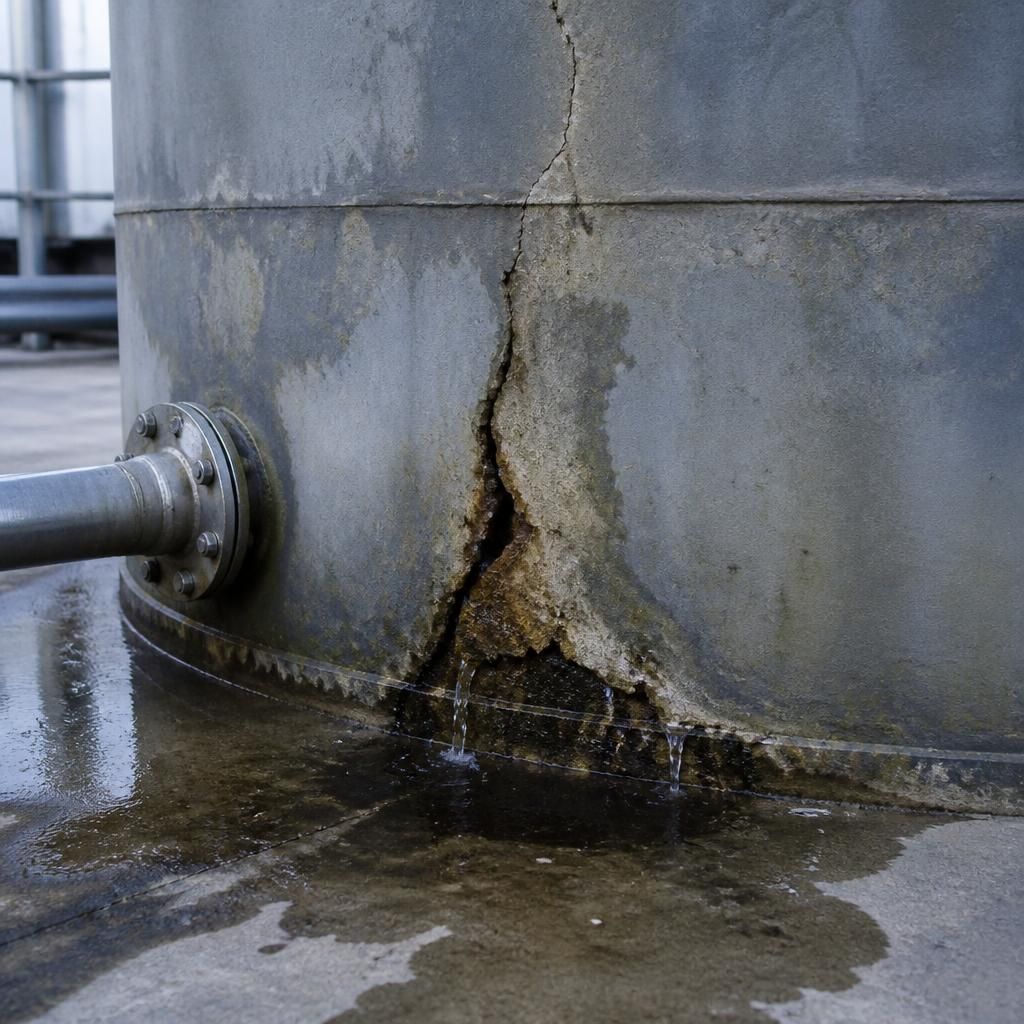
Replacement should also be considered where the tank’s remaining service life cannot be justified for the demands placed on it. A vessel may be capable of holding water after a local repair but still be a poor long-term choice if it is approaching the end of its usable life, has an uncertain maintenance history, or will be subject to changed operating conditions. In that situation, replacing the tank during planned works may avoid repeated disruption and provide a clearer basis for future inspection and maintenance.
Arrange an Assessment of Your Leaking Water Tank
Arrange an assessment with Blue Fish Water Management Ltd to establish whether repair remains appropriate or replacement is the more suitable option for your leaking water tank.