
What causes water tank leaks to recur after repair?
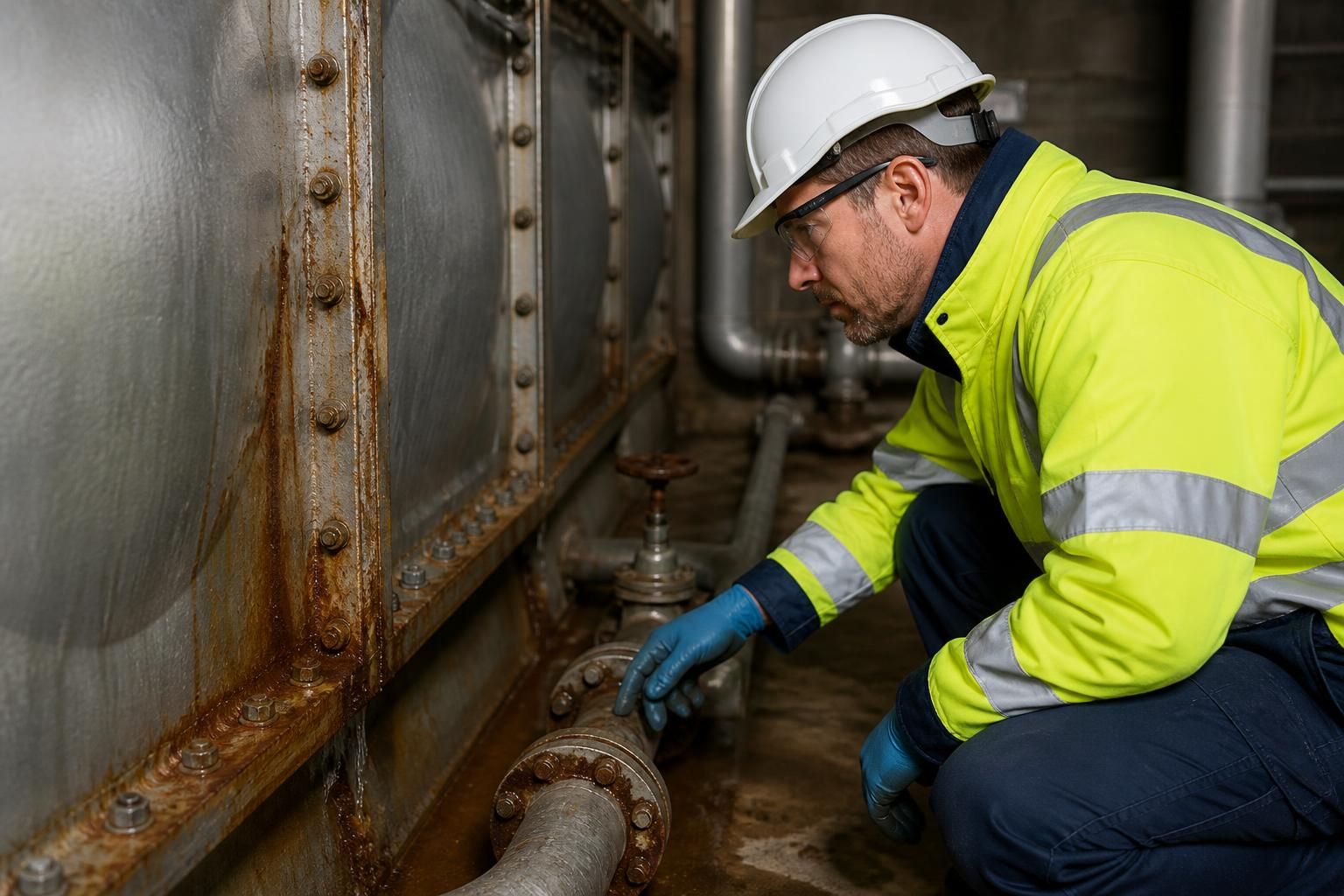
Water tank leaks recur after repair when the repair has not restored the complete water-retaining system or when conditions around the tank continue to damage it. Recurrence may therefore indicate a problem with the tank’s support, connected equipment, operating controls, drainage arrangements or the extent of the original defect, rather than a simple failure of the patch itself.
One common reason is that water has travelled from a different point before becoming visible. Moisture can track along the underside of a tank, insulation, support frame or connected pipework, making the apparent leak location misleading. A repair applied to the wettest or most accessible area may seem successful initially while the actual entry or escape point remains untreated. The surrounding area should be dried, inspected and traced methodically before the repair method is selected.
Tank construction and condition also affect how long a repair lasts. A local defect may sit within a wider area of thinning, distortion, delamination or fatigue. Repeated temperature changes, vibration from associated plant and stresses transferred through connections can gradually reopen a repaired area. Where the remaining material has insufficient strength, a local patch can only provide a temporary remedy and a wider remedial scheme or replacement assessment may be necessary.
Water levels and control arrangements can contribute to repeat failures. An incorrectly set float valve, defective level control, blocked overflow or inadequate warning arrangement may allow the tank to operate outside its intended range. Water can then reach areas that are not designed for regular loading or discharge through an overflow. Reviewing normal and abnormal operating levels is an important part of investigating recurrence, particularly where the repair itself remains intact.
The interface between the tank and its connected components requires particular attention. Pipework that is inadequately supported, valves that are difficult to operate without imposing force, and poorly arranged drains or overflows can place repeated loads on the tank connection. A tank may also appear to have failed again when the new moisture is coming from a nearby valve, flange or pipe joint. Each connection should be checked independently rather than treating the tank shell as the only possible source.
Repair preparation and curing conditions can affect durability even where the selected product is technically suitable. The repair area may need to be clean, dry and free from loose material, deposits or residues. Some systems also require specific preparation, mixing, application and curing conditions. If the repaired tank is returned to service before the repair has properly cured, water exposure can weaken the bond or prevent the material from developing its intended properties.
Repeated leakage can also result from changes made elsewhere in the water system. Altered pumps, control settings, pipework routes or storage arrangements may change loading, flow or water levels. Repairs should therefore be reviewed against the current system configuration, not only against the condition recorded when the original defect was found.
Recurring leakage matters beyond the cost and disruption of repeated remedial work. Persistent dampness can damage insulation, supports and surrounding building materials. It can also make it harder to maintain a clean tank environment, increase the likelihood of contamination entering through defective areas and complicate water hygiene monitoring. Any repair should be followed by appropriate cleaning, inspection and, where the risk assessment indicates, water quality checks before the system is considered suitable for normal use.
A robust investigation normally includes:
- reviewing previous inspection reports, repair details and photographs;
- identifying whether the moisture originates from the tank, a fitting, connected pipework or condensation;
- examining the tank interior and exterior, including areas near supports, penetrations, seams and access points;
- checking water levels, overflow arrangements, control devices and operating conditions;
- assessing the condition of the wider tank rather than concentrating only on the visible defect;
- confirming that the proposed repair system is suitable for the tank material and intended water use; and
- recording post-repair checks and any monitoring needed to confirm that the defect has not returned.
If the cause cannot be isolated, applying another patch may conceal a developing failure and make later diagnosis more difficult. An inspection should establish whether the recurrence is local and repairable, connected with system operation, or evidence that the tank has reached the point where more extensive remedial work is appropriate. This approach provides a sounder basis for protecting water hygiene and deciding whether continued repair remains proportionate.
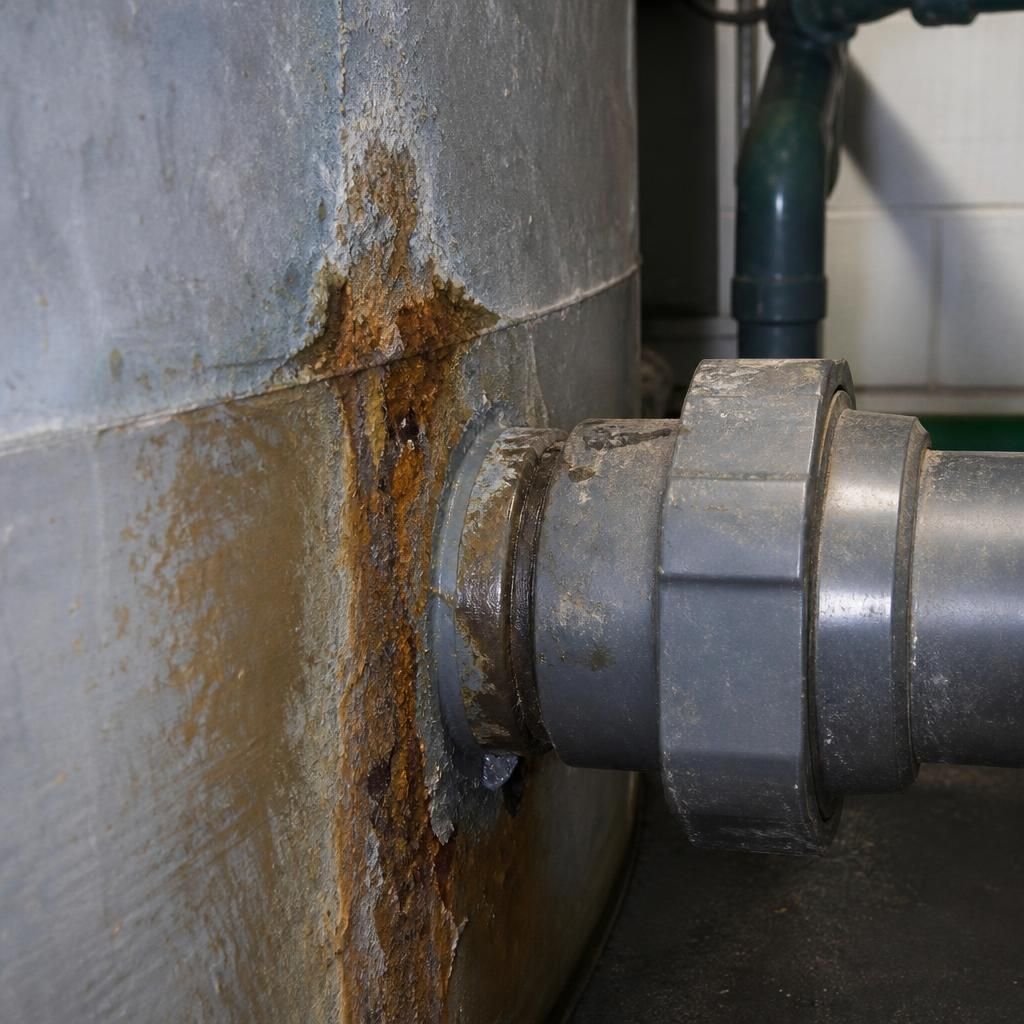
The timing and pattern of a recurring leak can help distinguish a failed repair from a continuing fault elsewhere. Moisture that reappears at the exact repair boundary soon after the tank is refilled may indicate inadequate adhesion, movement at the joint or incomplete preparation. A leak that develops only after the tank has operated through several fill-and-empty cycles points more towards changing loads or conditions that were not present during the original inspection.
Comparing the renewed defect with the original photographs and repair records is therefore important. The location, appearance, water level at which leakage starts and time since refilling should be recorded rather than relying on a general visual impression. This evidence helps determine whether the repair specification needs revising, whether further investigation is required, or whether repeated local repairs are no longer a suitable way to manage the tank’s condition.
Arrange an assessment of your recurring water tank leak
If your water tank leak has returned, arrange an assessment to establish whether further repair or wider remedial works are appropriate. Blue Fish Water Management Ltd can review the recurring defect and help determine the next practical step for maintaining water safety.