
How are repaired water tanks checked for continued watertightness?
Repaired water tanks are checked through a documented visual inspection and leak test to confirm that the repair is sound and the tank remains watertight. Where appropriate, the surrounding connections, fittings and water system are also examined, with the findings recorded for compliance and future monitoring.
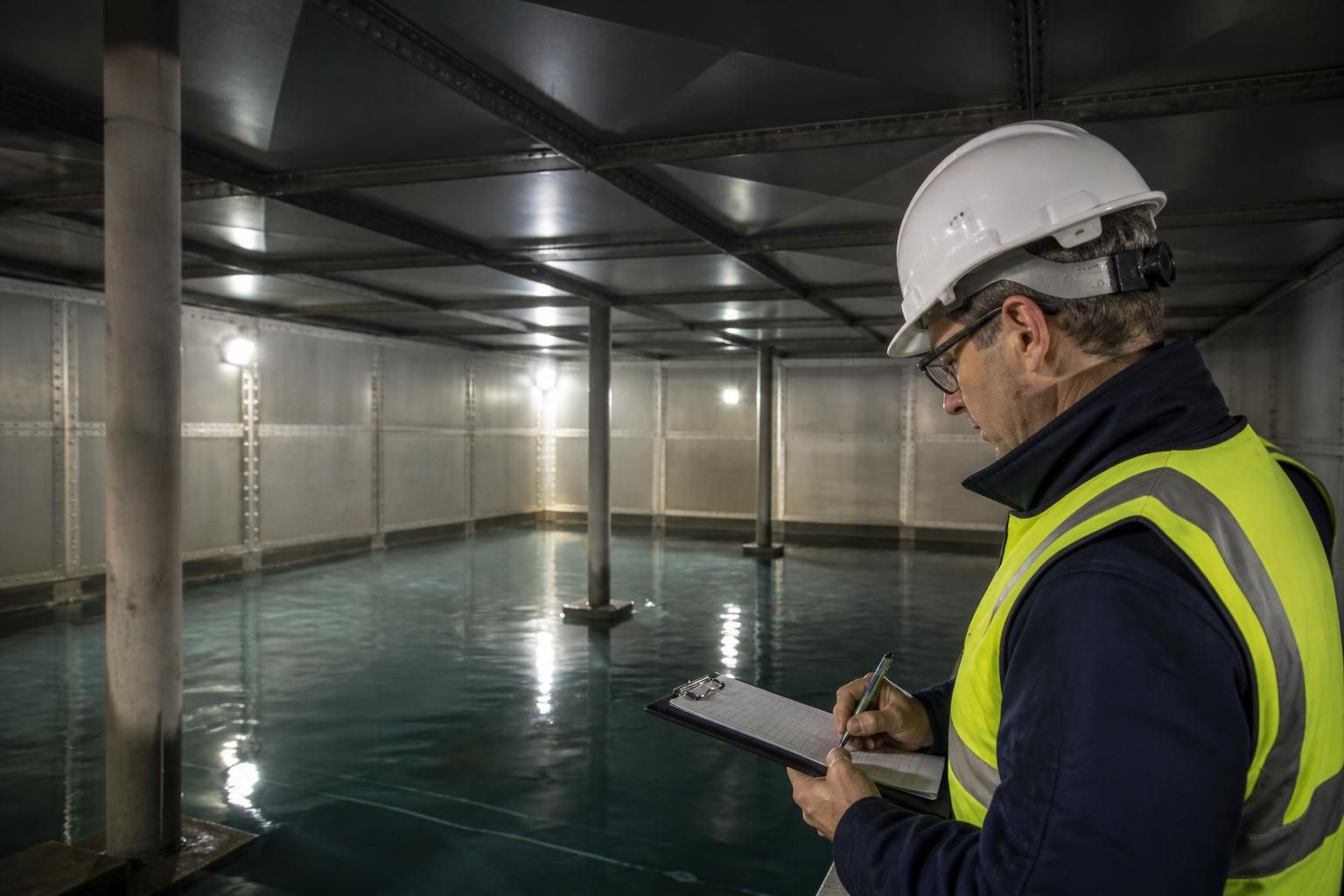
Continued watertightness is verified by confirming that the repaired tank holds its intended water level under suitable operating conditions, without seepage from the repaired area or associated components. The checking method must suit the tank’s material, design, capacity and service, because applying an unsuitable test pressure or filling it beyond its intended level can create a separate risk of damage.
Before testing, the repair should be allowed to cure or settle in line with the requirements of the repair material and the tank manufacturer or system specification. The tank is then prepared so that the result is meaningful. This may include removing temporary supports or equipment, confirming that valves are correctly positioned, and ensuring that apparent water loss cannot be caused by an open outlet, overflow, drain or connected pipework.
A competent person will normally establish a reference water level and observe the tank for an appropriate period. The level is checked again after the test period, taking account of temperature, evaporation and any expected movement within the system. A genuine loss of level is investigated rather than automatically attributed to the repaired section, as leaks can also arise from flanges, threaded connections, gaskets, overflow arrangements, drain valves, access covers or corrosion elsewhere on the tank.
Particular attention is given to areas that can be missed during a basic check, including:
- the boundary of the repair and the surrounding tank surface;
- internal and external seams, joints and penetrations;
- the tank base, supports and areas beneath the tank where water may collect;
- inlet, outlet, overflow and drain connections;
- covers, inspection hatches, seals and fixing points; and
- connected pipework that may transfer water away from the tank and make the leak source difficult to identify.
Where the tank design permits, a controlled fill or static head test can provide more reliable evidence than simply looking for visible dampness. Some repairs may also require a manufacturer-approved integrity or pressure test. There is no single pressure or holding time suitable for every installation, so the test level and method should be selected by reference to the tank’s design limits and the risk of distortion or structural failure.
Testing should cover the tank in the condition in which it will operate. If movement, vibration, thermal change or normal fluctuations in water level could affect the repair, these factors are considered when interpreting the result. A tank that appears sound when empty may still show seepage once the hydrostatic load is restored, while a leak around a connection may only become evident when the connected system is returned to service.
For a tank supplying potable water, watertightness is only one part of the post-repair check. Any contamination introduced during access or repair may require an appropriate cleaning and disinfection procedure, followed by water hygiene checks where the risk assessment or applicable requirements call for them. A satisfactory microbiological result does not prove that a tank is watertight, and a watertight tank is not automatically hygienically suitable for use.
The completed record should identify the tank, the repaired location, the repair materials or method used, the test conditions, the observations made and the result. Photographs, level readings and details of any follow-up inspection can support the record. If water loss continues, the tank should not be treated as passed simply because the original defect appears improved; the source should be reassessed and further repair or replacement considered according to the tank’s condition and service requirements.
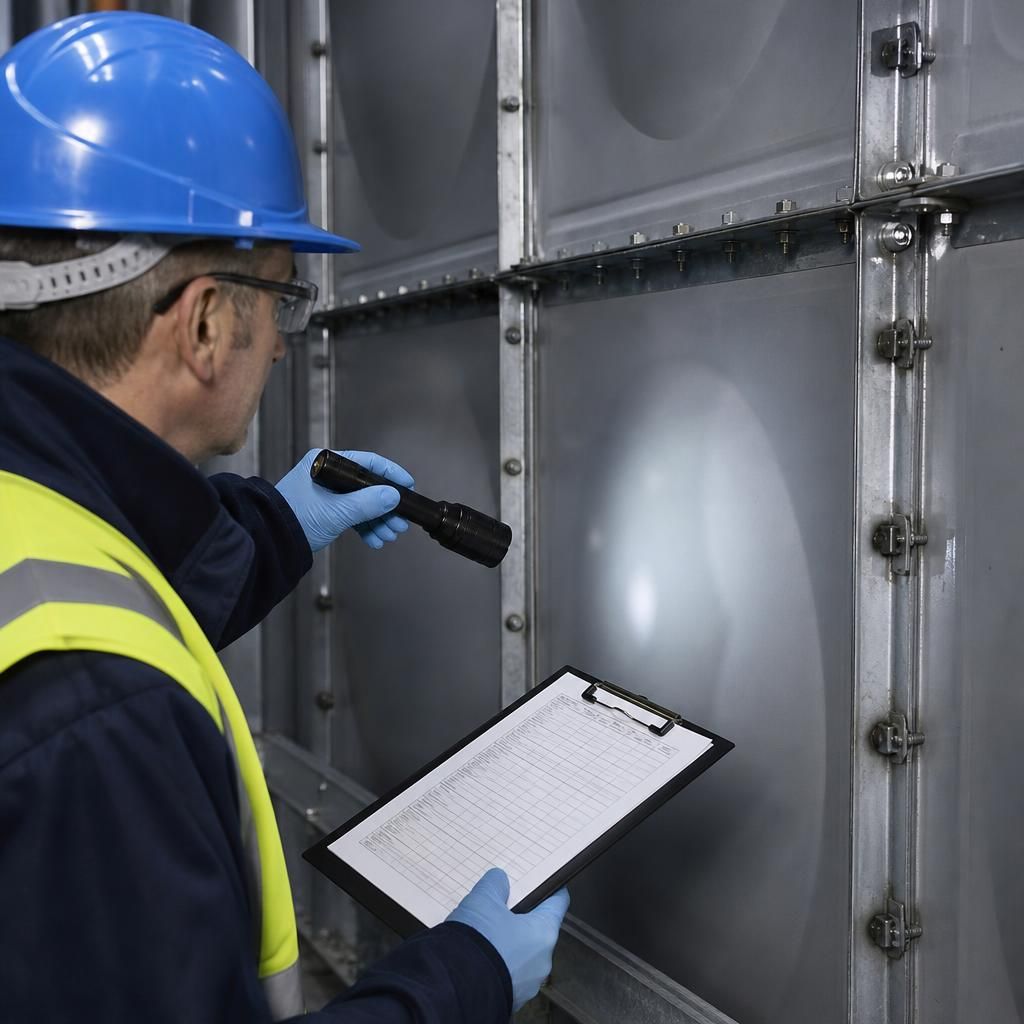
For higher-consequence water systems, watertightness may be subject to a second-person review rather than relying solely on the technician who carried out the repair. An independent competent person can check that the test method was suitable for the tank, the observations were recorded consistently and the acceptance decision is supported by clear evidence.
This review should consider the repair specification, test readings, inspection photographs and any relevant limitations, such as restricted access or connected equipment that could affect the result. It provides a documented check that the repaired tank was assessed against its intended operating requirements before being accepted back into service.
Need expert verification of a repaired water tank?
If you need a repaired water tank assessed before it returns to service, speak to Blue Fish Water Management Ltd about arranging a documented watertightness inspection and verification.