
Can water tank leaks be repaired without draining the system?
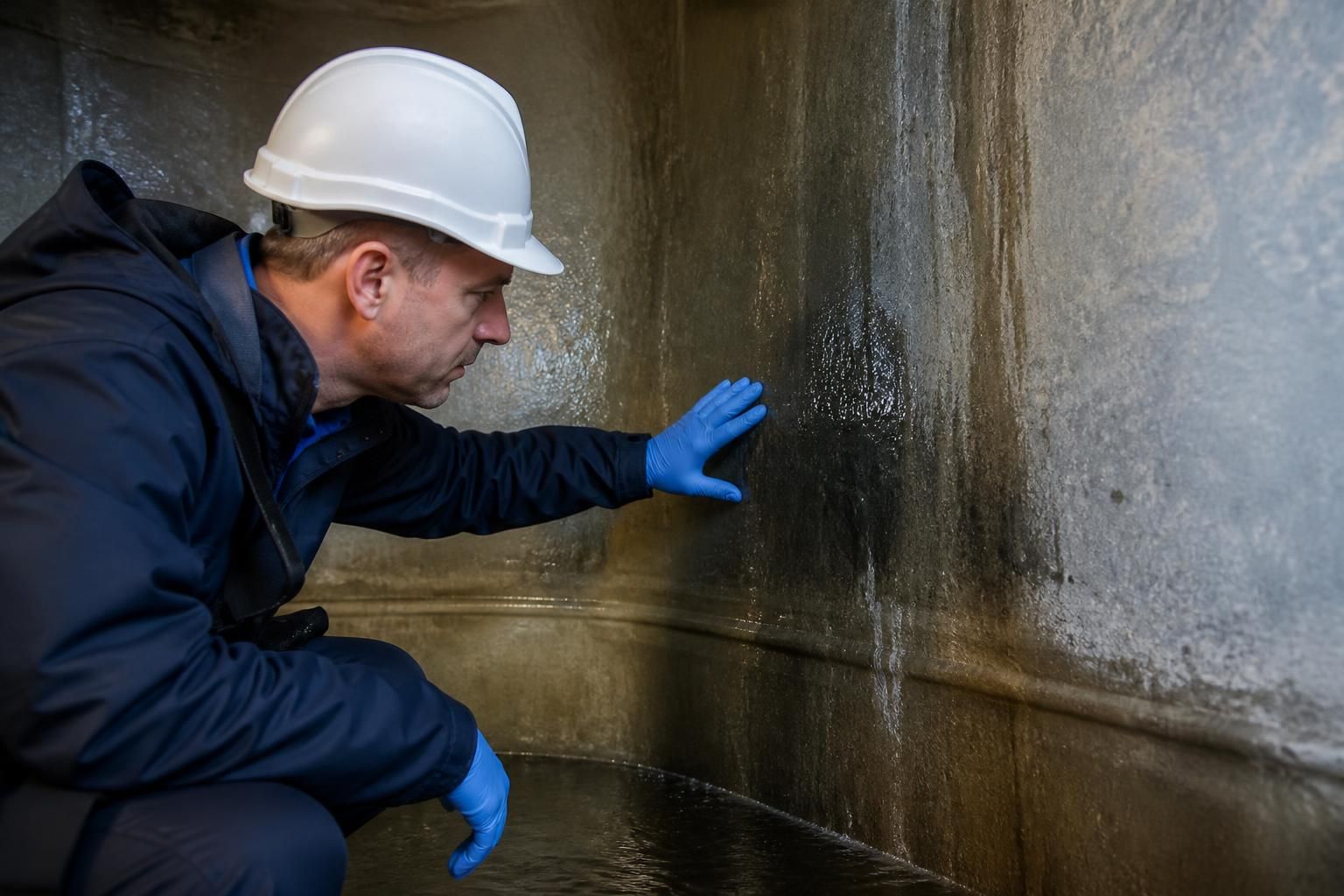
Whether a water tank can be repaired without draining depends on the leak’s position, severity, tank construction, water use and the repair material specified. A minor defect on an exposed external surface may allow a local repair while the tank remains partly operational, but repairs made with the tank full are usually limited and require careful control of water levels and hygiene.
Situations where draining may be avoidable
- The defect is above the normal water line or can be reached safely from outside the tank.
- The leak is small, stable and not causing significant loss of water or structural movement.
- The affected surface can be prepared adequately without introducing debris or contamination.
- The tank can be isolated, or its level can be lowered sufficiently, without compromising essential water services.
- The proposed sealant, lining or mechanical repair is approved for the tank material and intended water use.
In these circumstances, a contractor may be able to use a localised repair, external clamp or compatible sealing system. This is not the same as applying an ordinary waterproof adhesive to a wet surface. Products used in a water storage system must be suitable for the operating conditions and, where relevant, contact with water intended for domestic use. Their required preparation, curing and return-to-service conditions must also be followed.
Why a full tank can make repair difficult
Water pressure can continue to force moisture through the defect, preventing a seal from bonding or curing correctly. A wet surface may conceal corrosion, delamination, cracking or damage around a fitting. If the leak is beneath the water line, access may be restricted and the repair may not be possible without exposing enough of the tank wall for proper inspection. Attempts to work around these limitations can produce a temporary reduction in leakage rather than a durable repair.
There are also operational risks. Disturbing the tank or applying an unsuitable material can introduce debris into the stored water. A repair that narrows an outlet, obstructs an overflow or leaves an unsealed edge may create a further maintenance or hygiene problem. If the tank forms part of a shared supply, taking an improvised approach can also affect users who depend on the system.
Partial draining is often the practical compromise
Full drainage is not always necessary. Subject to the system design and the findings of the assessment, the water level may be reduced below the defect while the remaining water is managed safely. This can provide access for surface preparation and inspection while limiting disruption to connected operations. However, partial draining still requires suitable isolation and controls; it should not be assumed that lowering the level alone makes a repair safe or compliant.
The correct approach normally considers:
- whether the tank can be isolated without creating an unacceptable interruption or loss of protection;
- the position and extent of the defect, including damage that may not be visible from the outside;
- the tank’s material, age, condition and method of construction;
- the effect of water pressure, temperature and movement on the proposed repair;
- whether the repair product is compatible with the stored water and the tank lining; and
- how the tank will be cleaned, disinfected and checked before it is returned to service.
When draining is the safer option
Draining is generally more appropriate where the leak is below the water line, the tank wall is corroded or fractured, the repair area is extensive, or the tank is moving under load. It is also likely to be needed where the source of the leak has not been established. Sealing the first visible wet patch can conceal a failed joint, defective fitting or wider deterioration and may delay the action required to protect the system.
If water is escaping rapidly, the tank is losing structural integrity or contamination is suspected, restricting the repair to an in-service patch may be unsuitable. The tank may need to be taken out of use, emptied and examined fully. In some cases, replacement is more appropriate than attempting a repair, particularly where the tank material has deteriorated beyond a localised defect.
Checks after an in-service or partial-level repair
A repaired tank should not be judged solely by whether water is still visibly escaping. The repair area should be inspected for adhesion, gaps, movement and signs of renewed seepage. The tank, fittings and surrounding area should also be checked for secondary damage. Where the work has affected the stored water or internal surfaces, cleaning and disinfection may be required before normal use resumes. Water testing or other verification may also be appropriate under the site’s water hygiene arrangements.
Blue Fish Water Management can assess whether a tank leak is suitable for a localised repair, partial draining or a more extensive intervention. The decision should be based on the condition and function of the whole tank, not simply on whether a visible leak can be temporarily sealed.
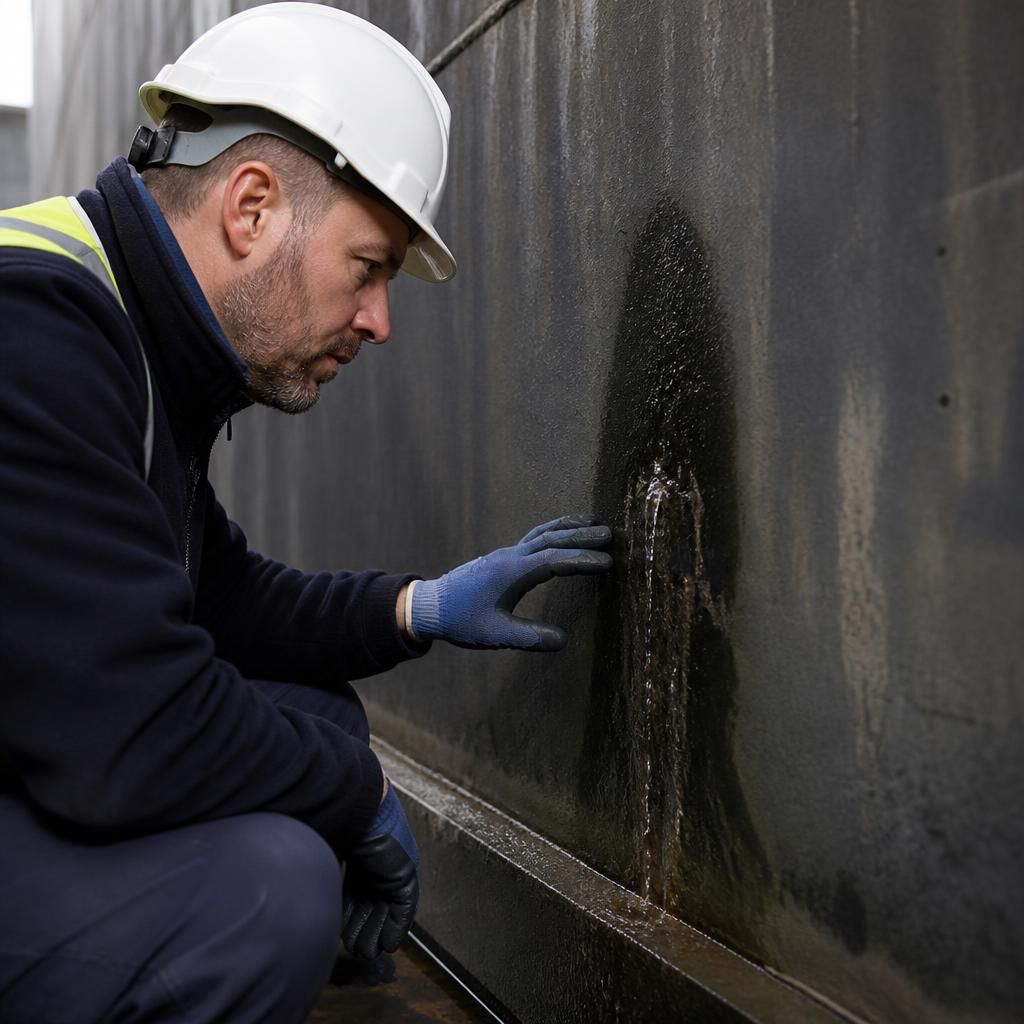
A water tank leak can sometimes be repaired without draining, but the key question is not only how much water is escaping. The defect may create a route for dust, insects or contaminated external water to enter the tank, particularly if water levels fluctuate or pressure conditions change. A small leak can therefore present a water hygiene concern even when it appears structurally minor.
Before choosing an in-service repair, the surrounding area should be assessed for signs of contamination, damaged seals and exposure to the external environment. If the leak is close to an access cover, overflow, inlet, outlet or other tank penetration, avoiding drainage may provide inadequate control. In those circumstances, taking the tank out of service can be necessary to protect water quality as well as to complete the physical repair.
Discuss your water tank leak repair options
Discuss the leak with Blue Fish Water Management to establish whether localised repair, partial draining or further investigation is the appropriate next step for the tank and its water hygiene requirements.