
What information is needed to plan water heater tank repair?
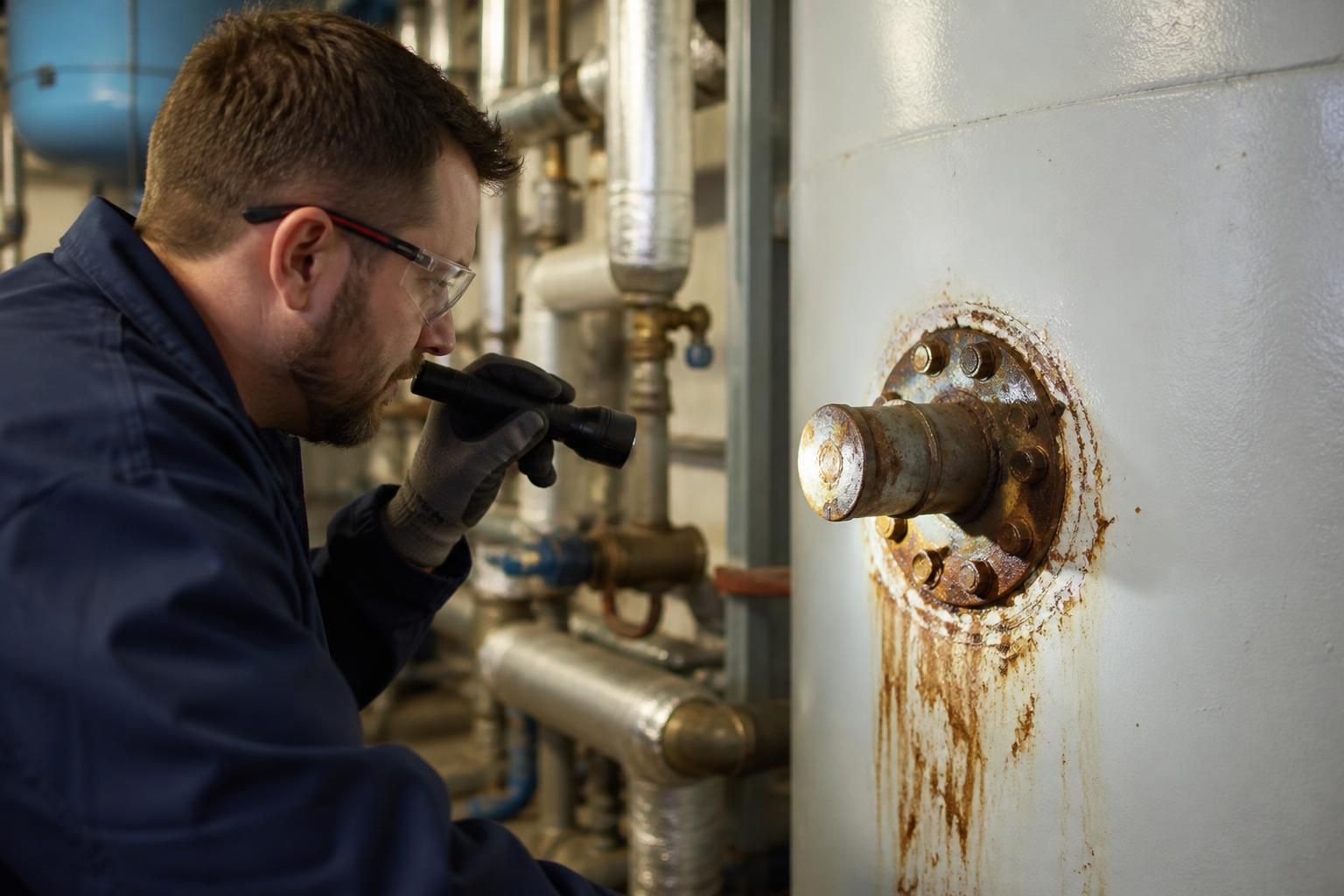
Planning water heater tank repair requires more than identifying the visible defect. Engineers also need to understand how the installation is used, what restrictions apply at the site and what level of service must be maintained while remedial work is carried out. This information allows the repair method, isolation procedure, materials and follow-up checks to be planned safely and proportionately.
Information about the tank’s role in the building
- Whether the tank serves domestic hot water, a process application or both.
- The areas, activities or equipment dependent on the hot-water supply.
- Whether the supply supports vulnerable occupants, healthcare-related activities, accommodation or other uses where interruption or water-quality issues may have greater consequences.
- Typical patterns of demand, including periods when demand is highest and whether alternative hot-water provision exists.
- The operational consequences of isolating the tank, draining it or taking it out of service.
This information helps determine whether the work can be completed through a straightforward local repair or whether additional controls, temporary arrangements or staged work are needed.
Information about the defect itself
Photographs, inspection notes and a clear description of where the problem is located can help before an engineer attends. Useful details include whether the defect is at a joint, connection, access cover, flange or vessel surface; whether water is leaking continuously or only when the system is hot or under pressure; and whether there are signs of staining, scale, corrosion, distortion or insulation damage. Any change in the leak, unusual noise, temperature fluctuation or pressure behaviour should also be recorded without attempting an unsafe intervention.
The repair decision may depend on whether the defect is localised and accessible or indicates wider deterioration. Engineers may therefore need information about the condition of adjacent components, supports, valves, safety devices and connected pipework, rather than assessing the tank in isolation.
Site and access details
Practical site information can affect both the proposed method and the preparation required. Provide details of:
- the tank’s physical location and the route to it;
- available working space around the vessel and connected equipment;
- doorways, stairs, plant-room restrictions or lifting limitations;
- drainage arrangements for controlled emptying;
- ventilation, lighting and floor conditions;
- site security, induction requirements and permit-to-work procedures;
- known asbestos-containing materials or other hazardous substances; and
- any restrictions on hot work, cutting, welding, chemicals or specialist access equipment.
These details are particularly important where a repair may require access inside a plant room, removal of insulation, hot work or the movement of heavy components. The site operator should identify who is authorised to isolate equipment and who will approve the return to service.
Records that can improve the plan
Drawings, photographs, equipment schedules and manufacturer documentation can help establish how the installation was assembled and modified. Records of commissioning, alterations, corrosion protection, water treatment and previous component changes may identify materials or design features that affect repair compatibility. Where available, provide the relevant sections of the operation and maintenance file rather than relying on an assumption that the installation remains in its original configuration.
It is also useful to identify any outstanding recommendations from earlier inspections or audits. A leak or failed component may be linked to a separate issue, such as poor support, unsuitable water conditions, ineffective temperature control or a defective safety device. Addressing only the immediate symptom may not be sufficient if the underlying cause remains.
Water hygiene and compliance considerations
For stored hot-water systems, the repair plan should account for the effect of draining, opening, cleaning, replacing components and refilling the vessel. The responsible person should provide relevant information about the site’s water hygiene arrangements, including any precautions required before the system is opened and any checks needed before it is put back into use.
Where the tank forms part of a system subject to formal risk controls, the repair should be considered alongside those controls. The planned work may need defined isolation, cleaning, disinfection, temperature verification, sampling or documented release arrangements, depending on the system and the findings. These requirements should be agreed before work starts rather than added after the physical repair is complete.
Decisions to agree before work begins
The responsible site contact should be clear about the acceptable repair outcome and any limits on disruption. This includes whether the priority is stopping a leak, restoring capacity, correcting a safety-related defect, improving reliability or addressing a water hygiene concern. It should also be agreed who will approve additional work if inspection reveals more extensive deterioration than first reported.
A well-prepared brief gives the engineer enough information to assess the defect, identify hazards, select compatible repair materials and define the work sequence. It should also establish what evidence will be required at completion, such as inspection records, test results, updated asset information or confirmation that the system has been safely returned to service.
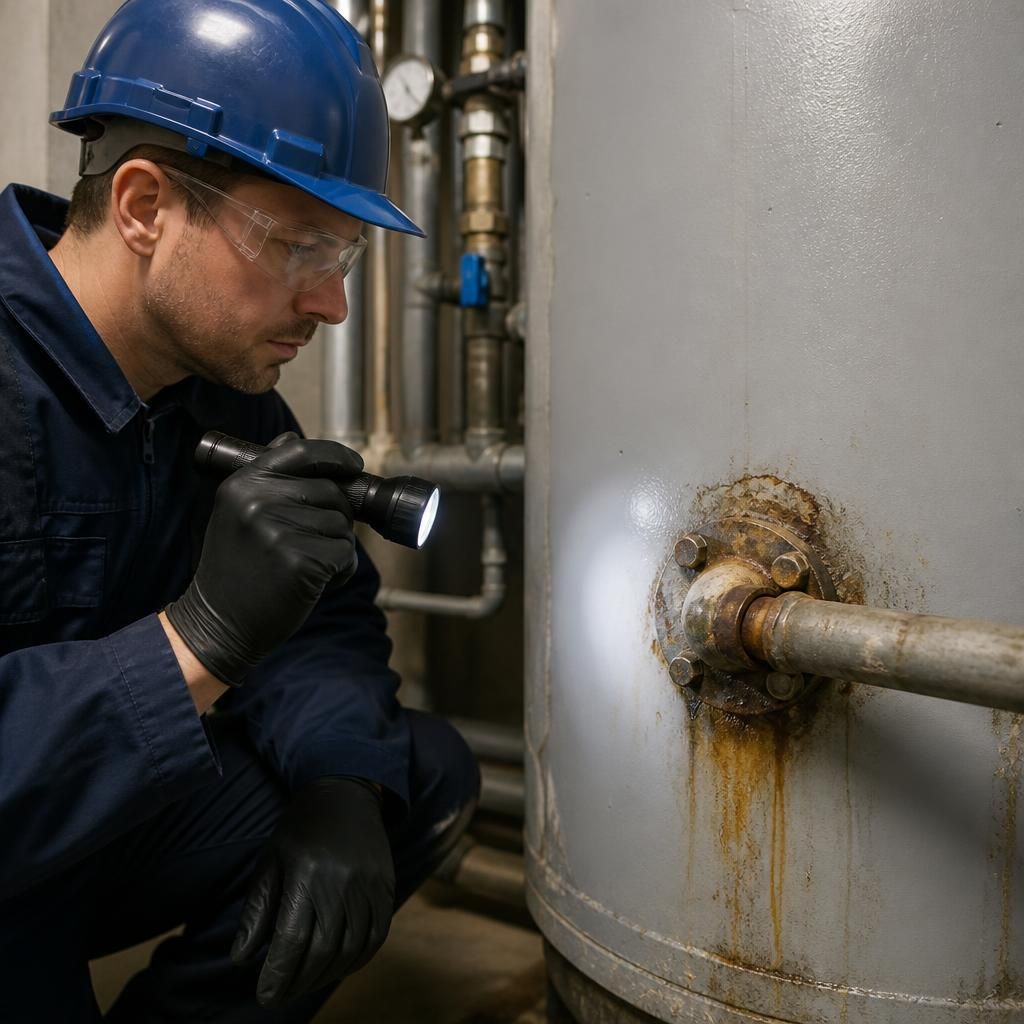
Recorded operating readings can help engineers distinguish a tank defect from a fault elsewhere in the hot-water system. Where it is safe and within the site team’s normal procedures, provide recent readings for storage temperature, flow temperature, system pressure and any alarm or control indications, together with the conditions under which they were taken.
Comparing normal readings with those recorded when the problem occurs may reveal whether the tank is being exposed to abnormal pressure, overheating, inadequate temperature control or repeated cycling. This information can influence the repair specification and identify checks needed on controls, safety devices or connected equipment before the tank is returned to service. Site personnel should not remove covers, enter a vessel or interfere with pressurised equipment simply to obtain additional information.
Speak to an engineer about planning water heater tank repair
If you are compiling information for a planned water heater tank repair, speak to a Blue Fish Water Management engineer to discuss the available records, site constraints and next steps for assessing the work.