
What does a water heater tank repair survey include?
A water heater tank repair survey includes a structured inspection of the tank, connected pipework, controls and visible safety features to identify faults, damage and likely causes. It records the findings and sets out appropriate repair or remedial recommendations, together with relevant water safety and compliance considerations.
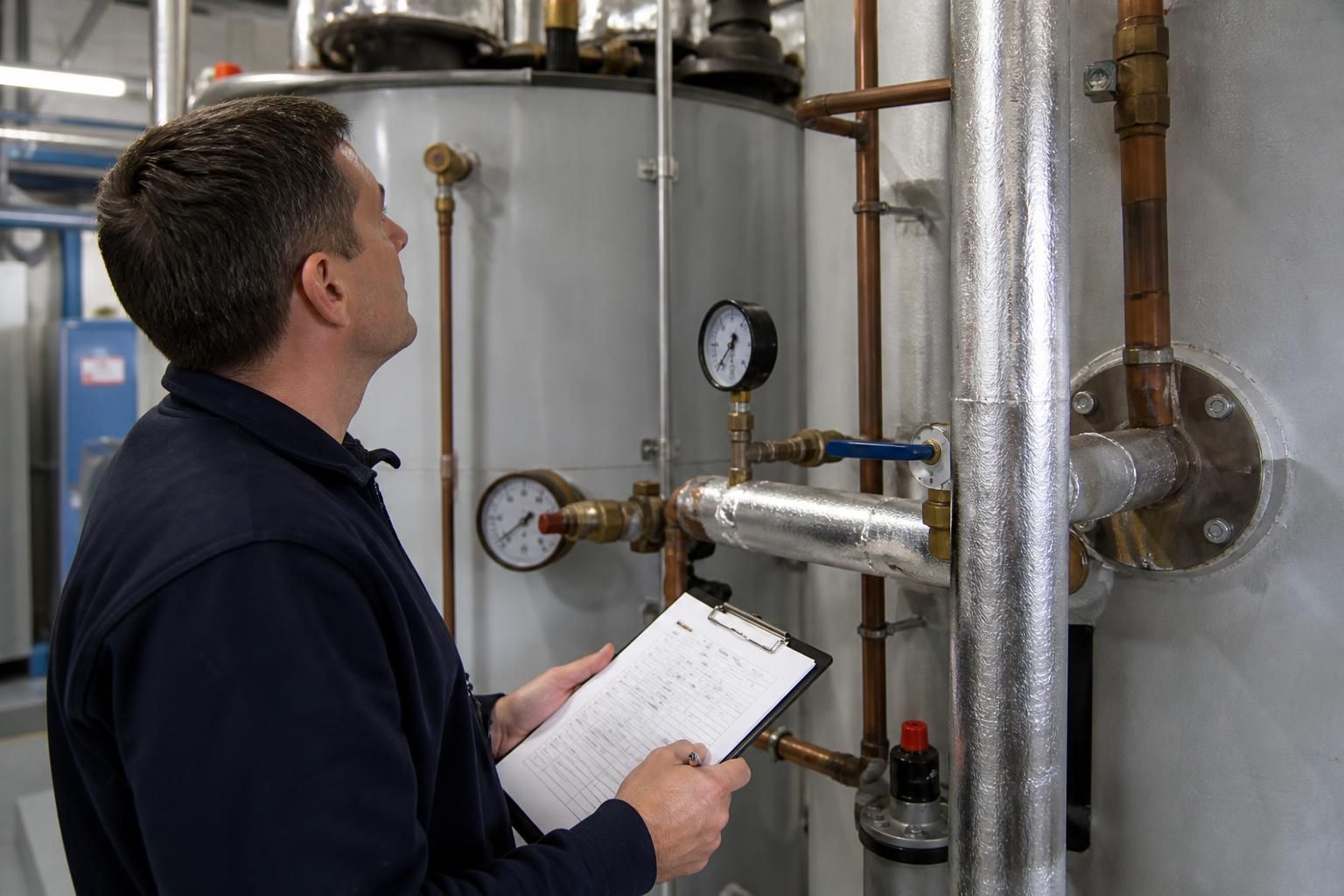
A water heater tank repair survey is a documented condition and diagnostic assessment used to establish what has failed, whether the tank can be safely repaired, and what remedial work is appropriate. It normally combines a review of available system information with an on-site examination, functional checks and a written record of the evidence gathered.
Pre-survey information. The surveyor will usually review any relevant maintenance records, previous inspection findings, reported symptoms, drawings and details of recent alterations. Information about leaks, loss of hot water, temperature fluctuations, unusual noise, pressure problems or recurring faults can help distinguish a tank defect from a problem elsewhere in the system. The age, material, capacity and type of tank are also relevant when considering repair options.
Condition assessment. The tank and accessible associated components are examined for signs such as corrosion, pitting, deformation, cracking, staining, seepage, damaged insulation and deteriorated joints. Particular attention is given to areas around connections, seams, access covers, drain points and fittings, as these can indicate whether water is escaping from the vessel itself or from a replaceable component. The survey should record the location and apparent severity of each defect rather than describing the tank simply as damaged.
Checks on connected equipment. A tank fault can be caused or worsened by connected equipment, so the assessment may consider valves, pumps, pipework, expansion arrangements, temperature controls, pressure-relief devices, gauges, supports and discharge routes. Electrical or fuel-related equipment may be reviewed for visible defects and safe operation, but specialist work outside the survey’s agreed scope should be identified separately. The purpose is to establish whether the reported problem originates in the tank, an attached component or the way the system is operating.
Operational and safety checks. Where it is safe and practical to do so, the surveyor may observe the system during operation and compare its behaviour with the reported fault. This can include checking temperature stability, evidence of overheating, pressure behaviour, unusual sounds and the operation of relevant controls. Safety risks such as an obstructed discharge route, inadequate support, exposed hot surfaces or an inaccessible isolation point should be recorded because they may affect both the repair method and continued use of the installation.
Water hygiene considerations. For commercial and other managed premises, the survey may also consider conditions that affect hot-water hygiene. These can include poor temperature control, infrequently used outlets, excessive storage, contamination risks, dead legs or arrangements that make cleaning and monitoring difficult. A repair survey does not automatically replace a legionella risk assessment or water test. Where the findings suggest a hygiene concern, the report should explain what further assessment, sampling, cleaning or control measure may be needed.
Access and limitations. The report should state which areas were inspected and which could not be examined because of fixed panels, restricted access, insulation, stored items or the need to keep the system operational. Some defects remain concealed until insulation, covers or connected fittings are removed. A competent survey therefore distinguishes confirmed observations from provisional conclusions and identifies any intrusive investigation required before a final repair decision.
Diagnosis and repair options. Findings are assessed against the likely cause and the condition of the wider installation. The recommendations may cover replacing a seal, valve or control; repairing an accessible connection; cleaning or descaling; restoring insulation or supports; undertaking a more detailed investigation; or replacing the tank where its integrity, age, construction or level of deterioration makes repair unsuitable. The survey should explain the reasoning behind the recommendation and note any risk of the defect recurring if the underlying cause is not addressed.
Written survey output. A useful report normally includes:
- the asset and location inspected;
- the reported problem and relevant background information;
- observations, photographs or other supporting evidence where appropriate;
- the condition of the tank, fittings and accessible system components;
- identified safety, operational and water hygiene issues;
- inspection limitations and any areas requiring further investigation;
- prioritised repair or remedial recommendations; and
- advice on isolation, interim precautions, follow-up checks and compliance records.
The survey is an assessment, not proof that a repair has been completed successfully. Verification belongs to the post-repair stage and may involve checking for leaks, confirming control operation, reviewing temperatures and updating maintenance or water safety records. Keeping the survey report with those later records creates a clear audit trail from the original fault to the remedial work and its verification.
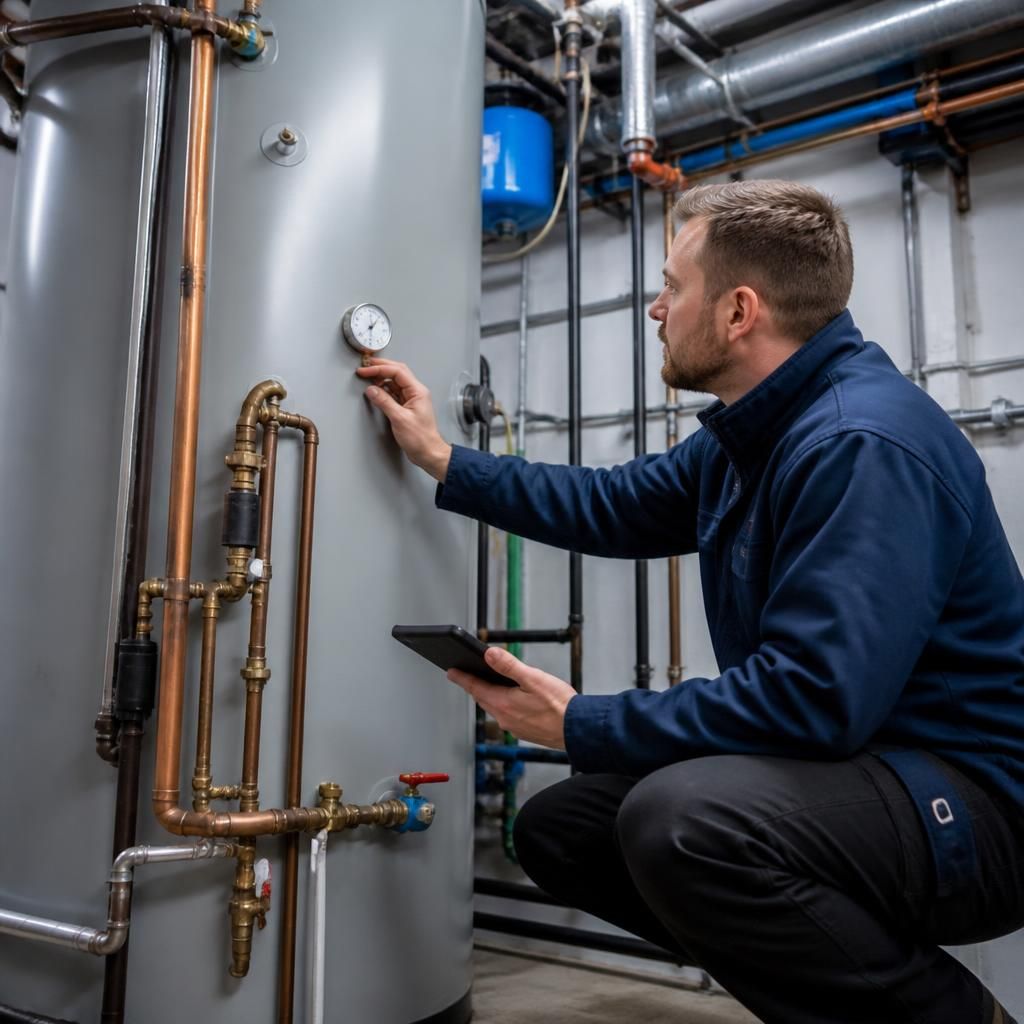
For a commercial installation, a water heater tank repair survey should also record site constraints that could affect how remedial work is planned. These may include the need to maintain essential hot-water services, restrictions on access or lifting equipment, limited plant-room space, hygiene controls, and coordination with other contractors or building users.
Recording these constraints helps turn a technical recommendation into a workable repair plan. The report can identify whether work needs to be phased, what temporary arrangements may be required, and which decisions must be agreed with the responsible facilities or compliance team before the tank is isolated or altered.
Discuss Your Water Heater Tank Repair Survey
Discuss your water heater tank repair survey with Blue Fish Water Management Ltd to clarify the required scope, site information and next steps for assessing the installation.