
How is a water heater tank repair verified after remedial work?
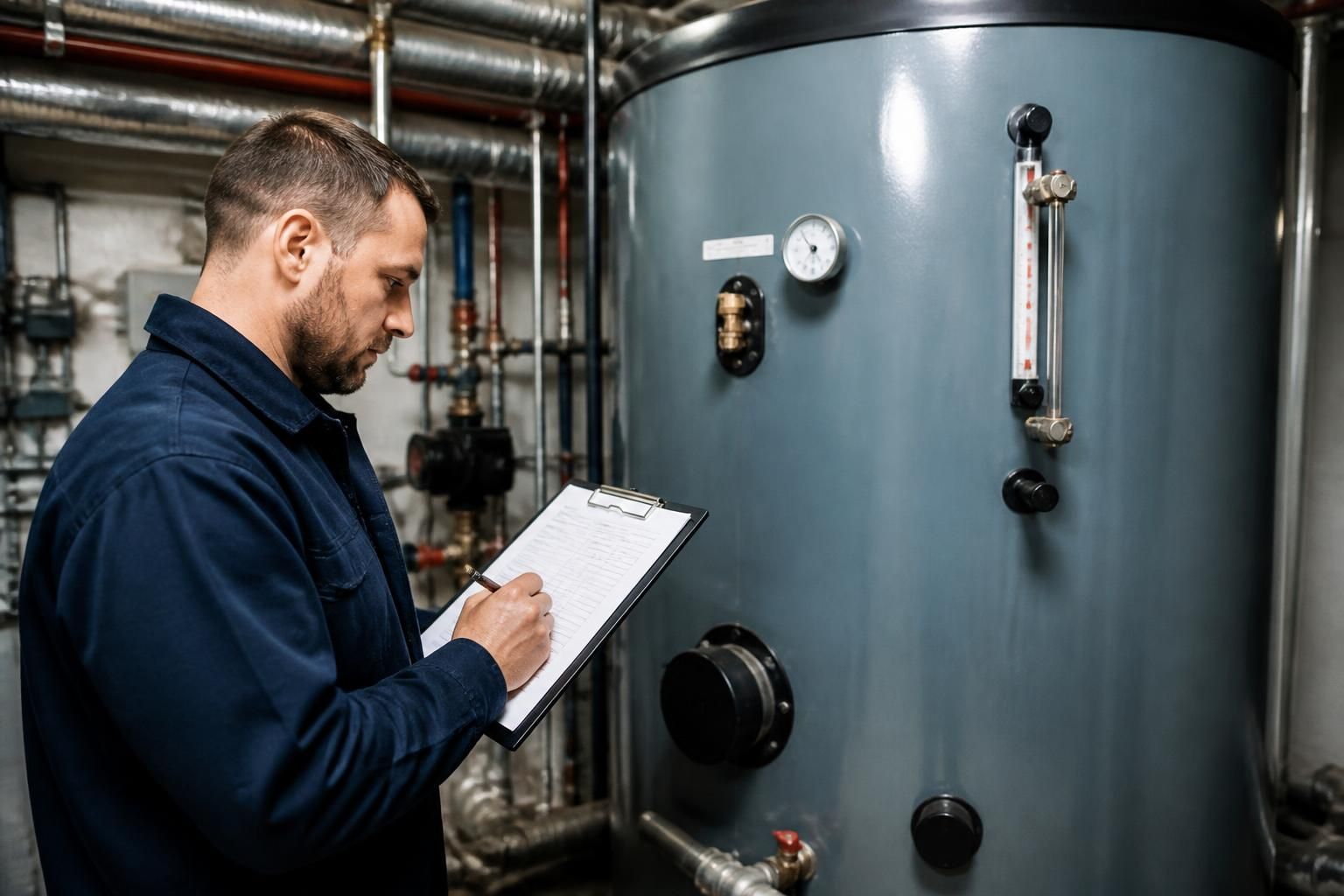
Verification confirms that the repair has corrected the identified defect without introducing a new leak, control fault or water hygiene risk. It should be based on the original survey findings, the repair specification and the tank or system manufacturer’s requirements, rather than on a visual inspection alone.
The person checking the work should first establish what was repaired and what evidence is needed to accept it. For example, a replacement gasket may require leak and pressure checks, while work to a vessel lining, weld, connection or support may require closer examination of the repaired area and adjacent components. Any limitation, such as an inaccessible surface or insulation that could not be removed, should be recognised when deciding whether further investigation is necessary.
A typical physical inspection examines:
- the repaired tank surface, weld, joint, flange or connection for cracking, distortion, corrosion, staining and signs of seepage;
- nearby pipework, valves, temperature and pressure controls, insulation and supports that may have been disturbed during the work;
- drain points, access covers and seals for correct refitting;
- evidence that temporary blanks, hoses, debris and contaminated materials have been removed; and
- the condition of safety devices associated with the tank, including relief arrangements and expansion components where fitted.
Functional testing then demonstrates that the installation performs under controlled operating conditions. Depending on the repair, this may include gradually refilling the tank, venting air, checking joints for leakage, confirming that the system holds the required pressure and observing the vessel through a heat-up and cool-down cycle. Sudden pressure application should be avoided where the repair method or equipment manufacturer specifies a staged procedure.
Controls should be tested as part of the same process. The inspection may verify that thermostats respond correctly, high-limit cut-outs operate, pumps and valves run in the intended sequence, and temperature and pressure readings are credible. A tank that remains watertight but cannot control temperature reliably has not been fully verified, because overheating can create a scalding risk and may affect system integrity.
Where the repair involved opening the potable or hot-water system, water hygiene checks are also relevant. The system may need to be flushed and, where appropriate, disinfected in accordance with the risk assessment and the nature of the work. Water samples can then be taken from suitable points and analysed by a competent laboratory. Sampling is not a substitute for checking the repair itself: a satisfactory microbiological result does not prove that a joint is mechanically sound, and a mechanically sound tank does not by itself demonstrate acceptable water quality.
Verification is strongest when the results are compared with defined acceptance criteria. These may include no visible leakage, stable readings during the prescribed test, correct operation of safety controls, acceptable water-quality results where sampling is required, and completion of any actions identified during inspection. If readings are abnormal or a leak reappears after the system reaches operating temperature, the repair should be investigated rather than treated as complete.
For larger or higher-risk systems, a follow-up review may be appropriate after the equipment has returned to normal use. This can identify recurring seepage, temperature drift, corrosion at the edge of the repair or changes in system performance that were not apparent during the initial test. The frequency and scope should reflect the tank’s condition, its use, the consequences of failure and the site’s water safety arrangements.
A competent verifier should be independent enough to challenge incomplete work and should understand both the mechanical repair and the water hygiene implications. The final decision should clearly distinguish between work that has passed verification, work accepted subject to a recorded action, and work requiring further remedial attention.
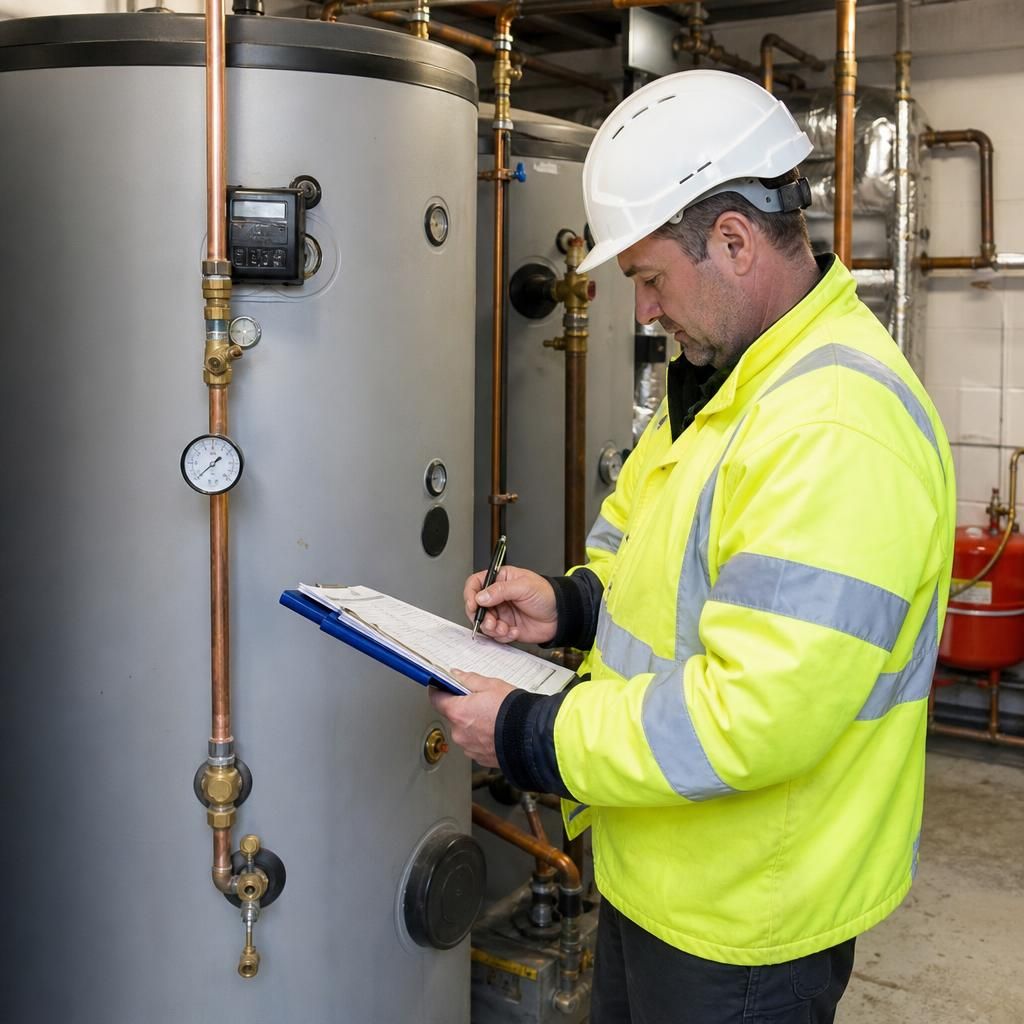
Verification after a water heater tank repair also includes confirming that the system documentation reflects the work completed. The repair record should identify the affected asset, describe any changed components or controls, and retain relevant inspection, testing and commissioning evidence.
This information supports safe operation after handover. Where the repair changes the tank configuration, access arrangements, control settings or maintenance requirements, the site’s operating instructions and water safety records should be reviewed and updated. Any new isolation points, altered temperature settings or additional inspection requirements should be made clear to the people responsible for managing the installation.
A complete handover file may include:
- the original defect or survey reference;
- the repair specification and details of materials used;
- photographs or other evidence of concealed work where appropriate;
- test and inspection records, with the equipment and test conditions identified;
- confirmation that removed materials and temporary arrangements have been dealt with; and
- outstanding actions, responsible persons and required review arrangements.
This documentary check does not replace physical verification. It provides traceability, demonstrates what was accepted, and allows future inspections to distinguish the repaired area from pre-existing defects or later changes to the water heater system.
Discuss Water Heater Tank Repair Verification Requirements
Speak to Blue Fish Water Management Ltd about the inspection, testing and records needed to verify remedial work on your water heater tank.