
Can a damaged water heater tank be repaired or must it be replaced?
A damaged water heater tank may be repairable where the defect is localised and the tank remains structurally sound, but significant corrosion, persistent leakage, cracking or internal contamination usually makes replacement the safer option. The decision should follow an inspection of the tank, its condition and the risks to water quality and system compliance.
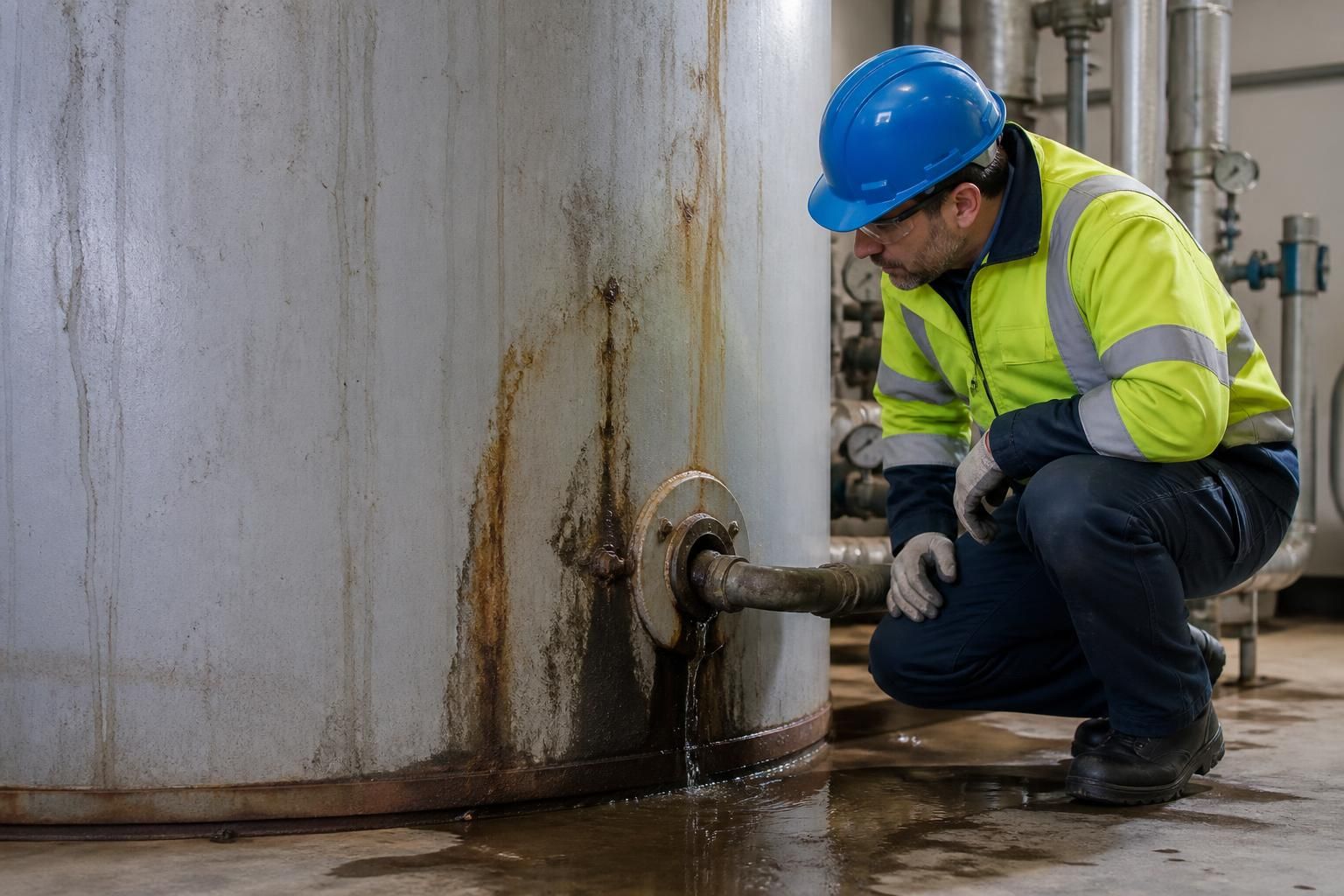
The practical answer is that a water heater tank should only be repaired where the proposed work is technically suitable for the tank’s construction, operating conditions and remaining service life. A repair is not simply a way to stop visible water escaping. The underlying cause, the tank’s pressure integrity, the condition of connected components and the effect on water hygiene all need to be considered before deciding whether repair or replacement is appropriate.
Repair may be considered when the defect is clearly defined and accessible. Examples can include a failed connection, damaged valve, faulty flange gasket, leaking sensor pocket or a local issue with associated pipework rather than the tank shell itself. In these cases, replacing the affected component or renewing the seal may resolve the problem without replacing the complete vessel. The repair method must be compatible with the tank material and the water temperature, pressure and chemical conditions in the system.
Damage to the tank body requires a more cautious assessment. Welding, lining, patching or other remedial techniques may not be suitable for every vessel, particularly where the tank is pressurised, internally coated or subject to regulated design and maintenance requirements. A repair can alter the tank’s protective finish, introduce contamination or affect its ability to withstand operating pressure. Any proposed work should therefore be assessed by a suitably competent person and carried out in accordance with the manufacturer’s instructions and relevant safety requirements.
Replacement is generally the more appropriate option where the tank has widespread deterioration or an uncertain remaining life. Factors that may point towards replacement include:
- corrosion affecting multiple areas or extending beneath insulation;
- repeated leaks after earlier remedial work;
- distortion, bulging or other evidence that the vessel has been subjected to abnormal pressure;
- cracks or damage in areas that are difficult to inspect or repair reliably;
- internal scale, sludge or corrosion that cannot be removed without compromising the tank;
- a failed internal lining or protective coating across a substantial area; and
- obsolete controls, fittings or safety devices for which suitable replacement parts are no longer available.
The age of the tank is relevant, but it should not be used as the only deciding factor. A relatively new tank may need replacement if it has suffered installation damage, incorrect operating conditions or a manufacturing-related failure. Conversely, an older tank may remain serviceable if its construction, inspection history and condition support continued use. Maintenance records, previous leaks, water treatment information and operating temperatures can help establish whether the problem is isolated or part of a wider decline.
Water quality must be considered alongside physical condition. Sediment, scale and corrosion products can affect heating performance and provide areas where microbial contamination is more difficult to control. A tank that has been opened, drained or repaired may also require appropriate cleaning, disinfection and verification before it is returned to service. The method used should reflect the type of water system and the site’s water hygiene procedures, rather than being treated as an automatic consequence of every minor component repair.
Replacement is not always a simple like-for-like exchange. The assessment should check whether the replacement tank has suitable capacity, materials, pressure and temperature ratings, access arrangements, insulation and connections. Safety controls, expansion arrangements, thermostats, valves and associated pipework may also need attention. If the original defect was caused by poor temperature control, excessive pressure, water chemistry, inadequate maintenance or unsuitable installation, installing another tank without correcting that cause may lead to a repeat failure.
A sound decision normally follows a documented sequence:
- isolate the equipment safely and establish the nature and location of the defect;
- review available drawings, inspection records, maintenance history and manufacturer information;
- assess the tank’s shell, fittings, supports, insulation, controls and connected pipework;
- identify any immediate risks to people, property, water quality or system operation;
- compare the proposed repair with replacement in terms of technical suitability, future reliability and compliance requirements; and
- record the work completed and define any post-repair inspection, testing, cleaning or monitoring needed before normal use resumes.
For a commercial or industrial site, the outcome should be reflected in the relevant maintenance and water safety records. Where the tank forms part of a wider hot-water system, its condition should be considered within the site’s legionella risk assessment and control arrangements. Blue Fish Water Management Ltd can provide practical advice on assessing the condition of water systems, identifying water hygiene implications and determining what remedial action is proportionate to the risk.
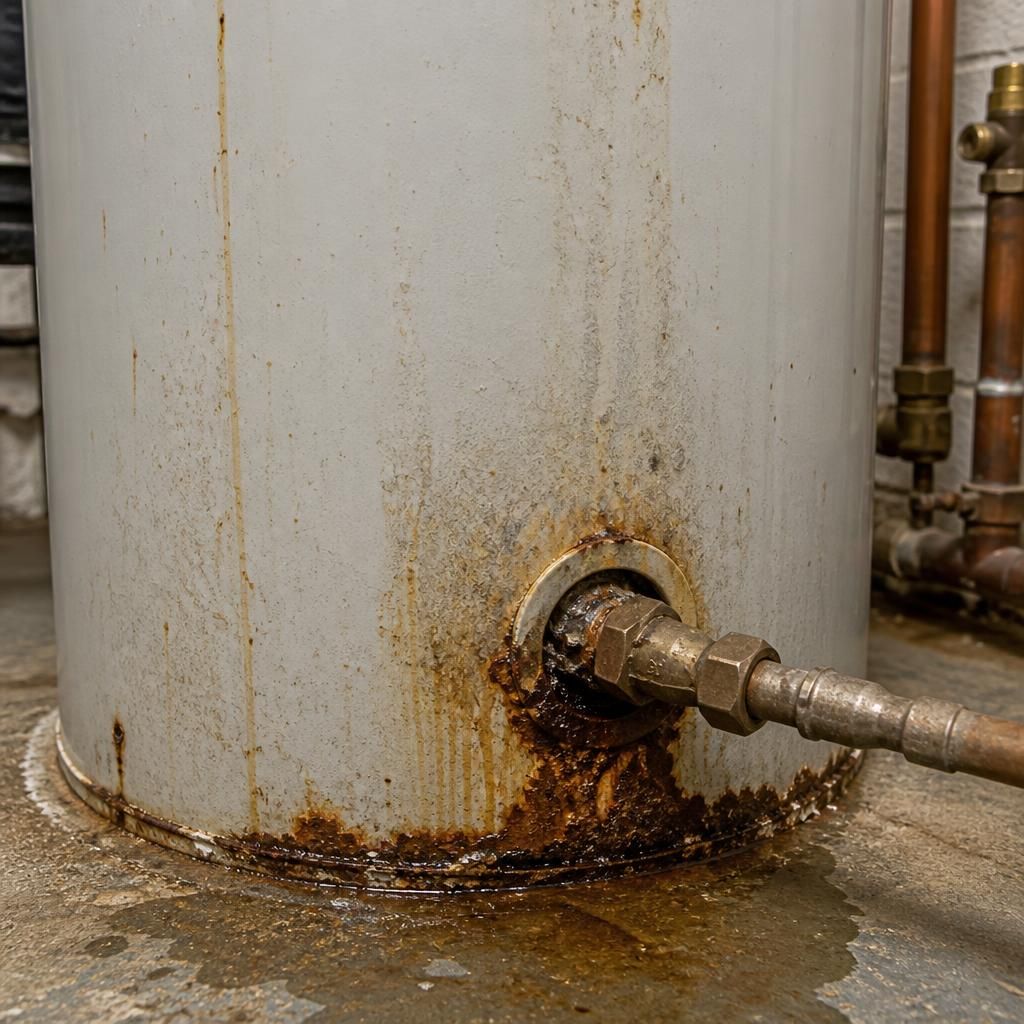
Whether a damaged water heater tank can be repaired depends partly on whether it is a vented or unvented vessel. An unvented cylinder operates as a pressurised boundary, so damage to the shell, welds or connections requires particularly cautious assessment. A dent, crack or corrosion affecting the pressure boundary should not be treated as cosmetic, and repair is only appropriate where the vessel design, manufacturer’s requirements and applicable safety procedures allow it.
Replacing a safety valve or other control does not make a damaged pressure boundary safe. Conversely, a fault in a removable component may be addressed without replacing the cylinder if the vessel itself remains sound. For a vented tank, the lower operating pressure may change the technical assessment, but it does not remove the need to consider structural condition, water hygiene and the reliability of the proposed repair. The decision should be supported by records identifying the defect, the tank type and the basis for returning it to service.
Get Advice on Repairing or Replacing Your Water Heater Tank
Contact Blue Fish Water Management Ltd to discuss the evidence required for a repair-or-replacement decision and the records needed to support the remedial plan.