
How can businesses prevent recurring water tank leaks?
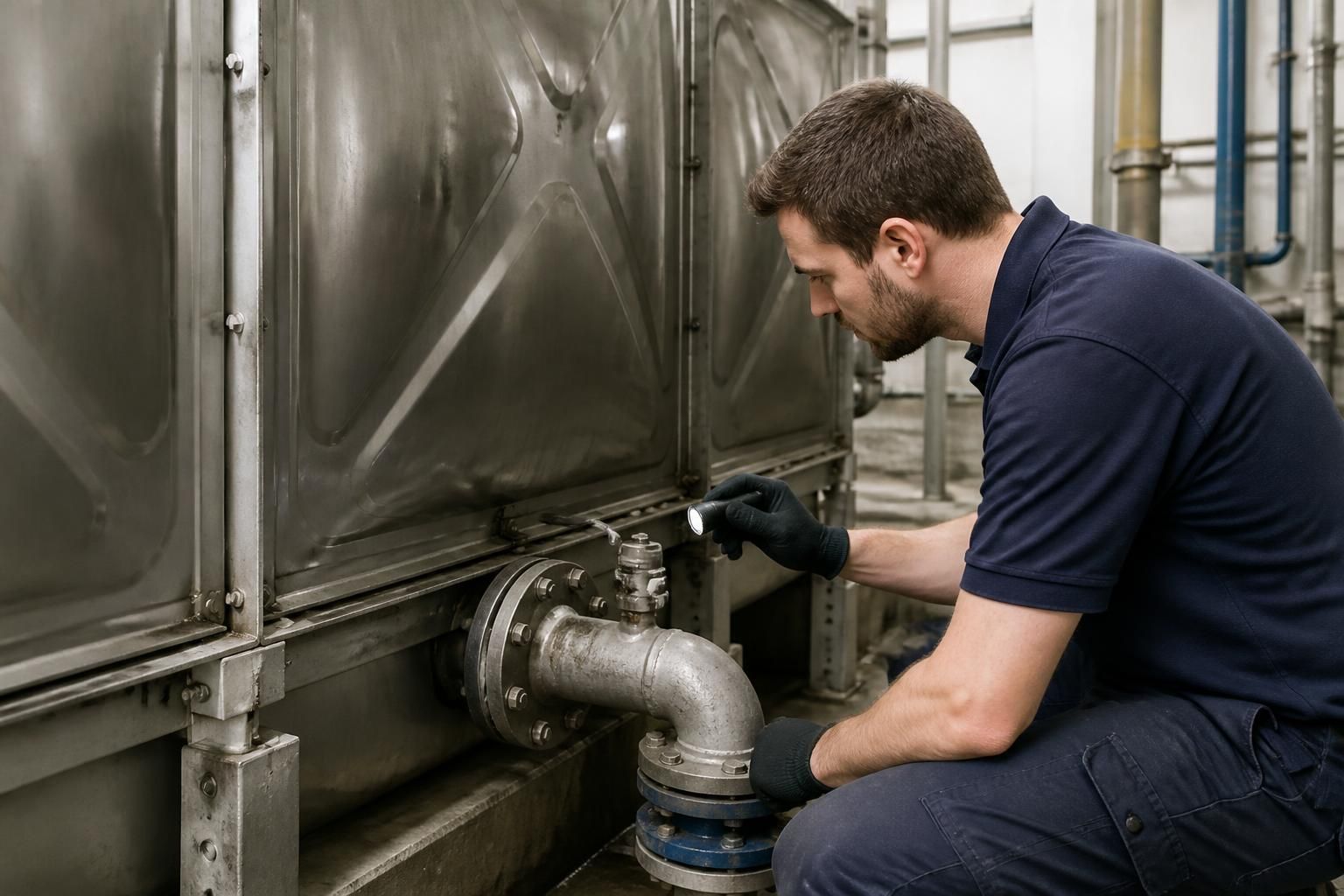
Preventing recurring water tank leaks requires more than sealing the visible point of escape. The durable approach is to establish whether the failure results from tank deterioration, movement, excessive pressure, faulty controls, poor installation or unsuitable operating conditions, then correct that cause and verify that the whole installation is suitable for continued service.
Assess the complete tank assembly, not just the tank body. A leak may originate from an inlet valve, outlet connection, overflow, drain, flange, gasket, access cover or associated pipework. Water can also travel along the outside of a fitting before appearing to come from another location. An inspection should therefore consider:
- the tank material, age, condition and evidence of cracking, distortion, corrosion or ultraviolet damage;
- the condition and alignment of flanges, washers, seals, threaded connections and flexible joints;
- the operation of ball valves, float valves, solenoid valves and other level-control components;
- whether the overflow is correctly positioned, unobstructed and capable of dealing with an abnormal inflow;
- the support base, frame and surrounding structure, including signs of settlement, vibration or uneven loading;
- pipework stresses that may be transferring movement or weight to the tank connections; and
- insulation, lagging and protection against impact, frost or excessive heat where these conditions could damage the installation.
Correct the reason for repeated overfilling. If water has escaped through an overflow, replacing a seal or patching the tank will not prevent a recurrence if the inlet control is sticking, incorrectly adjusted or receiving unsuitable water pressure. The valve should be checked for reliable shut-off, correct float movement and secure mounting. The tank's working level and overflow arrangement should also be checked against the system design, rather than adjusted simply to stop an immediate leak.
Use suitable components and installation methods. Repairs should match the tank material and the service conditions. A seal, repair compound or replacement fitting must be compatible with the water system and installed in accordance with the component manufacturer's requirements. Connections should not be forced into alignment, and pipework should be independently supported where necessary. Excessive tightening can distort a flange or damage a gasket, while inadequate support can make a sound repair fail when the system expands, contracts or vibrates.
Where a tank has become brittle, distorted or extensively corroded, repeated local repairs may be poor value and may not provide a reliable hygienic surface. In that situation, the responsible person should compare a properly specified replacement with further patching. The decision should take account of access, capacity, materials, connection arrangements, insulation and the consequences of a future failure.
Control the operating conditions. Water hammer, pressure fluctuations, thermal movement and vibration can progressively loosen connections and fatigue joints. Investigate unusual noise, movement or pressure changes rather than treating them as unrelated faults. Pressure-reducing equipment, suitable pipe supports, correctly selected flexible connections or changes to control settings may be needed, subject to competent assessment of the system.
Environmental conditions also matter. Tanks and exposed pipework should be protected from freezing, impact and other foreseeable damage. In plant rooms, keeping the area clear and ensuring that drainage can handle a discharge makes it easier to identify small failures before water reaches electrical equipment or building fabric. Any overflow or warning arrangement should discharge safely and visibly, without creating a concealed route for water damage.
Include leak prevention within water hygiene management. A tank that is repeatedly opened, repaired or contaminated by ingress may require a review of its cleaning, disinfection and inspection arrangements. Lids, screens, vents and access points should prevent the entry of dirt, insects and other contaminants while allowing appropriate inspection. Any intervention should preserve the integrity of the system and be followed by whatever checks, cleaning or sampling are appropriate to the risk and system type.
Businesses should also assign responsibility for routine checks. A responsible person or facilities team can look for dampness, staining, unexplained changes in water level, dripping valves, damaged insulation, overflow discharge and deterioration around supports. These observations should be recorded with the location, date, apparent severity and action taken. Trends are useful: repeated faults at the same joint, for example, may indicate movement or poor alignment rather than a series of unrelated seal failures.
After remedial work, the installation should be tested under normal operating conditions. This may include checking static and operating levels, valve shut-off, overflow performance, connection tightness and the condition of adjacent pipework. The affected area should be rechecked after the system has returned to service, because some defects appear only when the tank is full, warm, pressurised or subject to normal demand.
Evidence supporting future management should identify the defect, its likely cause, the work completed, parts or materials used, test results, photographs where useful and any remaining limitations. It should also state whether further monitoring, replacement or specialist investigation is recommended. Clear information prevents a future contractor from treating the same symptom without understanding the original failure.
For commercial premises, Blue Fish Water Management can support the wider water hygiene process through risk-based assessment, system monitoring, water testing and advice on remedial requirements. This is particularly relevant where a leaking tank forms part of a larger stored-water system and the business needs to consider both physical reliability and continued water safety compliance.
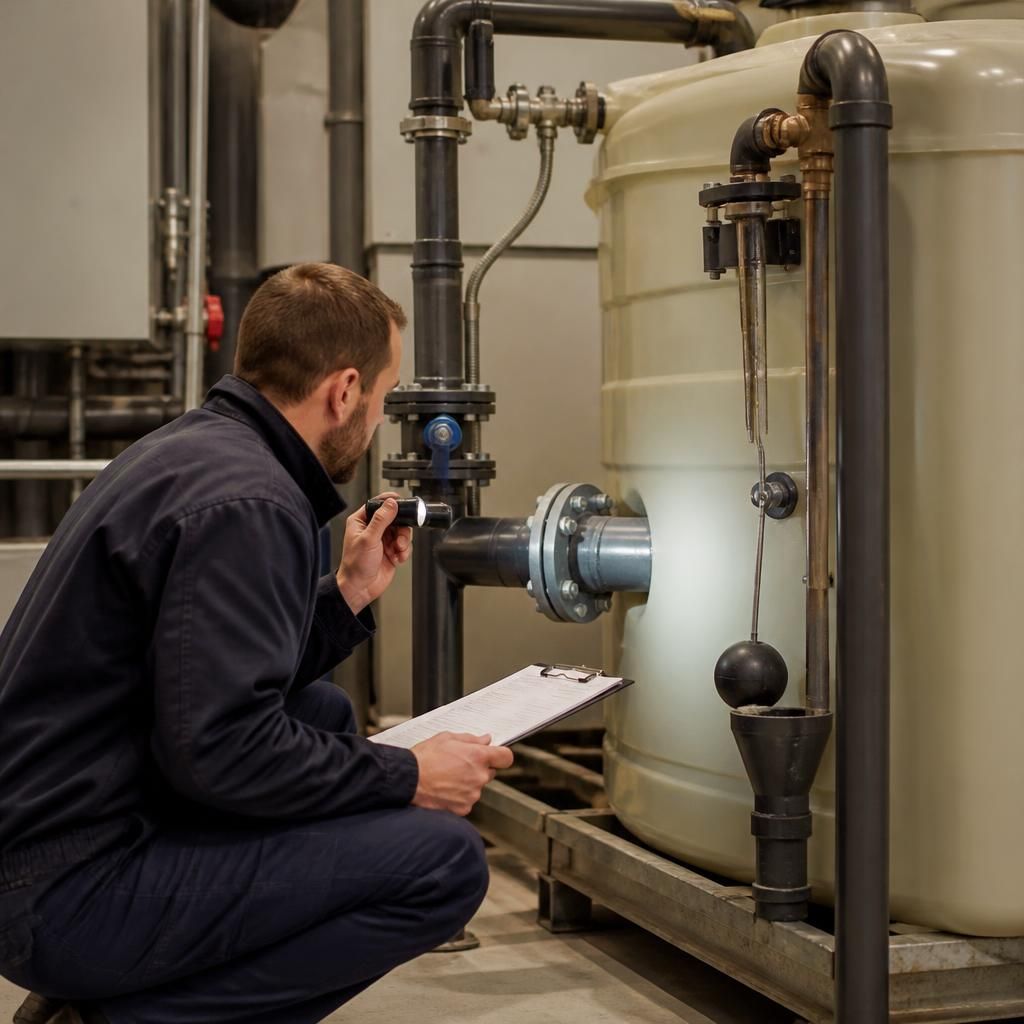
Recurring water tank leaks are less likely when the installation is reviewed after changes to the building or its water services. Alterations to pipework, pumps, controls, water demand or plant-room layout can introduce new loads and movement at tank connections, even if the tank itself has not been repaired.
A competent review should therefore follow significant maintenance, refurbishment, changes in occupancy or water use, and any incident involving abnormal pressure, overflow or vibration. The review should confirm that the tank capacity, supports, valves, pipework and overflow arrangements remain appropriate for the way the system now operates.
- Record what has changed and which tank or connections may be affected.
- Check whether new equipment has altered pressure, flow, temperature or vibration.
- Confirm that supports, access, drainage and protection remain suitable.
- Update maintenance instructions and responsibilities where the system has been modified.
This management-of-change approach helps businesses address conditions that can cause a repaired joint or fitting to fail again, rather than treating each leak as an isolated defect.
Discuss preventing recurring water tank leaks
If recurring leaks indicate wider concerns about a stored-water system, ask Blue Fish Water Management to review the installation and advise on appropriate water hygiene and remedial measures.