
What should cold water storage tank cleaning include?
Cold water storage tank cleaning should include a condition inspection, removal of sediment and biofilm, thorough cleaning and disinfection of the tank and associated components, followed by appropriate water testing. The work should also produce clear records of the findings, methods used, test results and any remedial recommendations.
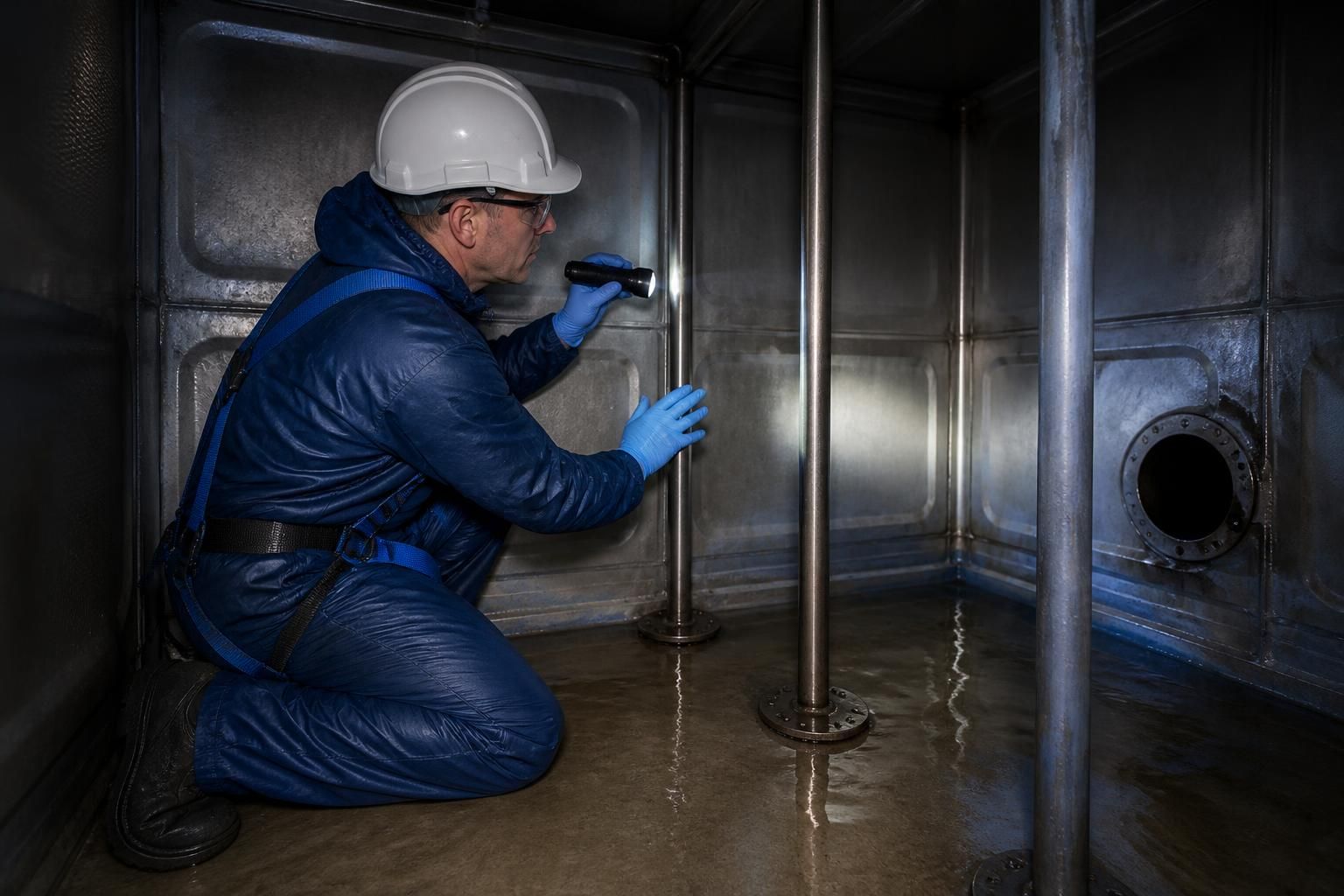
Effective cold water storage tank cleaning is a controlled process that prepares the system safely, examines the tank and its fittings, removes contamination, verifies the result and documents any action still required. The exact scope should be based on the system’s design, condition, use and legionella risk assessment rather than a standard cleaning routine applied to every tank.
Before work starts, the contractor should confirm which tank and connected services are included, identify outlets supplied by it and agree how the system will be isolated, drained and returned to service. The plan should consider the effect on occupants, production, welfare facilities and other water users. Where a temporary interruption or alternative supply is needed, this should be agreed with the responsible person in advance. Safe systems of work should cover electrical and mechanical hazards, chemical handling, access, hygiene and any confined-space risks.
The physical assessment should be more than a superficial visual check. It should consider the tank’s internal surfaces, base, joints, seams, supports, cover and insulation, together with signs of corrosion, cracking, scale, staining, leaks, contamination or deterioration. The inlet arrangement, float-operated valve, warning and overflow pipes, screens, outlet, drain and access cover should also be examined. A secure, close-fitting cover and suitable screened openings help prevent the entry of dust, insects, vermin and other contaminants after the work is complete.
Cleaning should use methods and equipment suitable for the tank and the water system. Loose material should be removed without spreading contamination into connected pipework. Deposits should be removed from accessible surfaces, corners, fittings and low points, while damaged coatings or materials should be identified rather than concealed by the cleaning process. Equipment and products used in a system supplying water for domestic or operational purposes should be appropriate for that application and handled in accordance with the relevant safety information.
Disinfection should be planned as a controlled treatment. The method, chemical, contact conditions and areas treated should be defined before application, taking account of the tank construction and connected pipework. The responsible person should understand which outlets or sections are included and which may require separate treatment. Following treatment, the system should be flushed in a controlled manner, with care taken to prevent disinfectant entering use points or being discharged inappropriately.
Reinstatement is part of the cleaning service. The tank should be refilled and returned to operation only after the required checks have been completed. Valves, covers, overflows, drains, insulation and access points should be left secure and functional. Any unusual condition found during the work should be reported, particularly defects that could allow recontamination, restrict turnover, create stagnation or compromise the tank’s structural integrity.
Verification should demonstrate that the system is suitable to return to use. This can include sampling from agreed points, laboratory analysis where appropriate and checks of relevant operational parameters. Results should be interpreted alongside the system history and risk assessment, not treated as a substitute for addressing visible defects or poor system design. If results are unsatisfactory, the report should explain the recommended next steps and whether further cleaning, disinfection, investigation or remedial work is indicated.
A useful completion pack should identify:
- the tank, location and system covered;
- the date and reason for the work;
- the condition observed before cleaning;
- the cleaning and disinfection methods used;
- any products, equipment or protective measures relevant to the work;
- isolation, flushing and reinstatement checks;
- sample details and laboratory results, where testing was undertaken;
- photographic evidence where it helps explain the condition;
- defects, limitations and recommended remedial actions; and
- the person responsible for reviewing and closing outstanding actions.
This information allows the dutyholder to update the water hygiene records and decide whether the tank can remain in service, requires repair or should be replaced. It also provides a clear basis for future monitoring and for checking that the cleaning frequency remains appropriate to the system’s actual risk.
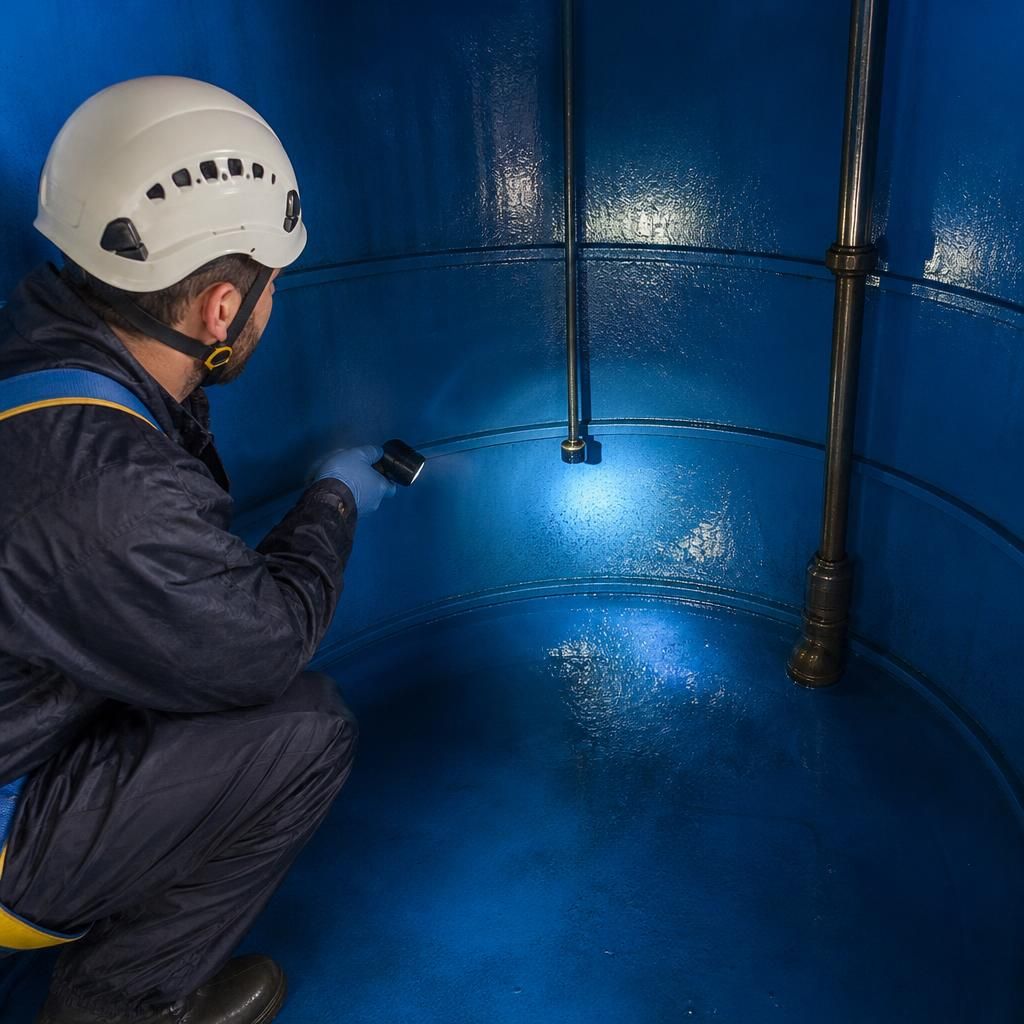
Cold water storage tank cleaning should include controls to prevent the tank becoming contaminated again during reinstatement. A tank may be visibly clean at the end of the work, but poor handling of hoses, tools, covers or fittings can reintroduce dirt and microorganisms before the system returns to use.
Equipment that enters the tank or contacts treated surfaces should be clean and suitable for hygienic water-system work. Openings should be protected while the tank is drained, cleaned and refilled, and removed covers, valves and fittings should not be placed where they can pick up contamination. Before reconnection, the contractor should check that access covers, screens, overflow arrangements and seals are correctly positioned and secure.
The completion record should note any limitations that prevented full access or treatment. This helps the dutyholder distinguish between a tank that has been fully cleaned and one where restricted access, damaged components or connected pipework requires further investigation.
Discuss what your cold water storage tank cleaning should include
If you need to confirm the appropriate scope for your cold water storage tank cleaning, discuss the system with Blue Fish Water Management Ltd. Their team can help identify the relevant cleaning, disinfection and verification requirements for your water system.