
What evidence should cold water storage tank cleaning produce?
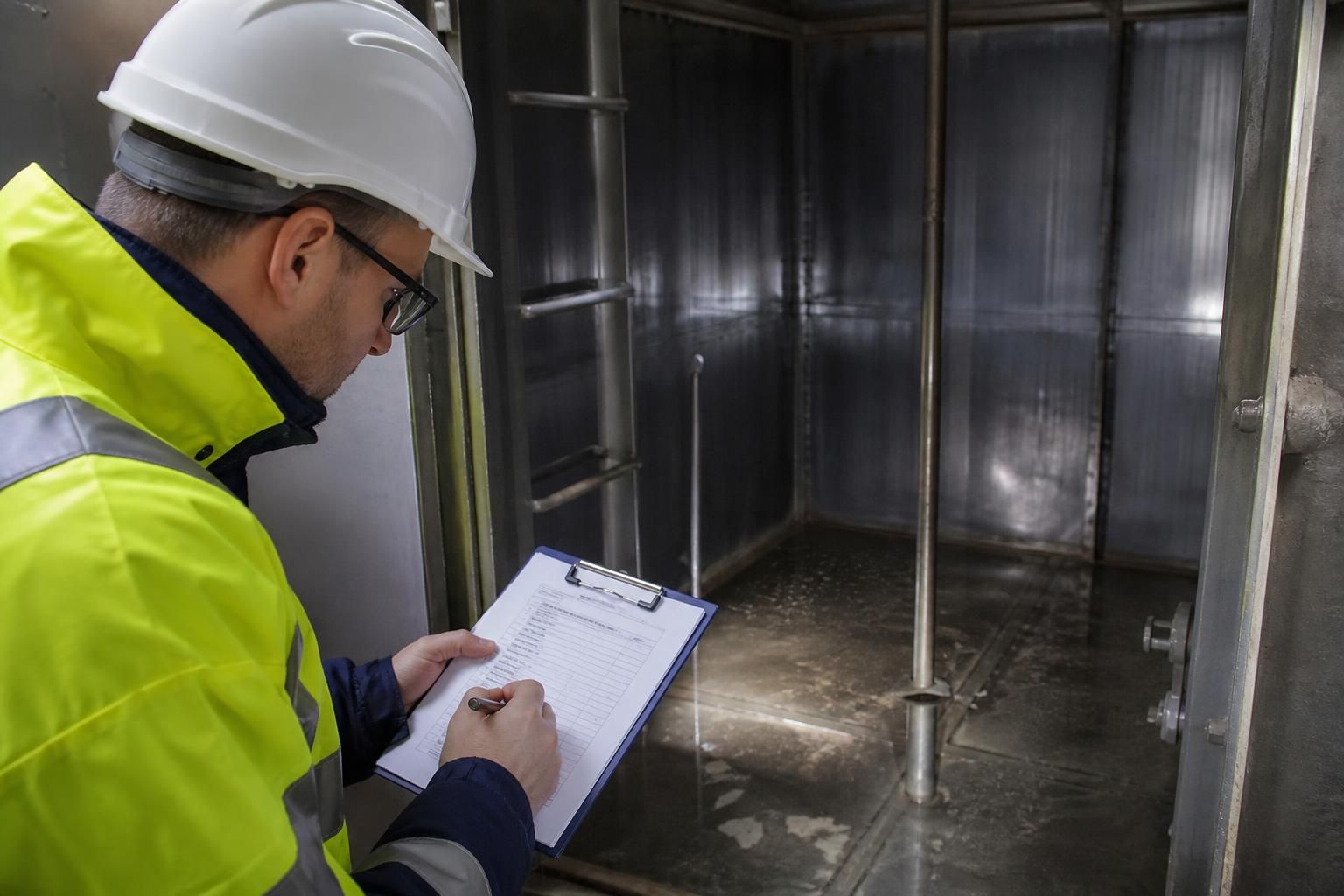
The evidence from cold water storage tank cleaning should demonstrate three things: that the correct tank was addressed, that the work followed a controlled and suitable procedure, and that any remaining risk was identified and managed. A payment receipt or brief statement that the tank was “cleaned” is not sufficient evidence for a robust water hygiene record.
Useful supporting evidence should establish the identity and condition of the asset. The record should link the work to the relevant building, plant area and tank, using an asset reference or another unambiguous description. It should also note relevant features such as access arrangements, tank material, compartment configuration, inlet and outlet condition, lids, insulation, screens, strainers and signs of corrosion, scale, sediment or contamination. This allows later reviewers to confirm that the work related to the tank assessed in the site’s water safety documentation.
The cleaning method should be traceable. The record should explain how the tank was isolated, drained, cleaned and returned to service, including any controls used to prevent contamination of the distribution system. Where disinfection is required, the evidence should identify the approach used and record the relevant operational checks. If a standard method could not be followed because of restricted access, damaged fittings or another site limitation, the deviation and its effect on the risk should be documented rather than omitted.
Photographic evidence is most useful when it is selective and identifiable. Images should show the condition that prompted cleaning, important internal surfaces, fittings or defects, and the completed condition. They should be dated and associated with the correct asset. A series of unlabelled photographs provides less assurance than a smaller set with captions explaining what each image demonstrates. Where access or safety restrictions prevent internal photographs, the report should say so and explain what alternative inspection evidence was obtained.
Any water sampling evidence should be connected to the work and interpreted correctly. A laboratory report should identify the sample point, sampling date, sample description and test requested, with the laboratory’s result and reporting details retained. The sampling plan should make clear whether a result represents the tank, the incoming supply or a downstream outlet; these are not interchangeable. Results should be considered alongside site conditions and the purpose of the sample, rather than treated as proof that every part of the water system is free from risk.
For samples sent to a laboratory, records should preserve the link between the collected sample and the issued result. This may include sample labels, submission information and any relevant chain-of-custody documentation. If a result is unsuitable, unexpected or requires follow-up, the record should show the decision taken and whether additional investigation, remedial work or repeat sampling was necessary.
Competence and authorisation should also be demonstrable. The evidence should identify the person or organisation responsible for the inspection and cleaning, together with the date of the work and any relevant review or approval. Where the task involved isolation, disinfection, confined-space considerations or interaction with building operations, the supporting records should show that the associated controls were considered. This helps a responsible person distinguish completed work from an unsupported assertion that work took place.
Where defects are found, the cleaning record should connect each issue to an action. Examples include a damaged lid, ineffective insect screen, poor insulation, corrosion, inadequate access, stagnant sections or evidence of ingress. A useful action record states the defect, its significance, the recommended remedy, the responsible party where known, and the status of the action. If a defect remains outstanding, the reason and interim control should be recorded so that it is not lost when the cleaning visit is closed.
The completed evidence should be filed with the wider water safety management system, not kept as an isolated contractor document. It may need to be cross-referenced to the asset register, legionella risk assessment, monitoring programme, remedial action log and planned cleaning schedule. Any change in tank condition, configuration or control measures should be considered during the next relevant review. Records should be legible, dated, retrievable and retained in line with the organisation’s document-control arrangements.
Before accepting the record, the responsible person should check that the asset can be identified, the method and limitations are clear, photographs and test results are traceable, defects have owners or follow-up actions, and the evidence has been incorporated into the site’s ongoing control arrangements. These checks turn a cleaning visit into an auditable part of water hygiene management.
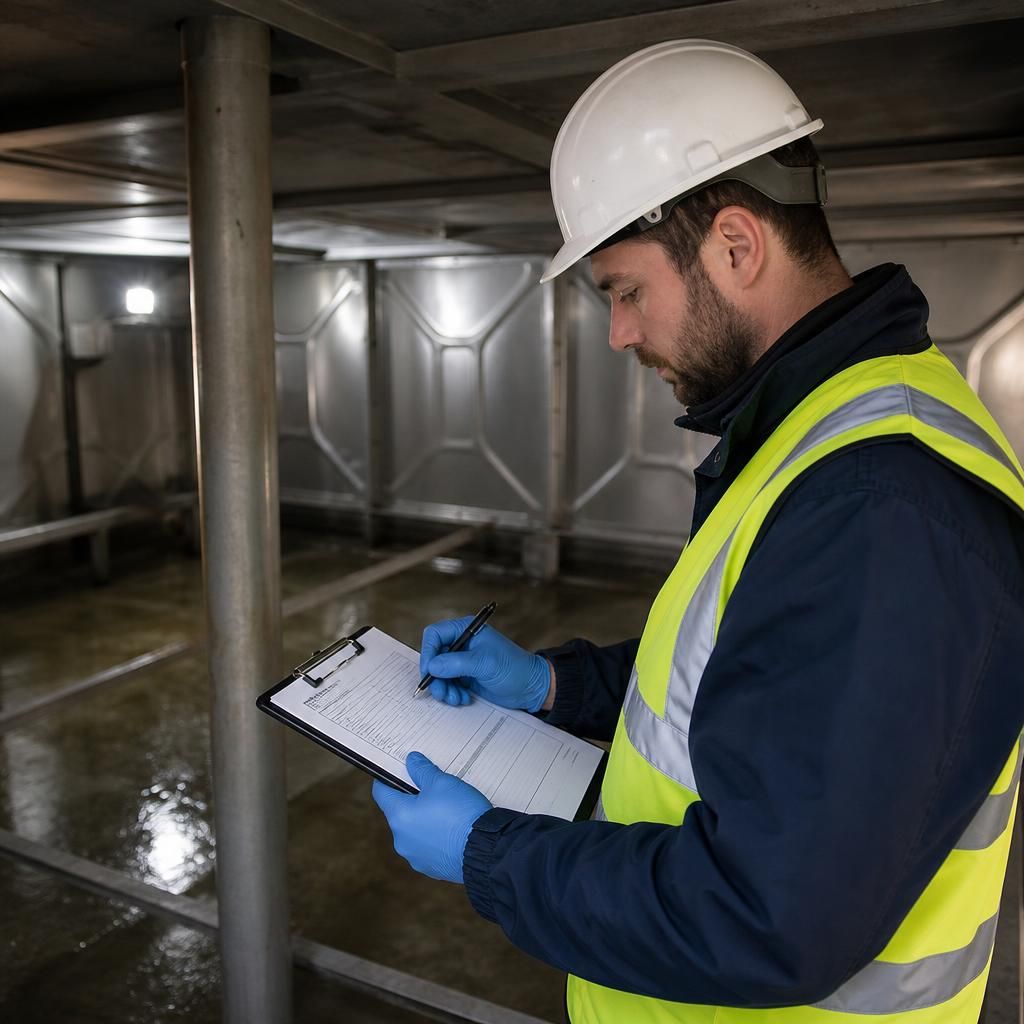
Good evidence is created during the cleaning task, not reconstructed from memory afterwards. The technician’s record should distinguish between observations made at the tank, work carried out, and conclusions reached from that information. Any amendments should remain traceable, with the original entry still understandable rather than being overwritten.
A site representative’s acknowledgement can also help establish that the work was completed and that relevant operational information was handed over. This acknowledgement should not be treated as technical approval, but it provides a clear record of who received the findings, recommendations and any restrictions affecting the tank’s use. Where the cleaning report forms part of a contractor’s standard certificate, its wording should define the work covered and avoid implying that the certificate alone proves the whole water system is compliant.
Discuss your cold water storage tank cleaning evidence requirements
Discuss your cold water storage tank cleaning evidence requirements with Blue Fish Water Management Ltd to identify whether your current documentation supports effective water hygiene oversight. Their team can advise on the information your organisation should retain and how it should fit within your wider compliance records.