
How can cold water storage tank cleaning minimise disruption to operations?
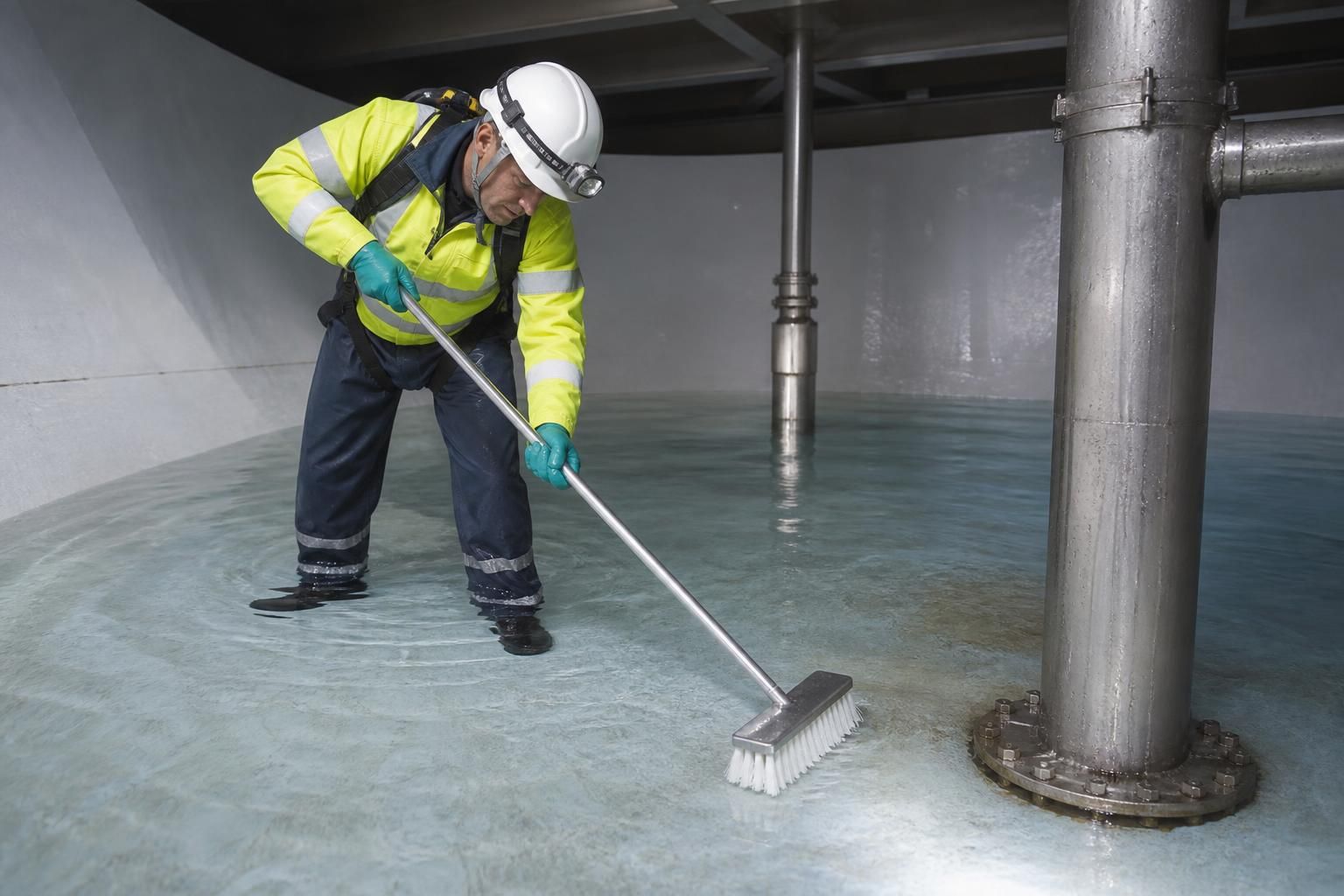
Cold water storage tank cleaning minimises operational disruption when the work is treated as a controlled water-system intervention rather than an isolated maintenance task. The scope should account for the tank’s users, its connection to the wider water system, the consequences of taking it out of service and the checks needed before recommissioning. This helps avoid unnecessary interruption while ensuring that water quality and safety controls are not compromised.
Define the tank’s operational role first. A storage tank may supply welfare facilities, accommodation, production processes or other essential services. The cleaning approach should therefore be based on what the tank serves, whether alternative supplies exist and whether isolation could affect connected equipment or building activities. Fire protection arrangements require particular consideration, because a tank associated with those systems must not be treated in the same way as a tank supplying potable water.
Confirm the work scope before the tank is taken out of service. Relevant information can include system diagrams, previous inspection reports, water quality results, tank capacity, access limitations and known defects. Reviewing this information helps distinguish the cleaning requirement from separate remedial work. It also reduces the risk of discovering during the visit that additional access, specialist equipment or follow-up work is needed before the system can be returned to normal use.
Use a proportionate cleaning method. The work may involve draining, removing sediment and scale, cleaning internal surfaces, inspecting the tank and disinfecting the relevant parts of the system. The method should reflect the condition and construction of the tank, the type of contamination present and the requirements of the connected installation. Excessive intervention can create avoidable downtime, while insufficient cleaning may lead to repeat work or unresolved water quality concerns.
Control the sequence of work carefully. A competent contractor should establish which sections need to be taken out of service, prevent cleaned components from being recontaminated and complete the required flushing and checks before normal use resumes. Where a system has more than one tank or can be divided into suitable sections, a staged approach may be possible. That decision must be based on the actual system design and should not reduce the level of protection required for users.
Temporary water arrangements can sometimes support continuity, but they must be technically suitable, agreed in advance and managed as part of the water safety controls. A temporary connection, bypass or alternative supply should not be assumed to be appropriate simply because it reduces interruption. Its effect on pressure, temperature, water quality, backflow protection and any connected processes needs to be considered.
Separate cleaning from unforeseen remedial work. An inspection may identify damaged covers, ineffective insulation, defective valves, corrosion, inadequate access or other conditions that affect the tank’s performance. Recording these findings separately allows the immediate cleaning task to be assessed against the work needed to restore or improve the installation. Where a defect affects safe operation, the tank should not be returned to service without an appropriate decision by the responsible person.
Make verification part of the programme. Recommissioning should include the checks appropriate to the system, such as confirming that the tank is clean, covers and fittings are secure, valves are correctly positioned and the system has been flushed as required. Water sampling may also be appropriate, particularly where there has been evidence of contamination or where testing forms part of the site’s control regime. UKAS-accredited water testing can provide a clearly defined laboratory result where testing is required.
Good records also reduce later disruption. The completion information should identify the tank or system addressed, the work undertaken, inspection findings, disinfection or flushing details where relevant, test results and any recommendations. This gives the responsible person evidence for the water safety management system and helps future contractors understand the installation without repeating investigative work.
For a business site, the most effective approach is therefore to combine system knowledge, proportionate cleaning, controlled recommissioning and clear evidence. Blue Fish Water Management can support this process through cold water storage tank cleaning alongside water hygiene advice, testing, compliance review and remedial recommendations where these are relevant to the installation.
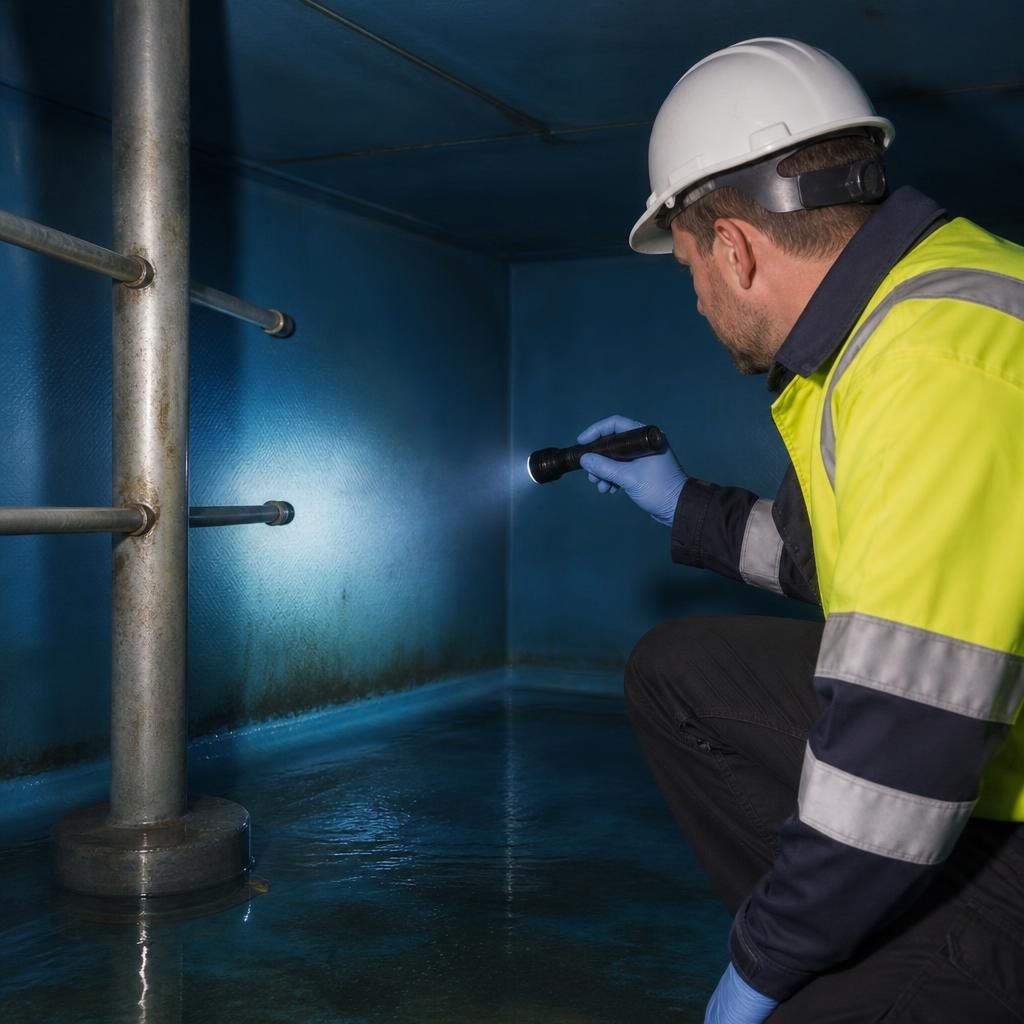
Clear communication helps prevent avoidable interruption. Before cleaning begins, the contractor and site team should agree who controls the isolation, which users may be affected, what activities must stop and who is authorised to approve recommissioning. This is particularly important where the tank supplies multiple areas or supports a process with its own operational controls.
A documented sequence of notifications and handovers can prevent conflicting instructions during the work. Facilities staff, water safety personnel, contractors and affected occupants should understand when the tank is unavailable, what restrictions apply and when normal use has been confirmed. This coordination does not replace the technical controls for cleaning, but it helps ensure that the work is carried out without unauthorised use, premature reconnection or avoidable delays.
Discuss your cold water storage tank cleaning requirements
Discuss your cold water storage tank cleaning requirements with Blue Fish Water Management to identify a proportionate approach for your site and its operational needs.